


Listen to the article
Battleground Gubernatorial Races Shape Up as Key Political Contests for 2026
While the 2026 midterm elections will determine whether Republicans maintain their congressional majority after their 2024 sweep, an equally consequential set of gubernatorial races is taking shape across several battleground states.
Political analysts have identified five key gubernatorial contests as “toss-ups” that could dramatically shift state-level power dynamics. Arizona, Michigan, and Wisconsin — all currently led by Democratic governors — are considered highly competitive races by major election forecasters like The Cook Political Report and Sabato’s Crystal Ball. Meanwhile, Republicans face challenging battles to defend their gubernatorial seats in Georgia and Nevada.
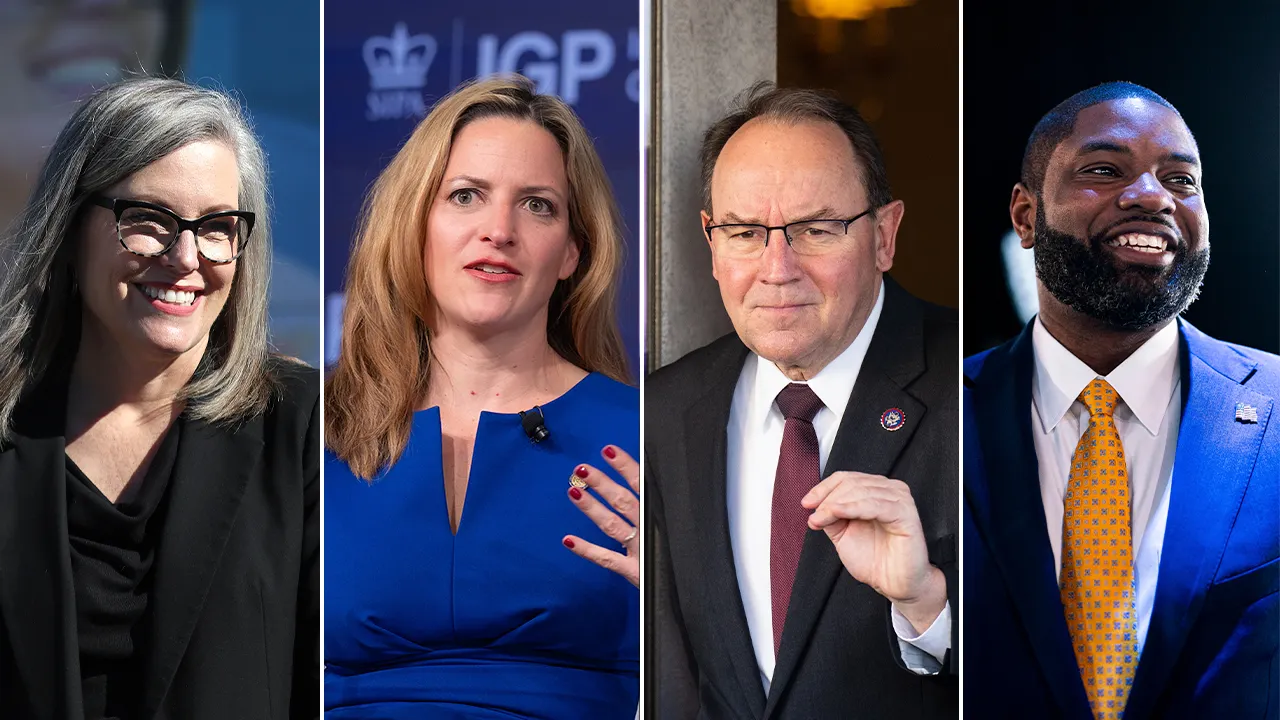
In Arizona, Democratic Governor Katie Hobbs faces a difficult reelection campaign against several Republican challengers, including long-serving House Representatives Andy Biggs and David Schweikert, as well as attorney Karrin Taylor Robson, who previously lost the 2022 GOP primary to Kari Lake.
Hobbs enters the race under the shadow of ongoing investigations. The Arizona governor faces allegations of involvement in a “pay-for-play” scheme after reports emerged that a group home business for vulnerable children received a rate hike following donations to her inauguration and the Arizona Democratic Party. Both the Arizona attorney general and Maricopa County attorney have launched criminal investigations, while the Arizona House has initiated its own inquiry. Hobbs has denied personal involvement in the rate decision.
The situation in Michigan presents unique challenges as Democratic Governor Gretchen Whitmer reaches her term limit. Secretary of State Jocelyn Benson has emerged as a leading Democratic candidate, but her candidacy has already sparked controversy. Earlier this year, Benson attended a Democratic “unity” dinner that featured controversial anti-Trump decorations, drawing significant backlash. Republican lawmakers have raised concerns about Benson’s dual role as both a candidate and Michigan’s chief election official, calling for federal oversight of the state’s elections in 2026.
Wisconsin presents another open race following Democratic Governor Tony Evers’ announcement that he won’t seek a third term despite having no term limit restrictions. The Republican field includes U.S. Representative Tom Tiffany and Wisconsin County Executive Josh Schoemann, while Democrats are eyeing former Lieutenant Governor Mandela Barnes, current Lieutenant Governor Sara Rodriguez, and Wisconsin County Executive David Crowley as potential candidates.
“Voters view governors’ races through a unique prism,” said Courtney Alexander, spokesperson for the Republican Governors Association. “They see that Republican-led states are more affordable and safer, while Democrat-led states are among the most expensive and have allowed their cities to become hellscapes of crime and homelessness.”
Republicans also face challenges defending gubernatorial seats in Georgia and Nevada. Georgia, traditionally Republican but increasingly competitive in recent elections, will see an open race as GOP Governor Brian Kemp reaches his term limit. Nevada similarly represents a state where Republicans hope to maintain control.
Florida’s gubernatorial contest, while not considered highly competitive, has generated interest due to the pending departure of term-limited Republican Governor Ron DeSantis. President Donald Trump has already endorsed U.S. Representative Byron Donalds for the position, while DeSantis himself has publicly suggested his wife Casey DeSantis could be a formidable candidate. “She would do better than me,” DeSantis remarked to reporters. “There’s no question about that.”
In total, 36 gubernatorial elections will be held on November 3, 2026, with primaries scheduled at various points throughout the year. These races will not only determine state leadership but could significantly influence policy directions on issues ranging from education and healthcare to immigration and election administration at a time when state-level governance continues to gain importance in America’s federalist system.
Fact Checker
Verify the accuracy of this article using The Disinformation Commission analysis and real-time sources.

12 Comments
The mining and commodities industries will be keeping a close eye on these gubernatorial races, as the policy priorities of the state leaders can have a major impact on the operating environment. I wonder how candidates will address issues like permitting, taxation, and environmental regulations.
Regardless of party affiliation, it’s important that the candidates put forth substantive, fact-based policy proposals that prioritize economic growth and job creation.
Interesting to see how the Republican party is positioning itself for key gubernatorial races in 2024. These battleground states will be crucial for shaping the political landscape at the state level.
It’ll be important to watch how the dynamics play out, especially in states like Arizona where there are ongoing investigations around the current governor.
The mining and energy sectors will be closely watching these gubernatorial races, as state-level policy can have a big impact on the business environment. Curious to see how candidates position themselves on issues like permitting, taxes, and regulations.
Given the importance of these battleground states, I expect a lot of focus and resources to be poured into these campaigns by both parties.
With Democrats currently holding the governorships in Arizona, Michigan, and Wisconsin, the Republican push to flip those seats will be a key storyline to follow. The results could significantly reshape the political landscape.
It will be interesting to see how issues like the economy, inflation, and energy policy factor into voter sentiment in these states.
With the 2026 midterms on the horizon, I’m curious to see how these gubernatorial races influence the broader political climate. Control of state governments is a key strategic priority for both parties.
It will be telling to see if Republicans can make inroads in traditionally blue-leaning states like Michigan and Wisconsin.
These battleground gubernatorial races will be a crucial battleground for both parties as they jockey for power and influence at the state level. It will be interesting to see how the energy and mining sectors factor into the campaigns and policy platforms.
With so much at stake, I expect these races to be highly competitive and closely watched by political observers and industry stakeholders alike.