


Listen to the article
Senate Democrats and Republicans Clash Over Election Integrity Measures
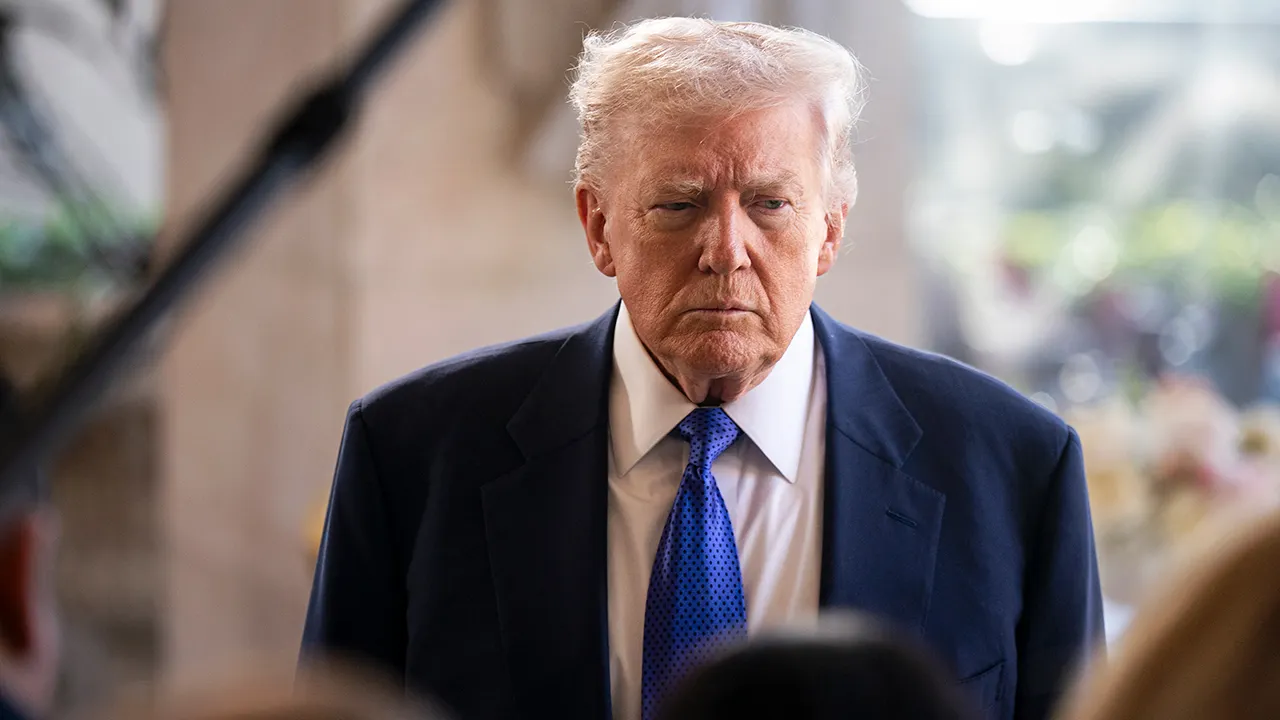
Senate Democrats are accusing President Donald Trump of attempting to interfere with the upcoming 2026 midterm elections, while Republicans dismiss these claims as baseless.
The dispute intensified last week when House Republicans demanded that voter ID legislation be included in a government funding deal negotiated between Trump and Senate Minority Leader Chuck Schumer. Although that specific demand wasn’t incorporated into the final agreement, the push for election integrity measures has continued with growing momentum.
Trump stirred controversy by suggesting Republicans should “take over voting” in at least 15 jurisdictions, comments made during an interview with former FBI Deputy Director Dan Bongino. These statements, coupled with an FBI raid on an election hub in Fulton County, Georgia, and Senate Republicans’ advocacy for the SAVE America Act, have heightened tensions between the parties.
“I think as Trump gets more desperate, he’s looking at ways that he can rig the election anytime a Republican doesn’t win,” Senator Chris Murphy, Democrat of Connecticut, told Fox News Digital. “He thinks it’s unfair, and so he wants to tilt the rules to make sure the Democrats don’t win.”
Murphy emphasized vigilance against potential federal intervention in state-run elections. “The Constitution is crystal clear, the federal government can’t run state elections, but that doesn’t mean he won’t try,” he added.
Republicans have responded forcefully to these accusations. Senator Eric Schmitt, Republican of Missouri, called Democrats’ concerns “ridiculous” and dismissed them as a “conspiracy theory.”
“I think President Trump cares very deeply about the integrity of our elections,” Schmitt said. “If you ask the American people, they support voter ID by overwhelming numbers. So look, they’ve got some outrage of the week every week.”
Senator Elissa Slotkin, Democrat of Michigan, pointed to Trump’s own statements as evidence of concerning intentions. “You can take the president at his own words and believe what he says,” Slotkin told Fox News Digital. “And he’s had an obsession with this issue, certainly an obsession with Fulton County, since he lost the 2020 election, and he’s now weaponizing the federal government because of his obsession.”
Not all Senate Republicans support Trump’s call for increased federal control over elections. Senate Majority Leader John Thune of South Dakota has expressed reservations about centralizing election administration.
“Distributed, decentralized elections held at state-level, in my view, are a protection against hacking and other things, so it’s a lot harder to hack 50 systems than it is one,” Thune explained. He did note that citizenship verification for voting could be an exception to his preference for state control.
A group of Republican senators including Mike Lee of Utah, Ron Johnson of Wisconsin, and Rick Scott of Florida are pushing the SAVE America Act, which would mandate voter ID, proof of citizenship for voter registration, and other election reforms. The trio met with Trump on Thursday to discuss strategies for advancing the legislation.
However, the bill faces significant obstacles in the Senate, where it would need to clear the 60-vote filibuster threshold. Senate Democrats have almost unanimously opposed the measure, with Schumer characterizing it as “Jim Crow 2.0.”
Senator Lee defended the legislation against Democratic criticism, telling Fox News Digital: “It is Democrats bending over backwards to prevent voter ID and proof of citizenship for American elections. It is Democrats demanding that nobody ask questions about election security and irregularities. The projection is jaw-dropping.”
The dispute highlights the ongoing partisan divide over election administration and security measures that has characterized American politics since the contested 2020 presidential election, with both sides accusing the other of undermining democratic processes for political gain.
Fact Checker
Verify the accuracy of this article using The Disinformation Commission analysis and real-time sources.

13 Comments
This seems like a complex issue with valid concerns on both sides. I try not to take strong partisan stances on these types of topics. I’d encourage everyone to seek out objective, non-partisan sources to learn more about the facts and issues at play.
As someone who follows the lithium and uranium markets closely, I’m hopeful that the politicians can put aside their differences and work together to address any real issues with election integrity. Instability and uncertainty are bad for business.
Absolutely, we need a fair and functional electoral system that all sides can have confidence in. Overheated rhetoric and partisan finger-pointing aren’t going to solve anything here.
As someone invested in the mining and commodities sector, I’m concerned about the potential impact of political instability and contested elections. Regulatory and policy uncertainty is a major risk factor for our industry.
That’s a good point. Businesses like ours really need a stable political environment to thrive. Hopefully the two parties can find a way to work together on election reforms.
While I understand the desire for election integrity, some of Trump’s rhetoric around ‘taking over voting’ is really concerning and seems to cross a line. We need to be vigilant about protecting the democratic process, not undermining it.
I agree, the President’s comments are quite troubling and could be seen as an attempt to delegitimize the electoral system. That kind of rhetoric is very dangerous and counterproductive, regardless of party affiliation.
This debate over election integrity is clearly very partisan and divisive. Both sides seem to be making accusations of interference and hypocrisy. It would be helpful to have a more objective, non-partisan analysis of the issues at stake.
I agree, it’s important to try to look at this issue from a neutral, fact-based perspective. Reasonable people can disagree, but the rhetoric on both sides seems overly inflammatory.
I’m curious to learn more about the specific election integrity measures being proposed by Republicans. What evidence is there of issues that need to be addressed? And how do the Democratic concerns about interference factor in?
Those are good questions. It does seem like there are valid concerns on both sides that deserve objective examination. Hopefully cooler heads can prevail and a bipartisan solution can be found.
This is a complex and highly charged issue, with valid concerns on both sides. As an investor, I’m mostly interested in the policy implications and hope the two parties can find a way to work together constructively. Stability and predictability are key for our industry.
From my perspective as an investor in the energy and mining sectors, I’m mostly interested in the policy implications of this dispute rather than the partisan politics. Whichever side prevails, I hope it leads to a more stable and predictable regulatory environment.