


Listen to the article
House Republicans on Thursday blocked an attempt by Democratic lawmakers to limit President Donald Trump’s war powers amid an ongoing two-week ceasefire between the United States and Iran. The move highlights growing partisan tension over congressional authority in military conflicts as the situation in the Middle East remains volatile.
Led by Rep. Glenn Ivey (D-Md.), House Democrats sought to pass a war powers resolution during a pro forma session by unanimous consent. However, Rep. Chris Smith (R-N.J.), who was presiding, adjourned the session without recognizing Ivey on the floor, effectively killing the measure.
“Congress needs to consider this. The time has come. The time has come,” Ivey declared after Smith gaveled out of the session.
The resolution, backed by House Democratic leadership, would have formally ended the Iran conflict and prevented Trump from taking further military action without explicit congressional approval. This represents the latest in a series of Democratic attempts to reassert congressional war powers that have been thwarted by Republican opposition.
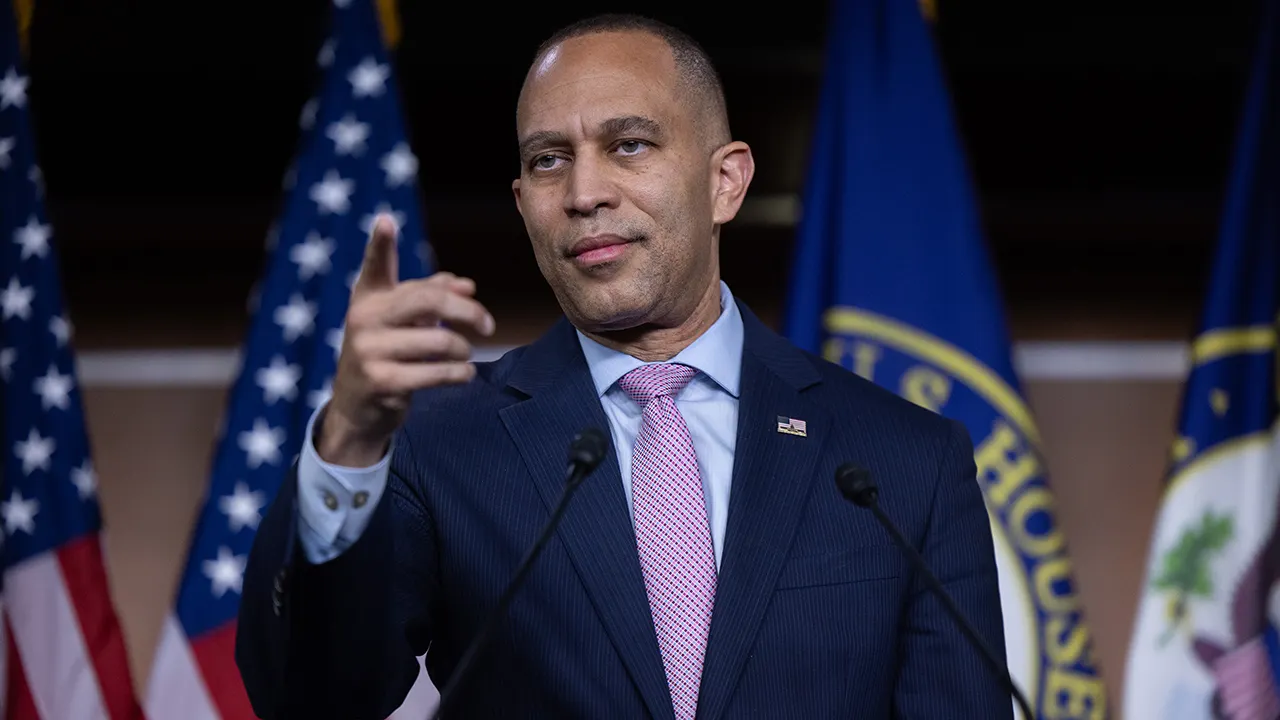
House Minority Leader Hakeem Jeffries (D-N.Y.) has called for House Republican leadership to immediately reconvene the chamber, which is currently in a two-week recess and not scheduled to return until April 13.
“A two-week ceasefire is woefully insufficient. Accordingly, we have demanded that the House come back into session immediately in order to vote on our resolution to permanently end the war in the Middle East,” Jeffries wrote in a “Dear Colleague” letter on Wednesday.
The push for congressional oversight follows Trump’s Tuesday announcement of a temporary ceasefire with Iran, with administration officials characterizing the military campaign known as Operation Epic Fury as “an unequivocal success.” Despite the ceasefire, diplomatic tensions remain high, with Iran reportedly insistent on securing a parallel ceasefire between Israel and Lebanon.
Vice President JD Vance, Special Envoy to the Middle East Steve Witkoff, and presidential son-in-law Jared Kushner are expected to travel to Islamabad for talks hosted by Pakistani mediators, though it remains unclear if Iranian representatives will attend these discussions.
The conflict has revealed unusual alliances in Congress, with some Republican lawmakers breaking party lines on the war powers issue. Representatives Thomas Massie (R-Ky.) and Warren Davidson (R-Ohio) have previously supported Democratic efforts to limit Trump’s military authority in Iran, and Rep. Nancy Mace (R-S.C.) has reportedly signaled openness to backing similar measures in the future.
Democrats appear determined to continue pressing the issue, with indications they will force another vote on restricting the president’s war powers as early as next week. Even if a bipartisan measure passes Congress, President Trump retains veto power over any such resolution.
In the Senate, Minority Leader Chuck Schumer (D-N.Y.) has announced plans for Democrats to force a vote on a fourth war powers resolution soon. Schumer has been highly critical of the military operation, calling it “one of the very worst military and foreign policy actions that the United States has ever taken” during a New York City news conference on Wednesday.
The parliamentary maneuvering comes amid broader concerns about the constitutional separation of powers and the role of Congress in authorizing military action. While presidents have increasingly asserted broad commander-in-chief powers in recent decades, many lawmakers from both parties have expressed concern about the erosion of congressional war powers as outlined in the Constitution.
As diplomatic efforts continue in the Middle East, the debate in Washington underscores the complex interplay between military strategy, constitutional authority, and partisan politics that often characterizes American foreign policy in times of international crisis.
Fact Checker
Verify the accuracy of this article using The Disinformation Commission analysis and real-time sources.

18 Comments
Interesting development on the war powers issue. While I respect the Republican position, I lean towards the view that Congress should have a more robust role in authorizing major military actions. Upholding the Constitution’s intent on this seems prudent to me.
I agree, the Constitution is clear on Congress’s authority. Preserving that balance of power is crucial, even if it means tough negotiations between the parties. Hopeful they can find a constructive compromise.
This is an important issue that goes beyond partisan politics. The Constitution grants Congress the power to declare war – that needs to be respected. Curious to see if a bipartisan solution can be found to update the War Powers Act for the modern era.
Absolutely. Updating the War Powers Act to reflect the realities of 21st century conflicts is crucial. Hopefully lawmakers can put politics aside and focus on crafting sensible legislation here.
This is a thorny issue without easy answers. I can see merits to both the Republican and Democratic positions. Hopefully cooler heads prevail and they can find a compromise that preserves the proper balance of power between the executive and legislative branches.
Well said. Maintaining that crucial system of checks and balances is so important, even if it requires tough negotiations. I’m hopeful they can work through this in a thoughtful, statesmanlike manner.
Curious to see how this political standoff over war powers plays out. While I understand the Republican position, I lean towards the view that Congress should have a stronger role in authorizing major military actions. Safeguarding that constitutional balance is important.
I agree, the Constitution is clear on Congress’s role. Preserving that system of checks and balances is vital, even if it means tough negotiations between the parties.
Interesting development on the war powers debate. While I respect the Republican position, I lean towards strengthening Congress’s role here. The Constitution is clear, and having robust legislative oversight of major military actions seems prudent to me.
I agree, the Constitution’s intent on this is pretty clear. Curious to see if the parties can move past partisan posturing and find a practical solution that upholds democratic principles.
Interesting political tension on war powers. Congress should have a say in major military actions, but the debate gets complex. I wonder if both parties can find a constructive compromise here to reassert legislative oversight while still allowing the president flexibility for urgent situations.
Agreed, it’s a delicate balance. Clear rules and processes are needed to ensure proper checks and balances, but also allow for nimble responses to fast-moving events.
This partisan standoff over war powers is concerning. I understand the desire for presidential flexibility, but the Constitution is clear that Congress should have a strong role. Hopefully the parties can find a pragmatic compromise that upholds democratic principles.
Well said. Maintaining the system of checks and balances, even in difficult geopolitical circumstances, is vital for a healthy democracy. I’m hopeful both sides can set aside political posturing and work towards a sensible solution here.
This is a complex issue without easy answers. I can see valid arguments on both sides – the president needs flexibility to respond quickly, but Congress also has an important oversight role. Hopefully cooler heads can prevail and they find a sensible compromise.
Well said. Balancing presidential authority and congressional oversight is tricky, but critical for a healthy democracy. I’m hopeful they can work through this in a constructive manner.
The debate over congressional war powers is an important one. While I respect the Republican view, I lean towards strengthening Congress’s role here to uphold the Constitution’s intent. Curious to see if the parties can find common ground and update the War Powers Act appropriately.
Agreed. Modernizing the War Powers Act to reflect today’s security challenges is crucial. Hopefully lawmakers can put politics aside and focus on crafting sensible, bipartisan legislation to ensure proper oversight of military actions.