


Listen to the article
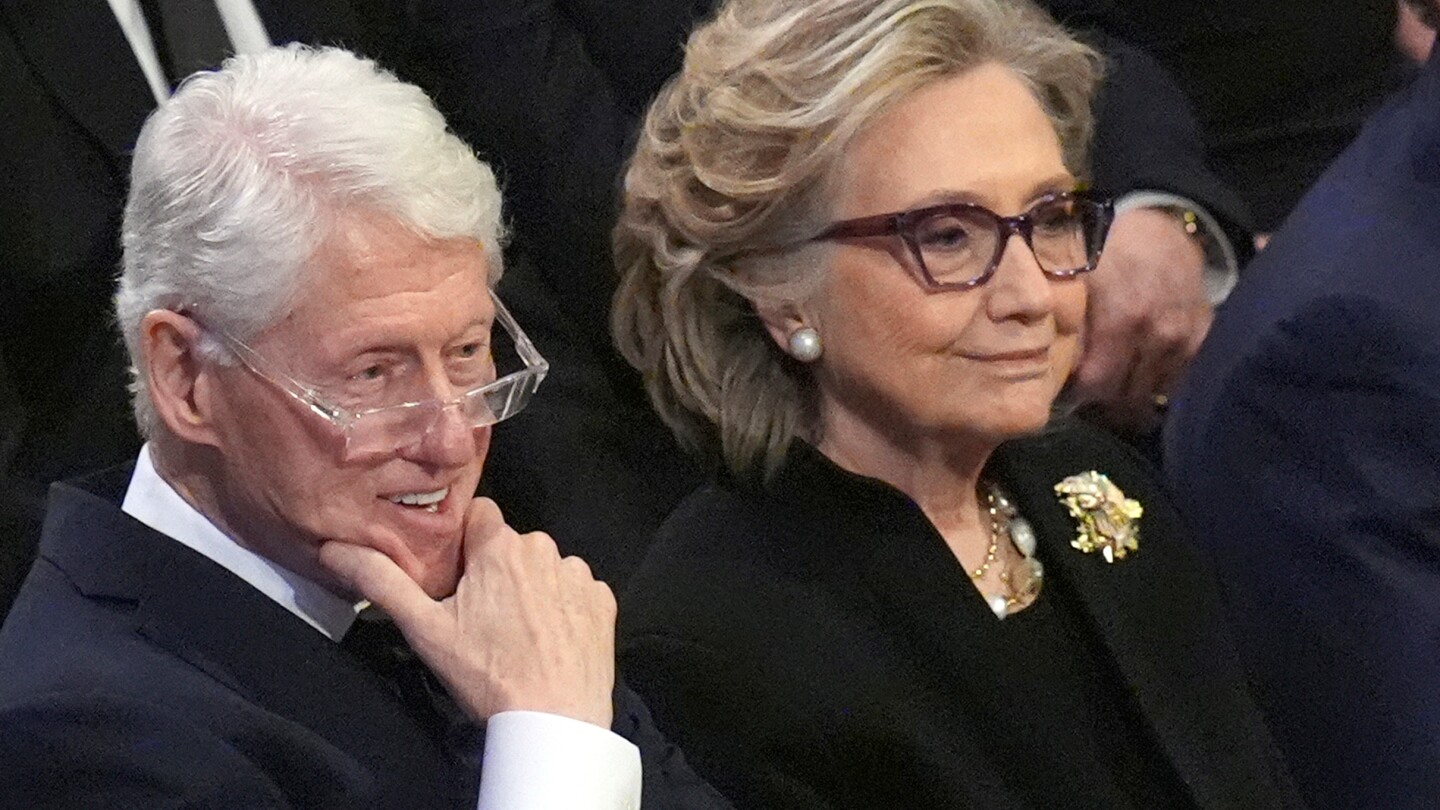
A House committee voted Wednesday to advance resolutions holding former President Bill Clinton and former Secretary of State Hillary Clinton in contempt of Congress over their refusal to testify in the Jeffrey Epstein investigation, potentially setting up unprecedented congressional action against a former president.
The Republican-controlled House Oversight Committee approved the contempt charges in bipartisan votes, with several progressive Democrats joining Republicans in supporting the measures. The full House could vote on the contempt resolutions as early as next month.
“No witness, not a former president or a private citizen, may willfully defy a congressional subpoena without consequence. But that is what the Clintons did and that is why we are here,” said Committee Chairman James Comer during Wednesday’s session.
The vote marks a significant escalation in Congress’s investigation into how Epstein, the late financier who died by suicide in 2019, was able to sexually abuse dozens of teenage girls for years while maintaining connections to powerful figures across the political spectrum.
If approved by the full House, contempt of Congress charges could lead to substantial fines or even incarceration, though such severe penalties remain unlikely. Behind the scenes, the Clintons appear to be seeking a compromise, having offered to allow committee leadership to interview Bill Clinton in New York—an offer Comer rejected Tuesday, insisting on an official transcript.
The Clintons have maintained they had no contact with Epstein for decades. Their spokesman, Angel Ureña, stated on social media that “both Clintons have been out of office for over a decade. Neither had anything to do with him for more than 20 years.” Their attorney, David Kendall, has been negotiating with the committee for months, even suggesting testimony dates on Christmas and Christmas Eve, according to committee records.
The former first couple contends the subpoenas lack validity because they serve no legitimate legislative purpose. They’ve offered written declarations about their interactions with Epstein as an alternative to in-person testimony.
Democrats on the committee have largely focused on advancing the broader Epstein investigation rather than defending the Clintons. “No president or former president is above the law,” stated Representative Robert Garcia, the top Democrat on the committee. During the hearing, Democrats attempted to exempt Hillary Clinton from contempt charges, arguing she had minimal personal interaction with Epstein, and proposed downgrading the resolution to a civil rather than criminal offense.
Records show Epstein donated to Bill Clinton’s 1992 presidential campaign and to Hillary Clinton’s joint fundraising committee before her 2000 Senate campaign in New York.
Democrats criticized Comer for focusing on the Clintons while the Justice Department has missed a congressionally-mandated deadline to publicly release its case files on Epstein. They also noted that Comer has allowed former attorneys general to provide written statements about their limited knowledge of the case rather than demanding in-person testimony.
The committee had also subpoenaed Ghislaine Maxwell, Epstein’s longtime confidant currently serving a prison sentence for sex trafficking, but Comer declined to press for the interview after her attorney indicated she would invoke Fifth Amendment rights. Comer said the committee will interview Maxwell next month.
In the final vote, nine Democrats joined all Republicans to advance contempt charges against Bill Clinton, while three progressive Democrats—Representatives Summer Lee of Pennsylvania, Melanie Stansbury of New Mexico, and Rashida Tlaib of Michigan—voted with Republicans on the contempt resolution for Hillary Clinton.
The Epstein investigation has created unusual political alignments, with Democrats embracing calls for transparency following the Trump administration’s handling of the case. Attorney General Pam Bondi’s initial reluctance to release unredacted Epstein files prompted backlash that crossed partisan lines.
Contempt of Congress proceedings are rare and historically used as a last resort for high-profile investigations. Recent examples include Trump advisers Peter Navarro and Steve Bannon, who were both convicted and imprisoned for defying subpoenas from the January 6 committee. No former president has ever been successfully forced to appear before Congress, though some have testified voluntarily.
“They’re going to have two weeks until this bill is on the floor,” Comer said Wednesday, setting a tight timeline for the Clintons to comply before the full House votes on the contempt charges.
Fact Checker
Verify the accuracy of this article using The Disinformation Commission analysis and real-time sources.

9 Comments
The bipartisan support for these contempt charges suggests the Epstein scandal transcends partisan divides. Uncovering the full truth, no matter where it leads, should be the top priority here.
The Clintons’ involvement with Epstein is undoubtedly concerning, but I hope the contempt process will be handled with impartiality and due process. The American people deserve a thorough, unbiased investigation.
This is a complex and politically charged issue. While the Clintons’ refusal to cooperate is concerning, the contempt process must be handled carefully to avoid accusations of partisan witch hunts.
This is a sensitive and complex issue, and I’m glad to see bipartisan cooperation in the investigation. It’s crucial that the truth is uncovered, no matter where it leads.
The Epstein scandal has far-reaching political implications, and I’m interested to see how this contempt process plays out. Thorough, impartial investigations are essential to maintain public trust.
I’m glad to see Congress taking strong action to compel testimony in this case. The American people deserve answers about the Clintons’ potential involvement with Epstein and his sex trafficking network.
Holding former presidents in contempt of Congress is extremely rare and carries serious consequences. While the Clintons’ cooperation is important, the process must be fair and impartial to maintain public trust.
While the Clintons’ refusal to cooperate is troubling, I hope the contempt process will be conducted with fairness and transparency. The public deserves to know the full extent of their connections to Epstein.
This is a significant escalation in the Epstein investigation. The Clintons’ refusal to testify raises many questions about their potential connections to Epstein’s alleged crimes. I’m curious to see what further evidence emerges from this probe.