


Listen to the article
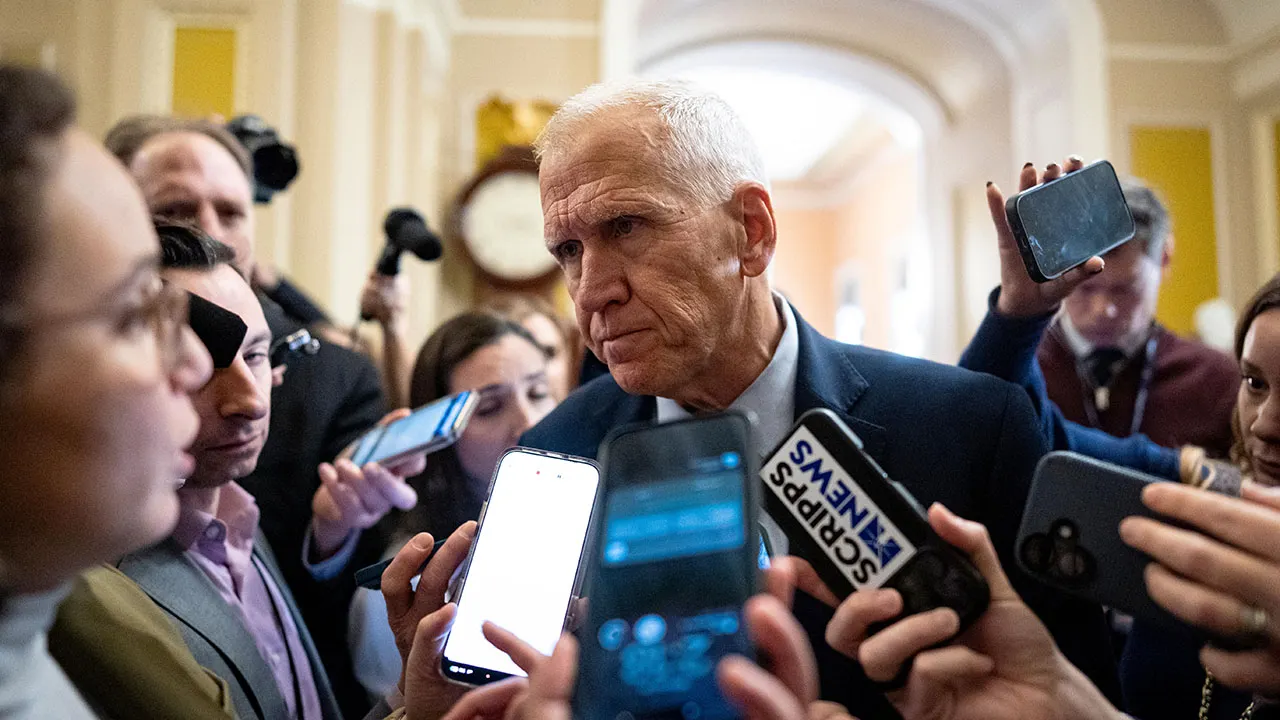
Senate Republicans are facing internal opposition over the Trump-backed Safeguarding American Voter Eligibility (SAVE) America Act, as North Carolina Republican Senator Thom Tillis has vowed to oppose the legislation ahead of an anticipated floor fight next week.
“I’m a no,” Tillis stated firmly. “I’m going to do everything I can to prevent it from even moving forward.”
Tillis’ opposition represents a significant hurdle for Republican leadership, who had planned to force Senate Democrats into taking politically difficult votes on the voter ID legislation. His stance, along with opposition from Republican Senator Lisa Murkowski of Alaska, threatens to undermine the GOP’s strategy before the bill even reaches the Senate floor.
Rather than supporting the current version, Tillis proposed an alternative approach to voter ID legislation. He suggested Republicans consider a bill that would offer federal funding to states that implement voter ID requirements, while redirecting those funds toward “election integrity” oversight in states that don’t adopt such measures.
“Who could be against that?” Tillis asked, adding, “Make sure you do it on your nickels, because we’re going to spend the money to oversee the elections to make sure you did it legally,” referring to practices like ballot harvesting in states like California.
The internal GOP division comes after President Donald Trump demanded that Republicans force the bill through Democratic opposition using a talking filibuster. Senate Majority Leader John Thune opted for a different strategy, planning a process that will allow Republicans to propose numerous amendments during a marathon debate session, though this approach won’t lower the threshold needed to pass the bill to a simple majority.
Republican leadership acknowledges the bill is unlikely to pass but views the floor fight as an opportunity to highlight Democratic opposition to voter ID requirements – a politically popular measure among conservative voters ahead of the upcoming election cycle.
Tillis, who co-sponsored the bill’s predecessor (also called the SAVE Act), expressed concerns about changes Trump proposed to the legislation. These additions included provisions to ban mail-in ballots with limited exceptions, prohibit transgender women from participating in women’s sports, and stop gender-affirming surgeries for minors.
“Taking the language from the White House without understanding the state-by-state implications, politically and procedurally, just doesn’t sound like we’re letting the people at the tip of the spear — that’s these people running for re-election — define what we should be voting on next week,” Tillis explained, suggesting the bill had strayed from its original intent.
The defection of Tillis and Murkowski, combined with Democratic Senator John Fetterman of Pennsylvania indicating he wouldn’t support the legislation in its “current state” due to Trump’s criticism of mail-in voting, leaves Republicans with almost no margin for error in attempting to advance the bill.
The controversy reflects broader tensions within the Republican Party over election policy. While voter ID requirements generally receive strong support from conservative voters and many Republicans consider them essential for election security, there is disagreement over how aggressive federal legislation should be in dictating state election procedures.
Election laws have become increasingly partisan in recent years, with Republicans generally favoring stricter identification requirements and limitations on mail-in voting, while Democrats have advocated for expanded access to the ballot. This divide intensified following the 2020 election, when Trump made unfounded claims about widespread voter fraud.
As the Senate prepares for what promises to be a contentious debate, the opposition from within Republican ranks demonstrates the challenges of achieving party unity even on issues considered central to the conservative agenda. The upcoming floor battle may ultimately serve more as political theater than as a serious legislative effort, with both parties positioning themselves for the electoral implications rather than expecting the bill to become law.
Fact Checker
Verify the accuracy of this article using The Disinformation Commission analysis and real-time sources.

10 Comments
Voter ID laws are a sensitive topic, and it’s encouraging to see some Republicans, like Senator Tillis, open to more nuanced approaches. Funding for election integrity oversight could be a pragmatic compromise.
This is a complex issue with valid concerns on both sides. I’m curious to see if Senator Tillis’ proposal can gain traction and potentially break the partisan deadlock around voter ID legislation.
The partisan divide over voter ID laws has been difficult to bridge, so it’s promising to see some Republicans, like Senator Tillis, willing to explore alternative solutions. Funding and oversight could be a way to address both election integrity and accessibility.
This is a complex issue with valid concerns on both sides. Senator Tillis’ proposal to offer federal funding for voter ID laws while supporting election oversight in non-compliant states seems like a reasonable attempt to find middle ground.
This debate highlights the ongoing tensions within the Republican Party over voting rights and election security. Senator Tillis’ willingness to explore alternative solutions is a welcome development, though the details will be crucial.
This is an interesting development in the ongoing debate around voter ID laws. It’s good to see some Republicans, like Senator Tillis, willing to take a more nuanced approach and consider alternative proposals that could gain broader support.
The Republican Party’s strategy of pushing for strict voter ID laws has been controversial, so it’s noteworthy that some within the party are now open to more compromise solutions. Funding for election integrity oversight could be a reasonable middle ground.
While voter ID requirements are intended to enhance election security, they can also create barriers to voting for certain groups. Senator Tillis’ suggestion to offer federal funding to states that implement these laws, while supporting oversight in non-compliant states, seems like a more balanced approach.
The SAVE America Act has been a contentious issue, so it’s interesting to see dissent emerging from within the Republican ranks. Senator Tillis’ proposal for federal funding and oversight could be a way to find common ground on this divisive topic.
It’s good to see some Republican lawmakers willing to reconsider the party’s hardline stance on voter ID laws. Seeking a more nuanced solution that addresses both election integrity and accessibility is a constructive approach.