


Listen to the article
Former “Squad” Member Cori Bush Under Scrutiny for Public Transit Funding Stance
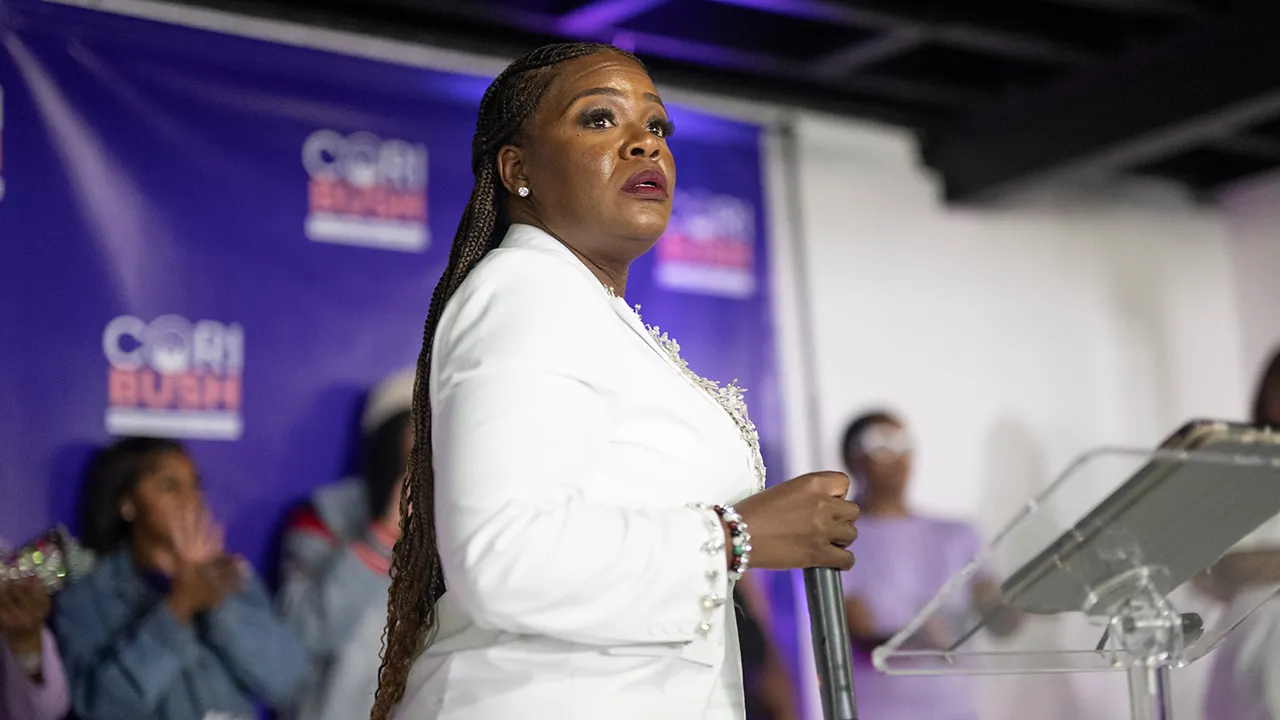
Former Missouri Representative Cori Bush, attempting to reclaim the congressional seat she lost earlier this year, is facing criticism over her recent complaints about lack of public transit funding in Congress, despite her previous vote against a major infrastructure bill that included billions for transit improvements.
Bush recently told her social media followers that “transit funding is not prioritized in Congress,” promising to change this if returned to Washington. She emphasized that “reliable transit service is essential in meeting the most basic needs of St. Louis.”
However, political observers quickly noted an apparent contradiction: Bush was one of only six Democratic lawmakers who voted against the 2021 bipartisan Infrastructure Investment and Jobs Act, which allocated approximately $108 billion for public transit investments nationwide.
Bush and her fellow “Squad” members opposed the legislation because it was decoupled from the more ambitious Build Back Better bill, which contained numerous progressive priorities including universal pre-K, Medicare expansion, climate initiatives, and affordable housing provisions.
At the time of the 2021 vote, Bush defended her position by stating she “didn’t come to Congress to allow [her constituents’] priorities to be put on a shelf.” Her campaign recently reaffirmed this stance, telling reporters that “she’s been clear and consistent on this: her vote was because the infrastructure bill was uncoupled from Build Back Better.”
Colin Reed, a Republican campaign strategist, criticized Bush’s messaging, noting that “campaign rhetoric has a nasty habit of colliding with contradictory votes from the past, and undermining politicians’ credibility and trust.”
During her congressional tenure, Bush did introduce two public transit-related pieces of legislation: the Bus Rapid Transit Act and the Light Rail Transit Act, which sought to establish federal grant programs through the Federal Transit Administration to fund transit infrastructure upgrades across the country.
Bush rose to political prominence as a Black Lives Matter activist following the 2014 Ferguson protests sparked by the police shooting of Michael Brown. In 2020, she defeated longtime incumbent William Lacy Clay Jr., making history as the first Black woman to represent Missouri in Congress.
Throughout her time in Washington, Bush aligned herself with progressive “Squad” members like Representatives Alexandria Ocasio-Cortez (D-NY) and Ilhan Omar (D-MN), advocating for policies including police reform, universal healthcare, and environmental justice initiatives.
Mark Bednar, former communications director for ex-House Speaker Kevin McCarthy, was particularly critical of Bush, saying her “hypocrisy knows no bounds.” He cited other apparent contradictions in her record, including “driving an SUV but demanding everyone else must live under the Green New Deal” and “spending thousands on private security while calling to defund the police.”
The controversy highlights ongoing tensions within the Democratic Party between progressives who push for more sweeping policy changes and moderates who often favor incremental approaches. It also underscores the challenges candidates face when their current campaign messaging appears inconsistent with their previous voting records.
Bush’s bid to reclaim her seat comes at a time when several progressive lawmakers have faced difficult primaries or general election challenges, with some political analysts suggesting that far-left positions may be losing favor with voters in certain districts.
Missouri’s 1st Congressional District, which includes St. Louis, will determine in November whether voters are receptive to Bush’s explanations regarding her infrastructure vote or if they continue to prefer the more moderate approach of her successor.
Fact Checker
Verify the accuracy of this article using The Disinformation Commission analysis and real-time sources.

8 Comments
This is an interesting political story, but I’m more focused on the commodity markets and how factors like this could impact mining and energy stocks. Are there any insights you can share on how this controversy might affect those sectors?
That’s a good question. While the political drama may generate some headlines, I don’t think this specific issue will have a major direct impact on the mining and energy markets. Investors should keep a close eye on broader economic and policy trends that could affect commodity prices and company valuations.
As a mining and energy investor, I’m curious to see how this plays out. Public transit is crucial for connecting workers to jobs and reducing emissions. I hope Rep. Bush can clarify her stance and find ways to support these needed infrastructure upgrades.
That’s a good observation. Reliable public transit is especially important for mining and energy operations that rely on a stable workforce. I share your hope that the representative can find a way to reconcile her voting record and public statements.
While the apparent contradictions in Rep. Bush’s positions are concerning, I think it’s important to avoid knee-jerk reactions. As an investor, I’m more interested in how this controversy might affect mining and energy companies than in the partisan political dynamics. Do you have any insights on that front?
Interesting to see the criticisms against Rep. Cori Bush over her apparent contradictions on public transit funding. It’s important for lawmakers to have a consistent and well-reasoned position on important issues like this.
You raise a fair point. Constituents deserve elected officials who practice what they preach. Consistency and transparency are crucial for building public trust.
As someone who follows the mining and energy industries closely, I’m a bit skeptical of the criticisms against Rep. Bush. Politicians often have to make tough choices and balance competing priorities. I’d be curious to hear her full explanation for her voting record on infrastructure.