


Listen to the article
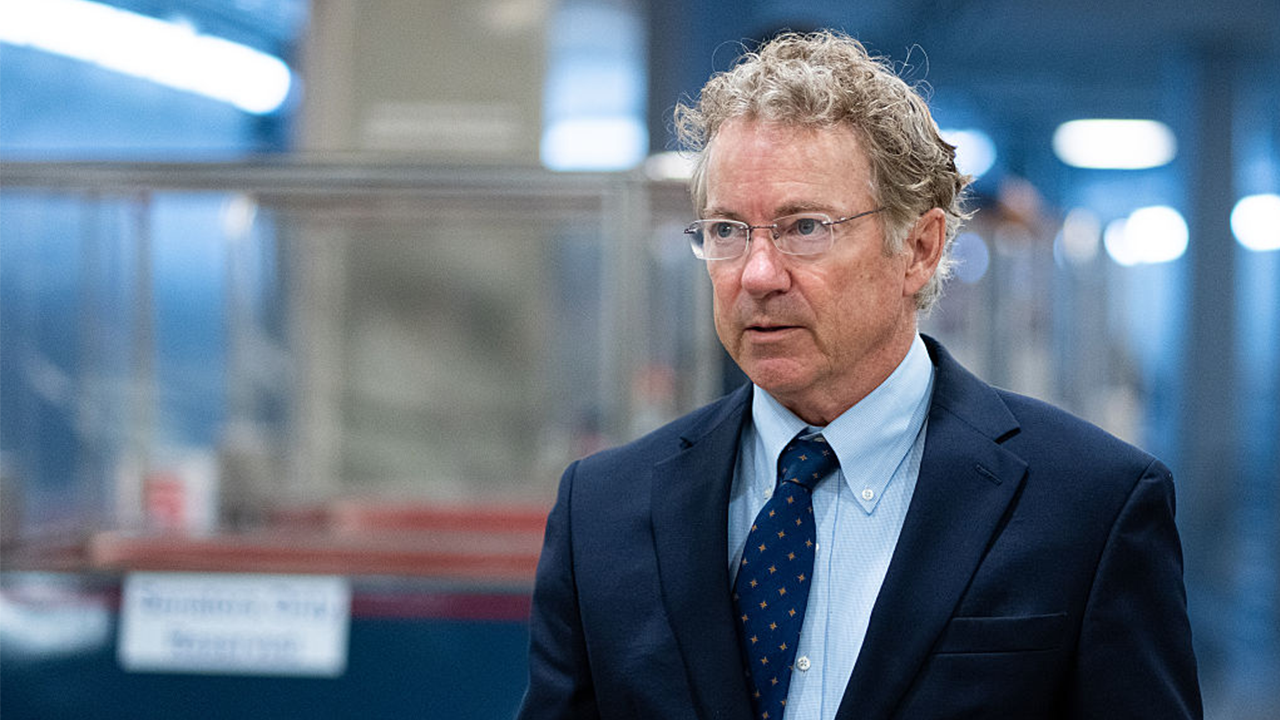
Senator Rand Paul on Sunday declared the United States is engaged in an “ongoing war” with Venezuela, pointing to recent U.S. actions involving the South American nation’s oil assets as evidence of continued conflict.
“That is an act of war, it’s an ongoing war, to continue to take their oil, ongoing war, to distribute it,” Paul said during an appearance on NBC’s “Meet the Press.” The Kentucky Republican added that the U.S. maintains “hundreds of ships with a 100% blockade of the coast” of Venezuela.
Paul’s comments come in the wake of controversial U.S. operations targeting Venezuela, including efforts to arrest President Nicolás Maduro and the Trump administration’s seizure of Venezuelan oil tankers. These actions represent a significant escalation in U.S. policy toward the oil-rich nation, which has been under various forms of American pressure for years.
Venezuela, one of the world’s largest oil producers with some of the biggest proven reserves globally, has seen its petroleum industry become a central focus of the Trump administration’s foreign policy. U.S. officials have indicated that Venezuelan oil sales to the United States will commence immediately, with an initial shipment of approximately 30 to 50 million barrels planned and ongoing shipments expected to continue indefinitely.
Former President Donald Trump has asserted direct control over these oil revenues, writing on Truth Social: “This Oil will be sold at its Market Price, and that money will be controlled by me, as President of the United States of America, to ensure it is used to benefit the people of Venezuela and the United States!”
The administration has also suggested that U.S. oversight of Venezuela will extend well beyond a few months. Both Trump and Secretary of State Marco Rubio have stated that Venezuela, currently under interim acting President Delcy Rodriguez, will require significant time to stabilize before being able to hold democratic elections.
Public opinion appears to be at odds with this approach. According to polling data from Quinnipiac University, more than half of American voters oppose the Trump administration’s management of Venezuela.
Paul is not alone in his concerns. He has joined a bipartisan coalition of lawmakers seeking to limit Trump’s authority to conduct further military actions against Venezuela. The group recently attempted to pass a War Powers resolution that would require congressional approval for additional interventions, but the measure failed to gain sufficient support in the Senate.
The Kentucky senator expressed frustration with the timing dilemma of such resolutions. “The only problem about a war powers vote now is that, since it hasn’t happened, there are a lot of Republicans who say, ‘Oh, that’s prospective. I’m not going to tie his hands prospectively,'” Paul explained.
He further criticized what he views as an absurd definition of conflict: “The problem is, if you wait until after an invasion, whereas the administration argues, we don’t know it’s a war until we count the casualties. That’s sort of a crazy definition of war, because our job is to initiate or declare war.”
The situation highlights growing tensions between executive and legislative branch authority over military action and foreign policy. It also underscores the complex relationship between U.S. energy interests and international relations, particularly in resource-rich regions like Latin America.
The controversy comes amid broader regional concerns about democratic stability, human rights, and economic sovereignty in Venezuela, which has experienced years of political turmoil and economic hardship under the Maduro regime.
Fact Checker
Verify the accuracy of this article using The Disinformation Commission analysis and real-time sources.

10 Comments
Venezuela’s oil resources have been a contentious issue for years. While the US may see opportunities in seizing assets, I hope diplomatic solutions can be found to address the country’s economic and political crises without resorting to ‘active war’.
Well said. Unilateral US actions could inflame regional tensions – a nuanced, multilateral approach seems prudent here.
The prospect of the US entering into an ‘active war’ with Venezuela over oil is extremely troubling. I appreciate Senator Paul’s caution, but the US needs to be extremely careful here to avoid further destabilizing the region and inflaming tensions. Diplomacy should be the priority.
Senator Paul’s comments highlight the precarious nature of the US-Venezuela relationship. Seizing oil assets and maintaining a ‘blockade’ are acts of aggression that could lead to outright conflict. I hope the administration pursues a more measured, constructive policy.
Interesting take from Senator Paul. The Venezuela situation is certainly complex, with geopolitical and economic implications. I’m curious to hear more perspectives on the potential risks and opportunities of increased US involvement in Venezuela’s oil sector.
Agreed, the situation bears close watching. Any escalation of military action would be concerning, but the economic factors at play can’t be ignored either.
While I understand the geopolitical and economic interests at stake, the idea of the US engaging in ‘active war’ with Venezuela is very concerning. We’ve seen the devastating consequences of past military interventions – I hope cooler heads prevail here.
Agreed. The risks of military confrontation far outweigh any potential benefits. A diplomatic, multilateral approach focused on economic development would be far preferable.
The prospect of an ‘active war’ with Venezuela is alarming. I appreciate Senator Paul’s cautious tone, but the US needs to tread very carefully here to avoid further destabilizing the region. Venezuela’s oil wealth should not be grounds for military intervention.
Absolutely. Any escalation of conflict over Venezuela’s resources would be a grave mistake. Diplomacy and economic cooperation should be the priority.