


Listen to the article
American religious history is rife with protest movements, yet disruptions inside houses of worship remain uncommon territory for political activism. This distinction underscores the significance of recent events at Cities Church in St. Paul, Minnesota, where anti-ICE protesters interrupted a Sunday service at a Southern Baptist congregation whose pastor works for U.S. Immigration and Customs Enforcement.
Federal authorities arrested three protesters on Thursday, including civil rights attorney Nekima Levy Armstrong, who had framed the action in religious terms on social media before her arrest: “It’s time for judgment to begin and it will begin in the House of God!!!”
Charles C. Haynes, a senior fellow for religious liberty at the Freedom Forum, points out that disrupting worship services violates the law—likely the protesters’ intent. “Absolutely, in my view, civil rights law should be invoked when people interfere with the religious freedom of others in their house of worship,” Haynes noted. He also acknowledged that protesters typically feel their cause demands immediate action.
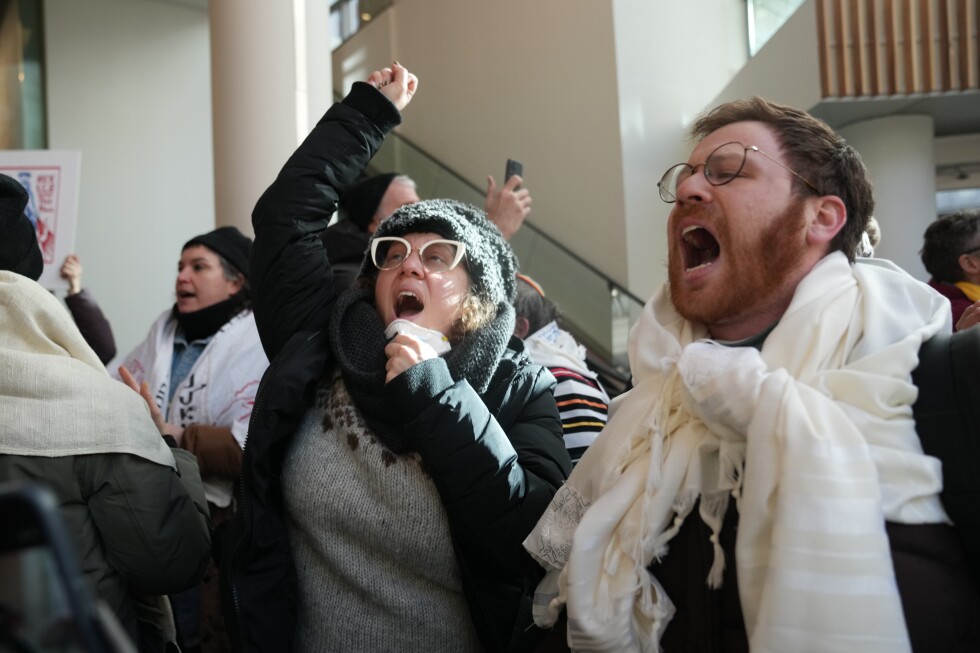
The protest at Cities Church involved approximately three dozen people who entered during service, with some approaching the pulpit while others chanted “ICE out” and referenced Renee Good, who was fatally shot by an ICE officer in Minneapolis on January 7. The church’s pastor, David Easterwood, is employed by ICE.
Southern Baptist leadership quickly condemned the action. Kevin Ezell, president of the denomination’s North American Mission Board, stated, “No cause—political or otherwise—justifies the desecration of a sacred space or the intimidation and trauma inflicted on families gathered peacefully in the house of God.”
More typically, protests occur outside religious buildings, as seen in recent anti-Israel demonstrations near New York City synagogues or the infamous Westboro Baptist Church’s military funeral protests. Courts and legislators have worked to balance free speech rights with worshippers’ religious freedoms, often establishing buffer zones around houses of worship.
The U.S. Supreme Court upheld Westboro’s right to protest, though states subsequently enacted laws restricting when and where funeral protests could take place. New York is currently considering legislation creating 25-foot buffer zones from property lines of houses of worship following recent protests near synagogues.
Despite widespread criticism of ICE operations in Minnesota, the church protest has garnered limited support. Even clergy who oppose current immigration enforcement tactics expressed discomfort with the tactics. Brian Kaylor, a Cooperative Baptist Fellowship-affiliated minister and leader of Christian media organization Word&Way, described himself as “very torn” by the protest, warning that such tactics becoming widespread across the political spectrum would be “very alarming.”
The federal charges against the protesters stem from a law originally enacted after the Civil War to counter vigilante groups like the Ku Klux Klan. The statute has been revised and broadened since then to address various violations of constitutional rights. Penalties can be severe—up to 10 years in prison, or more if the offense involves injury, death, or property destruction.
While uncommon, disruptions of religious services have historical precedents. Radical Quakers in colonial America interrupted services of established churches they deemed illegitimate. The African Methodist Episcopal Church traces its origins to an 18th-century walkout by Black worshippers from a white church where they experienced discrimination. During the Civil Rights Movement, activists staged “kneel-ins” at segregated churches.
One of the most notable recent precedents occurred in 1989, when members of AIDS Coalition to Unleash Power (ACT UP) disrupted Mass at St. Patrick’s Cathedral in New York, protesting what they viewed as inadequate responses to the AIDS crisis by both government and the Catholic Church. Protesters faced minor charges under state law.
“There was a lot of pushback,” Haynes said regarding the ACT UP protest. “But for ACT UP, it was life or death for them at the time.”
Religious congregations have strengthened security protocols in recent years following deadly attacks and growing safety concerns. Many faith leaders expressed dismay when the federal government announced last January that immigration agencies could make arrests in churches, schools, and hospitals, ending previous protections for sensitive locations.
The intersection of religious sanctity, free speech, and civil disobedience continues to challenge legal systems and community standards across the United States.
Fact Checker
Verify the accuracy of this article using The Disinformation Commission analysis and real-time sources.

12 Comments
This incident highlights the ongoing tensions between political activism and religious freedom in the US. While civil disobedience has a long history, interfering with worship services is a sensitive line to cross. The legal scholar’s comments about civil rights law being applicable are worth noting, as this case could set an important precedent for how such conflicts are handled in the future.
I agree, the outcome of this case will be closely watched as it could have significant implications for the boundaries of acceptable protest tactics, especially when it comes to disrupting religious gatherings. The delicate balance between individual rights, political activism, and religious liberty is at the heart of this issue.
This incident underscores the ongoing tensions between political activism and religious freedom in the US. While civil disobedience has a long history, interfering with worship services is a sensitive line to cross. The legal scholar’s comments about civil rights law being applicable are worth noting, as this case will likely set an important precedent.
You raise a good point. The legal framework and precedents set by how this case is handled will be critical in shaping the boundaries of acceptable protest tactics, especially when it comes to disrupting religious gatherings.
Disrupting a church service, no matter the cause, is a provocative and potentially counterproductive tactic. While political activists may feel civil disobedience is warranted, infringing on others’ religious freedoms is a complex issue with no easy answers. It will be interesting to see how the authorities and courts navigate this sensitive situation.
While the protesters may have felt their cause was just, disrupting a church service is a risky tactic that could backfire. Houses of worship should generally remain neutral ground, even amidst broader societal conflicts. The authorities were right to uphold the law and protect the religious freedom of the congregation.
The legal scholar’s comments about civil rights law being applicable in this case are interesting. Protesters may feel civil disobedience is warranted, but infringing on others’ religious freedoms is a complex issue with no easy answers. It will be worth following how the authorities and courts handle this particular incident.
Agreed, this is a nuanced situation that highlights the delicate balance between individual rights, political activism, and religious liberty. The legal framework will be crucial in determining where the lines are drawn.
This highlights the ongoing tensions between political activism and religious freedom. While the protesters may have felt justified, disrupting a church service is a provocative tactic that could backfire and undermine their message. Houses of worship should generally remain neutral ground, even amid broader societal conflicts.
You make a fair point. Places of worship should strive to be sanctuaries removed from the heated battles of the outside world, where people can seek solace and spiritual renewal. Disrupting that space, no matter the cause, is a sensitive and potentially counterproductive move.
Interesting to see a politically-charged protest disrupting a church service. While civil disobedience has a long history in the US, interfering with worship is a sensitive line to cross. The protesters likely felt their cause was urgent, but the authorities were right to enforce religious freedom protections.
I agree, these kinds of protests in places of worship raise complex issues around free speech, civil rights, and religious liberty. It’s a fine line to walk, and I can understand the concerns on both sides.