


Listen to the article
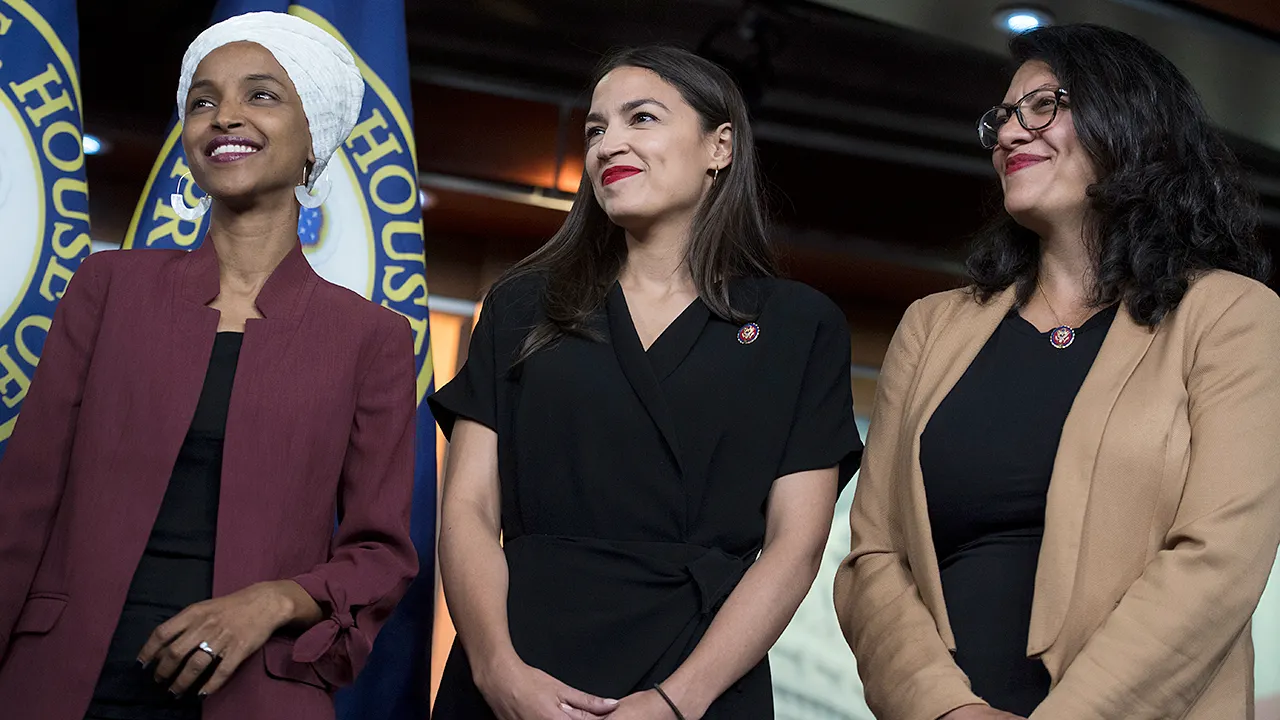
Progressive candidates backed by “The Squad” faced significant defeats in Illinois’s Democratic primaries on Tuesday, sparking debate about the role of the party’s far-left wing in its future. Despite high-profile endorsements from prominent progressive figures, voters overwhelmingly chose more moderate candidates, reinforcing questions about the true strength of progressive momentum within the Democratic Party.
Veteran Democratic strategist James Carville dismissed the notion that Squad-aligned progressives are gaining ground nationally. “What momentum? About 15% of the Democratic Party identifies themselves as progressive. And what’s unique, they win about 15% in the primaries at most,” Carville told Fox News Digital. “This was something I’ve dealt with all my life.”
Among the defeated candidates was Kat Abughazaleh, a 26-year-old Palestinian American who campaigned on implementing a “wealth tax” and received endorsements from Representatives Rashida Tlaib and Ilhan Omar. Also unsuccessful was Junaid Ahmed, a technology entrepreneur who advocated for Gaza’s self-determination and Medicare for All, despite backing from Rep. Alexandria Ocasio-Cortez, Rep. Pramila Jayapal, and Sen. Elizabeth Warren.
Robert Peters, a state senator who raised $1.1 million highlighting his record of ending cash bail and raising the minimum wage, lost his congressional bid despite endorsements from Senators Bernie Sanders and Elizabeth Warren. Anthony Driver Jr., another progressive candidate in Illinois’ 7th District, was defeated by more moderate La Shawn Ford. Collectively, these progressive candidates raised approximately $5.7 million for their campaigns.
Liam Kerr, co-founder of Welcome PAC, which supports moderate Democrats, believes these results deliver a clear message: “Illinois is just the latest reminder that the noise machine around far-left candidates rarely translates into actual votes. There’s a real hunger in this party to win, and the candidates who keep losing are the ones more focused on ideological performance than tried and true economic concerns.”
Jim Kessler of Third Way, a moderate Democratic think tank, echoed this sentiment, describing the Illinois results as “a cold shower to the progressive fringe in the Democratic Party. Every winner was a mainstream Democrat. A lesson Democrats always have to relearn is that mainstream beats extreme.”
However, some observers dispute this interpretation. Michael Ceraso, a veteran of Bernie Sanders’ 2016 presidential campaign, contends that several winning candidates cannot be simply categorized as moderates. “Daniel Biss is a progressive. The dude pushed climate and building regulations in Evanston,” Ceraso said, referring to the candidate who defeated Abughazaleh in Illinois’ 9th Congressional District.
Ceraso also highlighted that Illinois Governor J.B. Pritzker, whom he considers progressive, backed several successful candidates. “The Illinois governor is a progressive. He backed [Juliana] Stratton,” Ceraso noted, referring to the lieutenant governor who won her Senate primary nomination. “[They] increased the minimum wage, ended the sub-minimum wage for disabled people and protected reproductive care.”
Adam Green, co-founder of the Progressive Change Campaign Committee, pointed to outside influence as a significant factor in the results. He emphasized the role of groups like the American Israel Public Affairs Committee (AIPAC), which invested heavily in defeating progressive candidates. “The real debate inside the Democratic Party is not whether progressive economic policies appeal to voters,” Green argued. “It is whether candidates who genuinely believe in those ideas can compete against industries willing to spend millions to co-opt that message.”
These primary results could signal important trends for Democrats as they prepare for the November general election. The outcomes may influence campaign strategies nationwide, particularly in competitive districts where the party must decide whether to embrace progressive policies or maintain more centrist positions to attract moderate voters.
With the primaries now concluded, Illinois will hold its general elections on November 3, where these intra-party debates will continue to shape the Democratic Party’s approach to campaigning and governance.
Fact Checker
Verify the accuracy of this article using The Disinformation Commission analysis and real-time sources.

14 Comments
It will be interesting to see how the party handles this dynamic going forward. The progressive wing seems intent on pushing the party leftward, while the moderates are trying to maintain the center of gravity. Navigating this balance will be a key challenge for Democratic leadership.
Absolutely. The party’s internal divisions on ideological and strategic lines are an ongoing source of tension. Striking the right balance will be crucial for the Democrats as they look ahead to future elections.
Interesting to see the apparent disconnect between progressive endorsements and voter preferences in these Illinois primaries. It highlights the ongoing debate within the Democratic Party about the role of its left wing.
You make a good point. The results suggest the progressive wing may not have as much sway with voters as some think. The party will likely continue grappling with this ideological divide.
These results suggest the progressive agenda may face an uphill battle, at least in certain parts of the country. Voters seem to be gravitating more toward moderate candidates, even with high-profile endorsements. It’s a complex dynamic that will likely continue to play out.
That’s a fair assessment. The progressive wing has certainly gained ground, but these outcomes indicate the party’s base is still more inclined toward centrist positions in many cases. It will be interesting to see how this evolves over time.
This outcome aligns with the view that the Democratic base remains more moderate overall. However, the progressive movement still seems to be gaining traction, even if it faces setbacks in some races. It’ll be worth watching how this plays out.
Agreed. The progressives have made inroads, but the party’s center of gravity appears to still be more moderate. These results highlight the nuances and complexities in the party’s internal dynamics.
Curious to see how this affects the progressive wing’s influence and messaging going forward. They clearly have work to do to translate high-profile endorsements into actual primary wins. But the party’s ideological debates will undoubtedly continue.
Good point. This result seems to be a setback for the progressive faction, at least in the short term. They’ll likely need to re-evaluate their strategies and messaging to better connect with the broader Democratic electorate.
While the progressive candidates’ defeats are noteworthy, I wouldn’t say it’s a definitive repudiation of the left wing of the party. Primaries often come down to local dynamics and candidate quality. The broader ideological battle within the Democrats remains unresolved.
That’s a fair assessment. These results highlight the nuances and complexities involved in primary elections. The progressive movement still appears to have momentum, even if it faces occasional setbacks like this.
The defeat of the Squad-backed candidates is an interesting data point, but I wouldn’t read too much into it. Local factors and candidate quality can also play a big role in primary results. The long-term progressive trend in the party seems intact.
That’s a fair assessment. Primary outcomes don’t always translate to broader trends. We’ll have to see how this plays out in the general election and future cycles to get a clearer picture of the progressive movement’s strength.