


Listen to the article
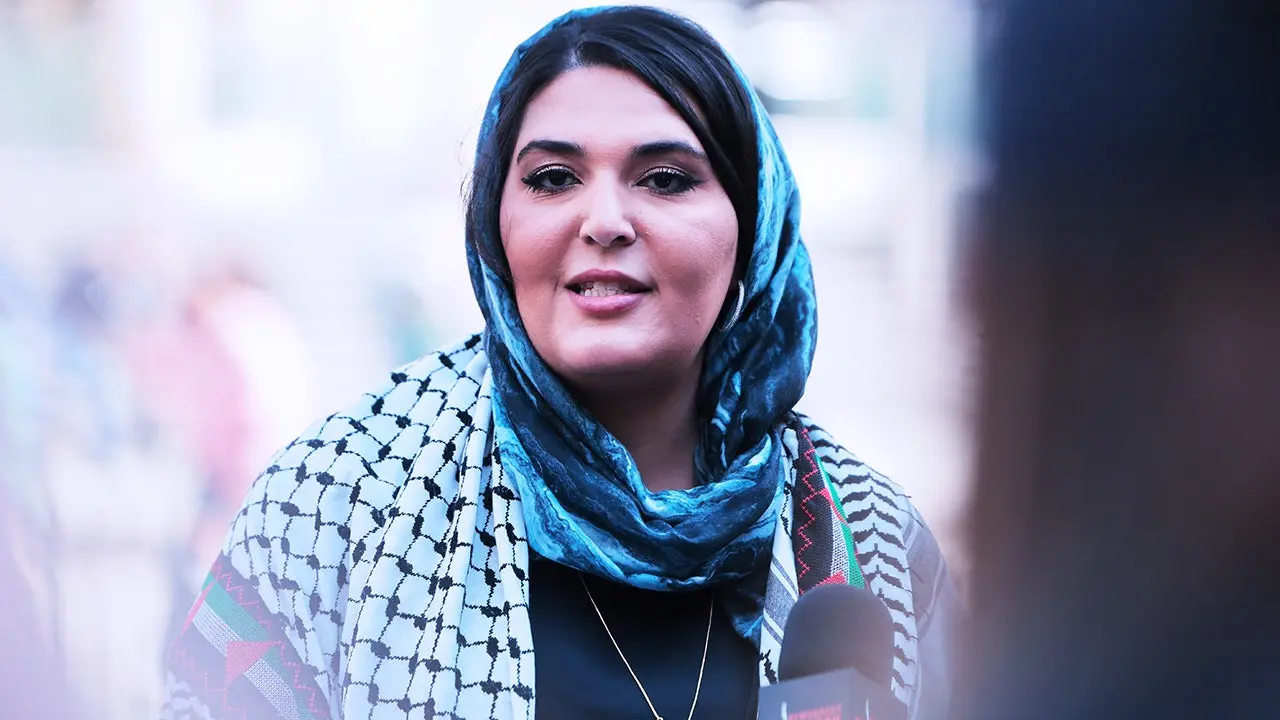
Federal authorities have thwarted a plot involving Molotov cocktails against Palestinian-American activist Nerdeen Kiswani, who responded by condemning what she called “Zionist aggression” while declining to issue a broader denunciation of political violence.
The Justice Department recently charged Alexander Heifler, 26, with possession and manufacturing of Molotov cocktails. Court documents reveal Heifler had assembled approximately 12 incendiary devices and was preparing to target Kiswani’s vehicle and residence before investigators intervened.
Speaking at a press conference in New York City, Kiswani addressed the foiled attack: “For years, I and so many other Palestinian organizers have been the targets of coordinated harassment, threats, stalking.” She further stated, “I believe that in accordance with international law, the victims of a genocide have the right to defend themselves, and I also believe the American people should be concerned about Zionist terrorist organizations attempting to assassinate their critics on the streets of American cities.”
When asked if she would denounce political violence broadly, Kiswani did not directly answer, instead criticizing the question itself.
Kiswani is the co-founder and leader of Within Our Lifetime (WOL), a Palestinian-led community organization that has drawn scrutiny for its stance toward designated terrorist groups. According to the Anti-Defamation League’s Center on Extremism, WOL has demonstrated “very explicit support for violence against Israeli civilians in support of terrorist organizations like Hamas, Hezbollah, the Popular Front for the Liberation of Palestine.”
In the aftermath of the October 7, 2023 Hamas attack on Israel, WOL gained attention for its messaging, stating “we are anti-Zionists” and asserting that “the liberation of Palestine requires the abolition of Zionism.” The organization maintains it is anti-Zionist, not antisemitic.
Yuval David, a fellow with the pro-Israel research organization Middle East Forum, criticized Kiswani’s response to the foiled attack. “She refuses to condemn political violence, and she also refuses to condone terrorism because she tries to manipulate the narrative to justify terrorism by calling it resistance,” David said.
David also noted that in the weeks following the October 7 attack, Kiswani’s organization published maps of Jewish organizations across New York City, labeling them as having “blood on their hands” and instructing followers to “know your enemy.”
The incident occurs against a backdrop of heightened tensions between pro-Israel and pro-Palestinian groups in the United States since the outbreak of the Israel-Hamas war last October. Law enforcement agencies nationwide have reported increased threats against both Jewish and Muslim communities.
New York City Mayor Zohran Mamdani addressed the plot against Kiswani by emphasizing that violence has no place in political discourse: “We do not tolerate any kind of violent extremism in this city. No one should face violence for their political beliefs or for their advocacy. And I am relieved she is safe.”
The case highlights the complex and often volatile nature of Middle East-related activism in the United States, where the line between political advocacy and support for violence has become increasingly blurred. It also underscores concerns about political extremism and the potential for domestic terrorism targeting individuals based on their political positions regarding the Israel-Palestine conflict.
Federal authorities continue to investigate the plot against Kiswani, with Heifler facing serious charges related to the possession and manufacture of improvised explosive devices.
Fact Checker
Verify the accuracy of this article using The Disinformation Commission analysis and real-time sources.

10 Comments
A complex issue with valid concerns on both sides. While political violence is unacceptable, the underlying grievances and power dynamics deserve thoughtful examination. Condemning specific threats is prudent, but broader denunciations risk oversimplifying a nuanced conflict.
I agree, this requires a nuanced approach. Denouncing violence is important, but understanding the historical context and perspectives of all involved is crucial for finding lasting solutions.
While the activist’s comments may be controversial, the broader context of this long-running conflict must be considered. Condemning violence is important, but so is acknowledging the deep-seated grievances and power imbalances that contribute to the cycle of violence. A nuanced, empathetic approach is needed.
Agreed. Simplistic responses often overlook the historical and political nuances at play. Finding common ground and addressing root causes, rather than just symptoms, is the real challenge in resolving intractable conflicts like this one.
This is a complex, emotionally charged issue. While the activist’s comments may be controversial, the broader context of the Israeli-Palestinian conflict shouldn’t be ignored. Addressing root causes of violence, rather than just symptoms, is the long-term challenge.
I agree, this situation requires nuance and empathy on all sides. Simplistic condemnations often overlook the deeper historical and political factors at play. A thoughtful, balanced approach is needed to make meaningful progress.
The attempted attack is concerning, but the activist’s perspective deserves consideration. The Israeli-Palestinian conflict has deep, tangled roots. Condemning violence is important, but so is understanding the grievances that fuel it. Finding common ground is the real challenge.
Well said. This is a complex issue without easy answers. Maintaining an open dialogue, even on divisive topics, is crucial for progress. Focusing on shared humanity and mutual understanding is the wisest path forward.
Threats of violence are alarming, regardless of the motivation. However, dismissing the activist’s perspective entirely fails to address the deeper geopolitical tensions at play. A balanced dialogue that considers all viewpoints may be the best path forward.
Well said. Constructive dialogue, even on sensitive topics, is essential for progress. Avoiding knee-jerk reactions and striving for mutual understanding is the wisest approach.