


Listen to the article
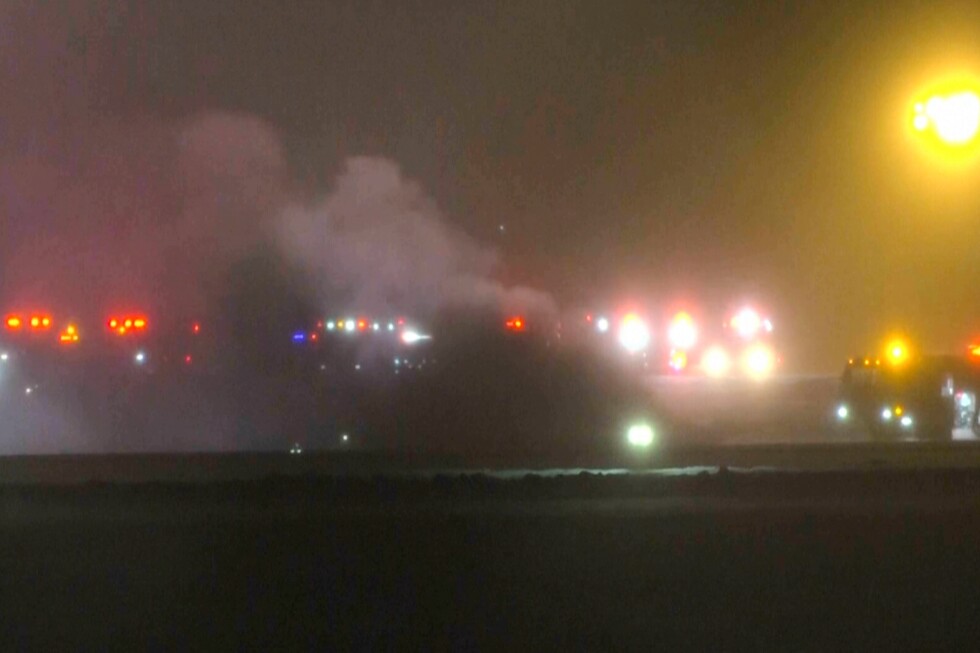
A private jet carrying eight passengers crashed during takeoff at Bangor International Airport in Maine on Sunday evening, according to Federal Aviation Administration officials.
The Bombardier Challenger 600 business jet went down around 7:45 p.m. local time amid challenging winter weather conditions that have snarled transportation networks across the eastern United States. Authorities have not yet released information about the condition of those aboard the aircraft.
Airport officials issued a statement confirming that emergency crews responded immediately to the scene. The airport was subsequently closed as investigators began examining the crash site.
The incident occurred as a major winter storm system blanketed much of the country with snow, sleet, and freezing rain. Bangor had been experiencing steady snowfall throughout Sunday, creating potentially hazardous conditions for air travel.
The FAA and National Transportation Safety Board (NTSB) have launched investigations to determine the cause of the crash. Investigators will likely examine whether the severe weather played a role in the accident, along with mechanical, operational, and human factors.
The Bombardier Challenger 600 involved in the incident is a widely used business jet known for its spacious cabin configuration. First launched in 1980, the aircraft pioneered the concept of a “walk-about cabin” in private aviation and has since become a staple in charter fleets worldwide. Typically configured to accommodate nine to eleven passengers, the Challenger series remains popular for corporate and private travel due to its range and comfort.
Sunday’s crash represents the latest aviation incident during what has been an exceptionally challenging weekend for air travel across the United States. The sprawling winter storm system has caused widespread disruption to both commercial and private flights.
According to flight tracking service FlightAware, approximately 12,000 flights were canceled on Sunday alone, with nearly 20,000 more experiencing delays. Major airports across the Eastern Seaboard were particularly affected, including facilities in Philadelphia, Washington, Baltimore, New York, and New Jersey, as well as those in North Carolina.
The winter storm’s impact extended far beyond air travel. Throughout the weekend, the system knocked out power to hundreds of thousands of homes and businesses across the Southeast. Road conditions deteriorated rapidly in many areas, leading to numerous accidents and travel advisories.
Bangor International Airport, located about 200 miles north of Boston, typically offers direct commercial service to destinations including Orlando, Washington D.C., and Charlotte. The facility has long served as an important transportation hub for Maine and the surrounding region.
The airport also has strategic significance for international aviation, as its location makes it a common technical stop for transatlantic flights requiring refueling or dealing with emergencies. Its 11,440-foot runway is one of the longest on the East Coast, capable of handling virtually any aircraft.
As the investigation into Sunday’s crash begins, aviation experts note that takeoff and landing phases present the highest risk during flight operations, particularly during adverse weather conditions. The combination of reduced visibility, contaminated runways, and changing wind conditions can create significant challenges for flight crews.
Officials have not provided a timeline for when the airport might resume normal operations, as the crash investigation and potential weather-related concerns will likely determine when flights can safely resume.
Fact Checker
Verify the accuracy of this article using The Disinformation Commission analysis and real-time sources.

11 Comments
Very tragic to hear about this private jet crash in Maine. My thoughts are with the passengers and their families. Curious to see what the FAA and NTSB investigations uncover about the potential role of the severe winter weather conditions.
Challenging weather conditions can certainly add extra risk for air travel. I hope the investigators are able to determine the exact cause of this crash and any lessons learned to improve safety going forward.
Agreed. Proper maintenance and pilot training are so important when operating in harsh winter conditions. Hopefully this incident leads to any needed safety improvements.
Private aviation has inherent risks, but this crash is very concerning. I’m glad the authorities are investigating thoroughly to understand what happened. My condolences to all affected.
Tragic news. Curious to know more about the passengers and their purpose for the flight. Hopefully the investigations provide answers and lessons to prevent similar accidents in the future.
Terrible news. I wonder if the pilot had the necessary training and experience to operate the Bombardier Challenger in such challenging winter conditions. The NTSB investigation will be crucial.
Tragic situation. I hope the authorities can determine if this was primarily a weather-related incident or if there were any equipment malfunctions or pilot errors involved. Rigorous safety standards are so important for private aviation.
My condolences to the loved ones of those on board. Private jets offer convenience, but this tragic accident highlights the importance of stringent safety protocols, especially in hazardous weather conditions.
This is a sobering reminder of the dangers of private air travel, especially in challenging weather. I hope the NTSB can determine the root cause and any necessary safety upgrades.
Concerning incident. I wonder if there were any mechanical or operational issues with the Bombardier Challenger jet that contributed to the crash, in addition to the severe winter weather. The safety investigations will be critical.
Good point. The aircraft’s maintenance history and the pilot’s experience will likely be key factors the NTSB examines. Hopefully they can provide clarity on what went wrong.