


Listen to the article
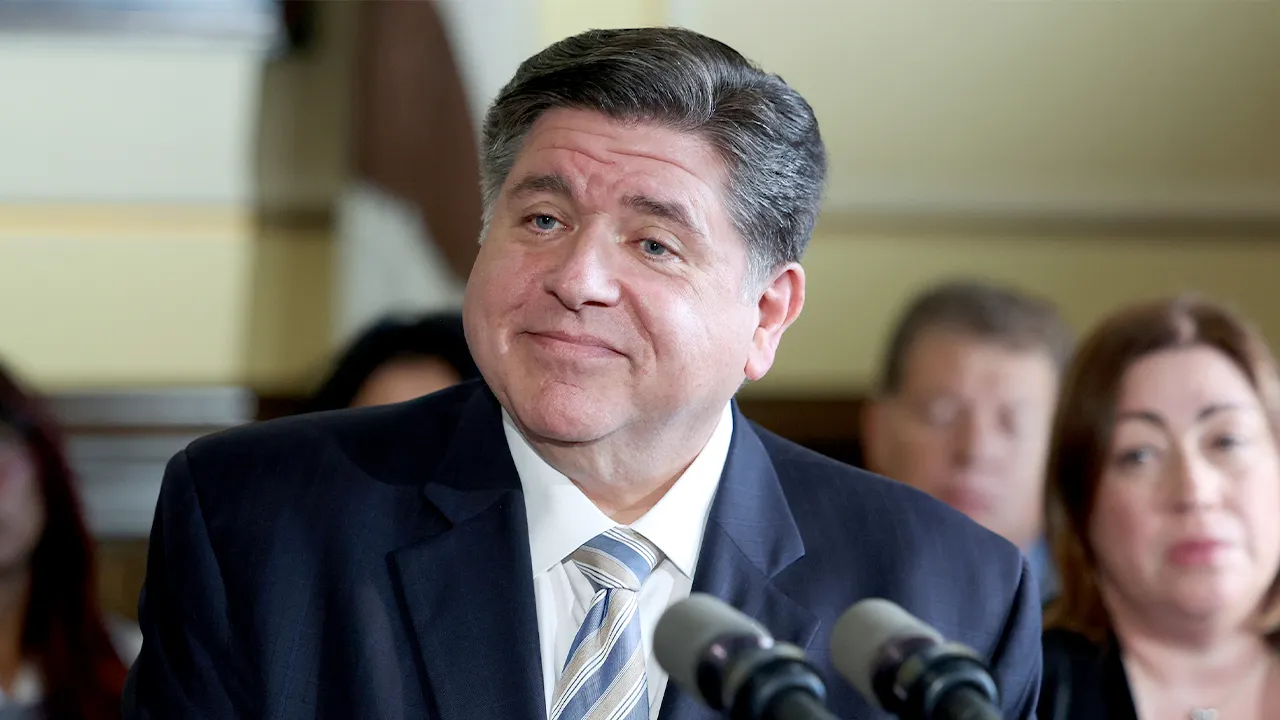
Governor JB Pritzker faces high-stakes Illinois primaries that could influence his political future beyond his guaranteed third term nomination. The billionaire governor, widely seen as a potential 2028 presidential contender, has significant political capital on the line in Tuesday’s highly competitive races across the state.
The marquee contest is the Democratic primary to replace retiring Sen. Dick Durbin, who is stepping down after nearly three decades in the Senate. Pritzker has thrown his considerable weight behind Lt. Gov. Juliana Stratton, who faces stiff competition from Representatives Robin Kelly and Raja Krishnamoorthi in a crowded and expensive primary battle.
The Senate race carries historic implications. If either Stratton or Kelly were to win both the primary and general election, they would become just the second Black woman elected to the Senate from Illinois. Krishnamoorthi, born in India before immigrating to the United States as a child, would make history as only the second Indian American senator if successful.
Campaign finance has played a central role in the contest. Krishnamoorthi leads in fundraising and has invested heavily in advertising. His campaign has received additional firepower from cryptocurrency interests, with a related super PAC investing nearly $10 million to support his candidacy.
Not to be outdone, Governor Pritzker has leveraged his substantial personal wealth – derived from the Pritzker family’s Hyatt hotel chain and various venture capital enterprises – to fund a super PAC backing Stratton. This financial intervention has drawn criticism from prominent Democratic figures, including Congressional Black Caucus Chair Rep. Yvette Clarke of New York, who accused the governor of attempting to “tip the scales” in the primary.
“A sitting governor shouldn’t be heavy-handing the race. Quite frankly, his behavior in this race won’t soon be forgotten by any of us,” Clarke stated.
The Democratic primary winner will be heavily favored in November’s general election, as Illinois has not elected a Republican to statewide office in twelve years. Former state Republican party chair Don Tracy and attorney Jeannie Evans are among four candidates competing for the GOP nomination.
Political analysts view the Senate primary as a critical test of Pritzker’s influence in his home state as he positions himself for a potential 2028 presidential bid. The governor’s national profile has grown substantially over the past year as he has emerged as a leading Democratic voice opposing President Donald Trump’s second-term agenda.
Meanwhile, four Republicans are vying for their party’s gubernatorial nomination to challenge Pritzker in November. The field includes former state Senator Darren Bailey, who previously lost to Pritzker by more than 12 percentage points in the 2022 governor’s race.
Tuesday’s primaries also feature significant Democratic contests in four House districts. Competitive races are underway to fill the seats being vacated by Representatives Kelly and Krishnamoorthi as they pursue the Senate nomination, as well as those of retiring Democratic Representatives Danny Davis and Jan Schakowsky, both longtime fixtures in Illinois politics.
Early voting has already been robust, with over half a million ballots cast before election day. Polls in Illinois will close at 7 p.m. Central time on Tuesday, after which results will begin to determine whether Pritzker’s political influence matches his ambitions.
The outcome of these primaries could significantly impact not only Illinois politics but also the national Democratic landscape as the party looks toward rebuilding after recent electoral setbacks and preparing for the 2028 presidential cycle.
Fact Checker
Verify the accuracy of this article using The Disinformation Commission analysis and real-time sources.

13 Comments
Pritzker’s involvement raises questions about the role of money and influence in elections. While his support could provide a boost, voters should carefully evaluate all the candidates on their merits.
Absolutely. The ability of deep-pocketed politicians to sway elections is concerning. Voters in Illinois will have an important decision to make in this primary.
The diversity of the candidates is certainly noteworthy, though I’m curious to see how their policy platforms and qualifications factor into voters’ decisions beyond just the historic nature of the potential outcomes.
Agreed, the substance of their campaigns will be crucial. It will be interesting to see how Pritzker’s backing of Stratton plays out against the other well-funded contenders.
It will be interesting to see how Pritzker’s political capital and influence play out in this primary. While his support could provide a boost, voters should ultimately make their decisions based on the candidates’ merits and vision for the state.
Interesting to see Pritzker’s political influence at play in the Illinois Senate race. It will be historic no matter the outcome, with the potential for either the second Black woman senator or first Indian American senator from Illinois.
Definitely a high-stakes contest, with significant implications for the state and potentially Pritzker’s own political future. Campaign finance seems to be a key factor in this crowded primary.
The historic potential of this race is certainly notable, but I agree that the candidates’ policy platforms and qualifications should be the primary focus. Voters deserve a robust debate on the issues facing Illinois and the country.
As an investor in mining and energy equities, I’ll be closely following this race to understand the candidates’ positions on issues that could impact those sectors. Their views on regulation, permitting, and support for domestic production will be particularly relevant.
As an energy and mining-focused reader, I’m curious to hear the candidates’ views on issues like fossil fuel development, renewable energy, and critical mineral supply chains. Those topics could have major implications for the state and beyond.
Good point. The Senate race could shape Illinois’ energy and natural resource policies, which are increasingly important given global market dynamics. Voters should press the candidates on these topics.
This race showcases the diversity of talent in Illinois politics, which is encouraging to see. Regardless of the outcome, the winner will have a unique opportunity to shape the state’s future on a national stage.
Pritzker’s involvement is sure to add an extra layer of intrigue to this Senate primary. While his backing could provide a significant advantage, the candidates’ ability to connect with voters and articulate their policy platforms will ultimately determine the outcome.