


Listen to the article
Congress Navigates Fiscal Roadblock as Pentagon Requests $200 Billion for Iran War Funding
A contingent of reporters and photographers followed House Budget Committee Chairman Jodey Arrington as he departed the Capitol last Thursday, discussing what may become one of the most contentious funding battles of the year.
The Trump administration has requested an additional $200 billion from Congress to cover escalating costs of the war in Iran, a sum that faces significant hurdles in the closely divided legislature. With Senate approval requiring 60 votes to overcome potential filibusters, Republican leaders are considering alternative legislative strategies.
“I think reconciliation is probably going to be the only vehicle that we put anything in because the Democrats aren’t going to support it,” said Arrington, referring to the budget procedure that allows certain fiscal legislation to pass with a simple majority. “I don’t think they’ll support the supplemental for the operating needs for our military while they’re in conflict.”
House Speaker Mike Johnson and Arrington have already been promoting a “reconciliation” bill to advance GOP domestic policy priorities ahead of the midterms. This procedural mechanism, which shields legislation from Senate filibuster, could potentially serve as a vehicle for the war funding request alongside other Republican priorities.
Arrington believes that his Senate counterpart, Budget Committee Chairman Lindsey Graham, understands the strategic necessity of this approach. “The only train leaving the station for the bigger vision for our military will be a reconciliation bill,” Arrington asserted.
The funding request faces resistance from both sides of the political spectrum. Republicans, traditionally supportive of military spending, are expressing concerns about fiscal responsibility in an era of massive deficits.
“We have to continue to look at offsetting,” said Rep. Tony Wied (R-Wisconsin), while Rep. Tim Burchett (R-Tennessee) was more direct: “I think it should be offset.”
House Veterans’ Affairs Committee Chairman Mike Bost acknowledged the steep price tag, though he cautioned against cutting certain programs to fund the war effort. “A lot of the VA stuff, that’s like the third rail in politics. You don’t cut that,” Bost explained.
Arrington suggested Republicans should focus on eliminating government waste, fraud and abuse to mitigate the war’s cost – a familiar but often elusive target for spending reductions.
Opposition from progressive Democrats presents another significant obstacle. Rep. Alexandria Ocasio-Cortez (D-New York) firmly rejected the supplemental request, questioning the legality of the military operation itself.
“It is skyrocketing prices of everything across the board, and Congress didn’t even approve,” said Ocasio-Cortez. “To have the audacity to come to Congress to fund a war that we have not even voted for – not only is it illegal, it is insulting.”
When asked whether rejecting funding could endanger American troops already deployed, Ocasio-Cortez responded sharply: “They should have thought about that before they entered a conflict without Congress. They told everybody that it was just a quick in and out strike and now they have found themselves in a disaster. And we cannot enable this kind of reckless and illegal behavior.”
Her comments highlight Congress’s constitutional “power of the purse” – its authority to approve or deny government spending. By withholding funds, lawmakers could effectively constrain military operations, regardless of executive branch decisions.
The Pentagon’s current annual budget stands at approximately $1 trillion for Fiscal Year 2026. President Trump’s request for Fiscal Year 2027 – submitted before the additional $200 billion war funding request – already sought a 50 percent increase to $1.5 trillion.
Adding complexity to the situation, President Trump has sent mixed signals about the war’s status and the necessity of additional funding. When questioned about whether the $200 billion was still needed, Trump responded ambiguously: “It’s always nice to have. It’s a very inflamed world. And the Democrats inflame it.”
Defense analysts believe the Pentagon urgently requires the funds to replenish munitions depleted during operations in Iran, regardless of whether combat operations are winding down.
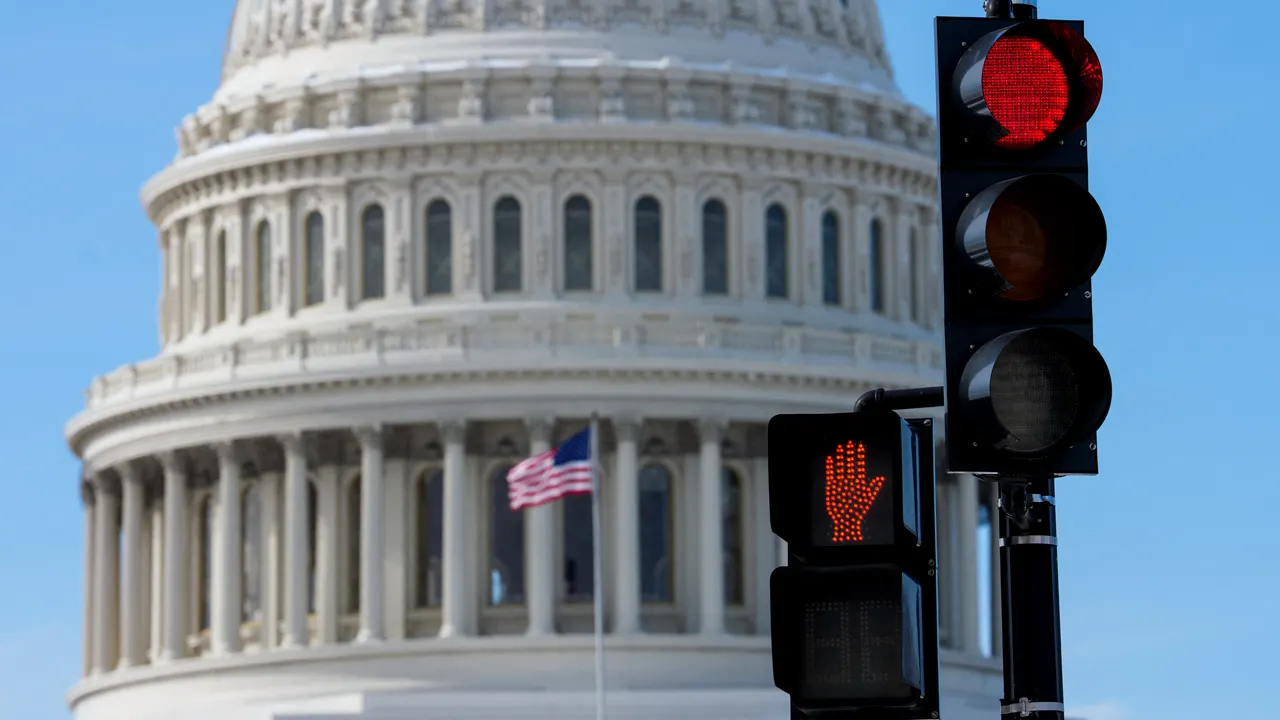
As Congress navigates this high-stakes funding decision, the path forward remains unclear. Unlike traffic signals that change predictably, the political signals are flashing a definitive “don’t walk” for the $200 billion supplemental request, with no certainty when – or if – the light might change.
Fact Checker
Verify the accuracy of this article using The Disinformation Commission analysis and real-time sources.

6 Comments
While I understand the need for military funding, I’m concerned about the escalating costs of the war in Iran. $200 billion is a massive amount that could be better spent on domestic priorities. I hope Congress can find a fiscally responsible solution.
You raise a fair point. Military spending needs to be carefully weighed against other critical needs. Taxpayer dollars should be allocated as efficiently and effectively as possible.
The political gridlock in Congress is certainly concerning. It’s critical that lawmakers find a way to compromise and make progress on important issues like military funding. Hopefully they can put partisan politics aside and do what’s best for the country.
I agree, the partisan divide is deeply troubling. Both sides need to be willing to negotiate and find common ground, even if it means making difficult concessions.
It’s encouraging to see lawmakers exploring options like the reconciliation process to advance their policy agendas. This could help break the gridlock, though I’m curious to learn more about the specific proposals and how they would impact the mining and energy sectors.
Good question. The details of any reconciliation bill will be crucial. I’d like to better understand how it could affect mining, commodities, and energy companies, both positively and negatively.