


Listen to the article
In a growing standoff between federal and local authorities, Philadelphia District Attorney Larry Krasner’s threat to prosecute Immigration and Customs Enforcement (ICE) agents has sparked serious concerns over jurisdictional authority and constitutional powers.
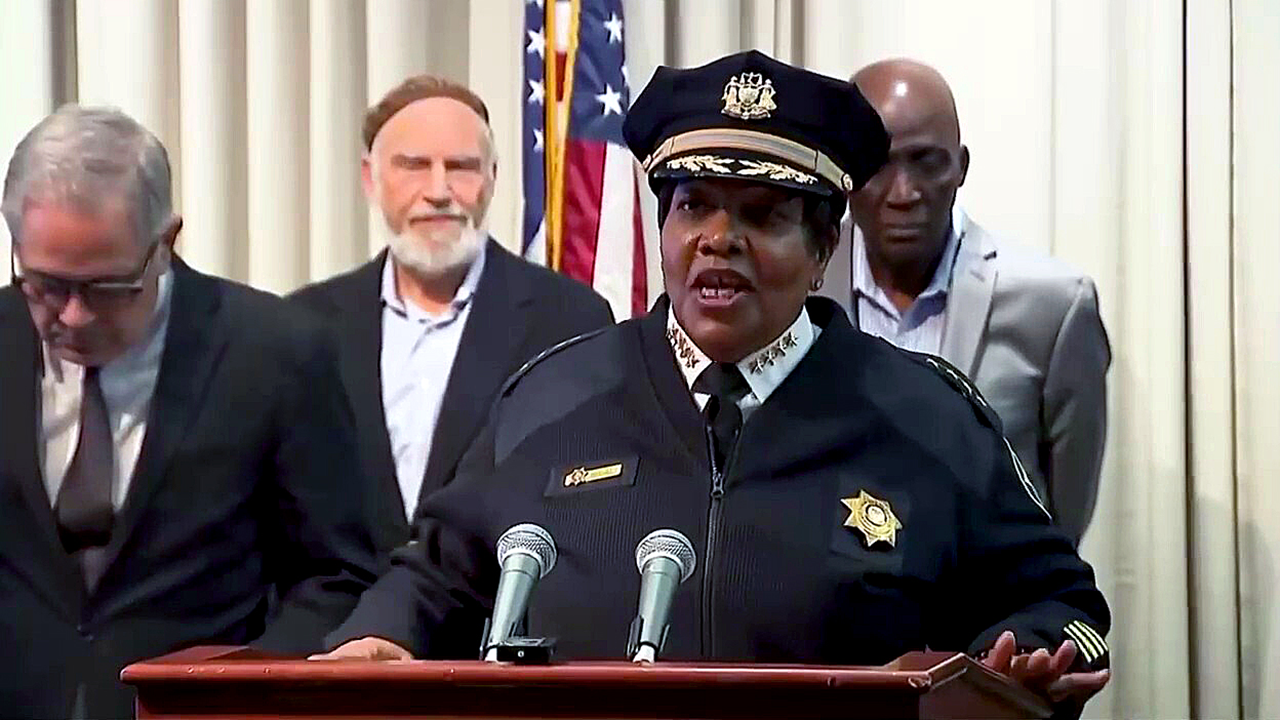
Krasner recently warned he would prosecute ICE agents who “come to Philly to commit crimes,” apparently referencing a controversial incident in Minnesota where an agent shot a woman who allegedly hit him with her car during an operation. Philadelphia County Sheriff Rochelle Bilal intensified the rhetoric, calling ICE officers “fake, wannabe law enforcement” and warning them they “don’t want this smoke ’cause we will bring it to you.”
The Philadelphia DA has argued that President Donald Trump could not pardon arrested agents because cases would be brought at the state level, not federal. This position has raised significant questions about the constitutional underpinnings of such potential actions.
Legal experts and federal officials have quickly pushed back against Philadelphia’s stance. César Cuauhtémoc García Hernández, chair of Civil Rights & Civil Liberties at Ohio State’s college of law, explained that while “immigration agents are permitted to enforce federal immigration laws within any community in the United States,” local police are equally authorized to investigate suspected violent crimes. However, he noted that the typically cooperative relationship between federal and local authorities has “clearly broken down in cities like Minneapolis” and appears “frayed” in Philadelphia.
The Department of Homeland Security has taken a firm position that Philadelphia would have no legal standing if it attempted to interfere with federal immigration operations. Assistant Secretary Tricia McLaughlin stated, “Enforcing federal immigration laws is a clear federal responsibility under Article I, Article II and the Supremacy clause.”
Pennsylvania State Senator Doug Mastriano predicted federal authorities would prevail in any litigation due to the Supremacy Clause, which establishes that federal law takes precedence over state law when conflicts arise. Mastriano emphasized that the “Constitution is not optional” and Philadelphia officials cannot “bully” Washington.
The Justice Department has also weighed in, stating it maintains a “zero-tolerance policy for violence against law enforcement and will hold offenders accountable to the fullest extent of the law,” suggesting federal protection for ICE agents performing their duties.
A senior attorney at the Washington-based Oversight Project called Philadelphia’s position a “bluff,” describing any potential arrest of federal agents as “blatantly unlawful.” The attorney characterized the constitutional principles at stake as “hornbook constitutional law that every law student in America learns early in their schooling.”
This confrontation comes as DHS highlights recent arrests in Philadelphia, including Egyptian national Yehia Badawi, who was convicted of aggravated assault and robbery. The agency also cited the capture of several other undocumented immigrants with convictions ranging from drug trafficking to violent crimes, including rape, suggesting what might have continued without federal intervention.
The standoff underscores growing tensions between sanctuary jurisdictions and federal immigration enforcement under the Biden administration. While local jurisdictions like Philadelphia have increasingly adopted policies limiting cooperation with ICE, federal authorities maintain they have clear constitutional authority to enforce immigration laws nationwide.
Legal scholars note that the ultimate resolution may require court intervention to determine where precisely the boundaries of federal and local authority lie in immigration enforcement operations. As Hernández explained, “The hard question is where the line is drawn. That is what courts are set up to do.”
Neither Krasner’s office nor Bilal provided additional comments when contacted, with the sheriff’s office referring questions to the DA after stating that state legislators don’t determine who gets arrested in Philadelphia.
Fact Checker
Verify the accuracy of this article using The Disinformation Commission analysis and real-time sources.

13 Comments
This clash between federal and local authorities over immigration enforcement is a complex issue with significant legal and political implications. It will be important to see how the courts interpret the constitutional powers at stake.
The debate around federal vs. local authority on immigration enforcement raises important questions about the separation of powers. I can understand the concerns on both sides, and hope a balanced resolution can be found.
Prosecuting federal agents for carrying out their duties could set a concerning precedent, but the local government also has a duty to protect its citizens. It’s a delicate balance.
The threats of prosecution against ICE agents by the Philadelphia DA seem like a risky move that could backfire. I wonder if there are better ways for local governments to push back against aggressive federal immigration tactics.
Pursuing criminal charges may not be the most prudent approach, as it could provoke an even stronger federal response. More diplomatic negotiations may be warranted to find a middle ground.
As someone who closely follows the mining and commodities sectors, I’m curious to see how this legal battle might impact things like immigration policies that affect the industry workforce. Jurisdiction over enforcement is a key issue.
This legal standoff between federal and local authorities over immigration enforcement seems quite complex. I’m curious to see how the courts might rule on the jurisdictional issues and constitutional powers at play.
It will be interesting to follow the legal arguments made by both sides and any precedents that may be set by the outcome.
As someone who follows commodity and energy markets closely, I’m interested to see how this legal battle over immigration enforcement authority may impact workforce issues in industries like mining and drilling. The outcome could have broader economic implications.
While I understand the Philadelphia DA’s concerns about federal overreach, prosecuting ICE agents seems like an aggressive and risky move that could backfire. There may be more constructive ways for local governments to address these tensions.
Escalating the conflict through criminal charges may not be the best approach. Diplomatic negotiations and legal challenges may be more effective in finding a resolution that respects the rights and responsibilities of both levels of government.
The potential legal battle over immigration enforcement authority is an important issue to follow, especially for those of us interested in how it may impact industries like mining and energy that rely on immigrant labor. I’m curious to see how the courts handle this complex jurisdictional dispute.
This standoff between federal and local authorities over immigration enforcement highlights the ongoing debate around the balance of power between different levels of government. It will be interesting to see how the legal arguments and any precedents set may influence future policy decisions in this area.