


Listen to the article
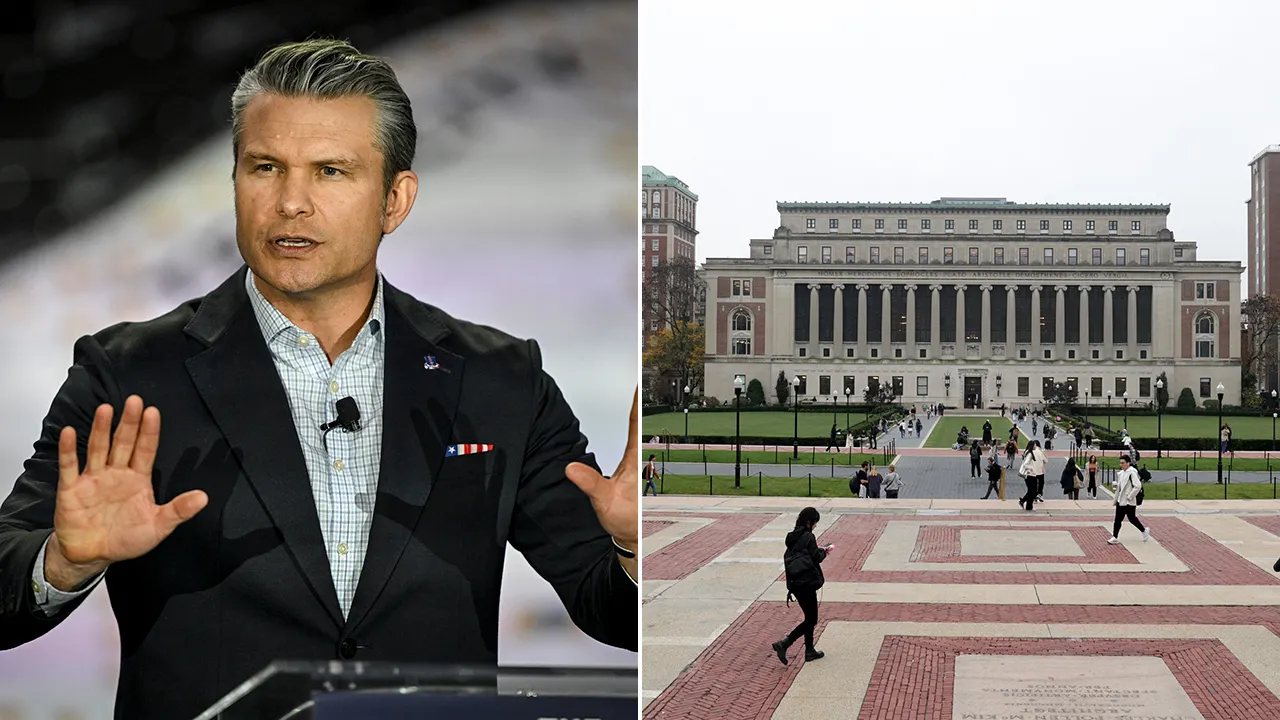
In a sweeping move that signals a dramatic shift in military education policy, Secretary of War Pete Hegseth announced Friday the termination of Department of War attendance at several prestigious universities beginning with the 2026-27 academic year.
The directive affects military personnel seeking education at Princeton, Columbia, Massachusetts Institute of Technology (MIT), Brown, and Yale, with Hegseth indicating that “many others” would be included in the ban. This decision follows his earlier announcement this month that prohibited active-duty service members from attending Harvard starting next year.
“I am ordering the complete and immediate cancellation of all Department of War attendants at these institutions,” Hegseth stated, delivering pointed criticism of what he described as “so-called elite universities who’ve abused their privilege and access to this department and utterly betrayed their purpose.”
The Secretary accused these institutions of misusing taxpayer funds while fostering anti-military sentiment. “These universities have gorged themselves for decades on a trust fund of American taxpayer dollars only to become factories of anti-American resentment and military disdain,” Hegseth said.
This policy shift represents a significant disruption to the long-established relationship between the military and elite academic institutions, which have historically provided advanced education for officers rising through the ranks. Military attendance at prestigious graduate programs has been a cornerstone of officer development, particularly for those being groomed for senior leadership positions.
Hegseth’s criticism extended to the nature of education provided at these universities, claiming they had “replaced the study of victory and pragmatic realism with the promotion of wokeness and weakness.” He characterized their approach as “indoctrination” rather than education.
The move comes amid growing tension between conservative leadership and academic institutions that have faced criticism for their handling of various political issues, including campus protests related to international conflicts. Some universities have struggled to balance free speech principles with maintaining order on campuses, creating controversy that has drawn attention from political figures.
“The Department of War is finished subsidizing the corruption of our own in uniform class,” Hegseth declared. “We’re done paying for the privilege of our enemies’ wicked ideologies to be taught to our future leaders. We’ve had enough.”
Beyond the external ban, Hegseth announced an internal review of military educational institutions, stating the department would hold itself accountable through a “top-to-bottom review of our own internal war colleges.” The goal, he said, is ensuring these institutions return to being “bastions of strategic thought, wholly dedicated to the singular mission of developing the most lethal and effective leaders and war fighters the world has ever known.”
This policy shift raises questions about how military officers will receive advanced education in specialized fields like international relations, strategic studies, and technical disciplines that have traditionally been strengths of these universities. The Department of War has not yet specified alternative educational pathways for officers who would have attended these institutions.
The decision may have long-term implications for military recruitment, retention, and the professional development of officers who have historically viewed attendance at elite universities as both a benefit of service and a career advancement opportunity.
University representatives from the affected institutions have not yet issued formal responses to the announcement, though the decision will likely prompt significant debate about the relationship between higher education and military service, as well as questions about academic freedom and the role of political viewpoints in educational settings.
The policy is scheduled to take effect at the beginning of the 2026-27 academic year, giving both the military and affected universities time to adjust to this significant change in their long-standing relationship.
Fact Checker
Verify the accuracy of this article using The Disinformation Commission analysis and real-time sources.

8 Comments
This decision raises some important questions about balancing academic freedom, military priorities, and public funding. I hope both sides can find a constructive way forward that serves the national interest.
While I understand the desire to ensure military personnel receive training free from political bias, I worry that banning engagement with top universities could have unintended consequences for research, innovation, and national security. A more nuanced approach may be warranted.
From a national security perspective, I can understand the desire to ensure military personnel receive training free from perceived bias. However, cutting off engagement with top universities could have unintended consequences that should be carefully considered.
Exactly, these universities often contribute valuable research and expertise that benefits the military. Losing that access could be detrimental if not managed thoughtfully.
This seems like a politically-charged move that could further exacerbate tensions between the military and academia. I hope cooler heads can prevail and find a middle ground that upholds academic freedom and military readiness.
As someone with an interest in military affairs, I’m curious to learn more about the specific concerns that led to this decision. Transparency around the rationale and potential impacts will be important.
This is an interesting development. I’m curious to see how universities respond and if this will impact military recruitment and research more broadly. There are valid concerns about political bias, but a blanket ban seems like a heavy-handed approach.
I agree, a more nuanced approach may be warranted to address specific issues rather than a total ban. It will be important to hear from all stakeholders on this complex issue.