


Listen to the article
Pentagon Opens Investigation Into Iran Strike Amid Civilian Casualty Claims
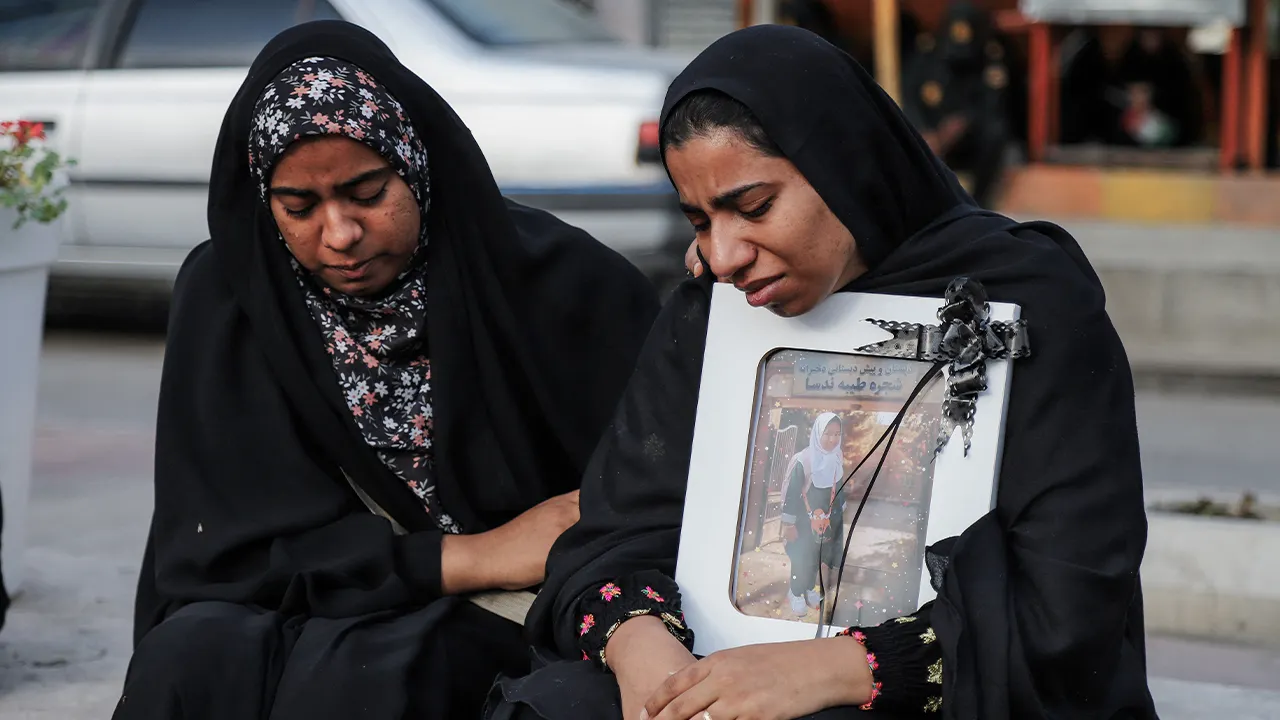
The Pentagon announced Friday it has launched a formal command investigation into a February 28 strike in Minab, Iran, where Iranian officials claim dozens of children were killed when a school adjacent to a military compound was hit.
U.S. Central Command (CENTCOM) has appointed a senior officer from outside the command to lead the review, according to Secretary of War Pete Hegseth, who addressed the matter during a Pentagon briefing.
“The command investigation will take as long as necessary to address all the matters surrounding this incident,” Hegseth said, defending American targeting procedures while the investigation continues. “There’s only one entity in this conflict, between us and Iran, that never targets civilians, literally never target civilians. We will investigate. We’ll get to the truth and we’ll share it when we have it.”
The strike has drawn intense scrutiny as reports continue to emerge about potential civilian casualties. If U.S. forces carried out the attack, it raises significant questions about military planning processes and safeguards designed to prevent unintended casualties in densely populated areas.
CENTCOM has declined to confirm whether American forces launched the missile, stating only that “it would be inappropriate to comment given the incident is under investigation.” However, The New York Times reported Wednesday that preliminary findings from U.S. officials suggest the strike was likely carried out by American forces.
The Iranian regime claims between 168 and 180 fatalities occurred, primarily girls between ages 7 and 12, along with teachers and parents from the school. These figures have not been independently verified.
Iranian-American journalist Banafsheh Zand noted inconsistencies in the reporting, pointing out that the school had ties to Iran’s military establishment. “The school itself was for the children of the (Islamic Revolutionary Guard Corps) Navy, and it speaks volumes to where the place was and how they use civilian shields,” she said.
The use of human shields is prohibited under international humanitarian law.
Zand also questioned the accuracy of casualty reports coming from Iranian officials. “There is no confirmation on the number of people, from anyone other than regime sources,” she said, adding that satellite images showing new graves do not align with the reported death toll.
The White House reiterated that the investigation is ongoing. “Unlike the terrorist Iranian regime, the United States does not target civilians,” spokesperson Anna Kelly told Fox News Digital.
Examining the Strike Details
Open-source video analysis and reported missile remnants have led to speculation that the munition resembled a U.S. Tomahawk cruise missile, a weapon Iran does not possess. The Tomahawk is a long-range, precision-guided cruise missile with a high-explosive warhead used by the U.S. and a limited number of allies, including the UK and Australia, neither of which has been firing missiles in the conflict.
Independent investigators, including the Netherlands-based journalism group Bellingcat, have examined evidence indicating multiple strikes hit the compound within a short time frame.
Some experts have offered alternative theories, including podcast host and veteran Matt Tardio, who suggested on social media that an Iranian missile might have gone off course due to GPS jamming: “Simply put, GPS jamming of an Iranian KH-55. The USA and Israel were, and continue to actively jam the Iranian airspace.”
Satellite imagery and reporting indicate the Shajareh Tayyebeh primary school was located approximately 600 meters from an Islamic Revolutionary Guard Corps naval facility, highlighting the proximity of civilian and military infrastructure.
Questions About Targeting Protocols
Former National Security Council official Javed Ali, now a professor at the Gerald R. Ford School of Public Policy, emphasized that the central issue involves the intelligence that informed the strike decision.
“How solid was the intelligence picture on that facility? How good was the intelligence that went into what’s called a target package?” Ali said. Military strikes typically draw from multiple intelligence sources to ensure targets are legitimate military objectives.
Wes Bryant, the Pentagon’s former chief of civilian harm assessments, suggested the incident likely involved misidentification rather than a random malfunction. Bryant also noted that the Pentagon’s Civilian Protection Center of Excellence, established to help minimize harm to civilians in conflict, was scaled back in 2025, potentially reducing resources available for civilian harm investigations.
Retired Vice Admiral Kevin Donegan, who previously commanded U.S. Naval Forces Central Command, explained that U.S. targeting doctrine involves multiple safeguards, including legal review and collateral damage assessments before strikes are approved.
“We actually have judge advocates that sit there and help us through the process of targeting,” Donegan said, while acknowledging that even precision-guided systems have limitations. “War isn’t precise. Mistakes can be made, and they can happen anywhere in the chain of events.”
If the investigation ultimately finds negligence or procedural failures, there is precedent for accountability. Bryant cited the 2015 U.S. strike on a Doctors Without Borders hospital in Kunduz, Afghanistan, which resulted in command changes after being deemed “a tragic and avoidable accident” caused by human error and procedural failures.
As the investigation continues, both military and civilian experts await more definitive answers about what occurred in Minab and whether systemic changes might be needed to prevent similar incidents in the future.
Fact Checker
Verify the accuracy of this article using The Disinformation Commission analysis and real-time sources.

12 Comments
This is a complex issue and I’ll be interested to see what the investigation uncovers. Transparency and accountability are crucial for maintaining public trust.
Absolutely. The American people deserve to know the full truth about this incident.
This is a concerning and tragic incident. I’m glad the Pentagon is launching a thorough investigation to get to the truth and understand what happened. Civilian casualties must always be avoided if possible.
Agreed, we need to ensure proper safeguards and procedures are in place to prevent such incidents in the future.
Transparency and accountability are crucial in these types of military operations. The investigation should be comprehensive and the findings shared publicly.
Indeed, the American public deserves to know the full details and circumstances around this strike.
Civilian casualties are always tragic, regardless of the circumstances. I hope the investigation provides clarity and helps ensure better safeguards are in place moving forward.
Well said. Protecting innocent lives should be the top priority, even in the midst of conflict.
While the US claims to never target civilians, this incident raises serious questions about the military’s targeting and intelligence gathering processes. I hope the investigation is thorough and impartial.
Absolutely, the investigation needs to leave no stone unturned to determine what went wrong and how to prevent similar tragedies.
This is a delicate situation that requires careful handling. I’m glad to see the Pentagon taking it seriously and launching an independent review. Lessons learned will be crucial.
Agreed, the findings of this investigation could have significant implications for future military operations and protocols.