


Listen to the article
In a dramatic turn of events on the international stage, War Secretary Pete Hegseth announced what he described as a “decisive military victory” in Iran on Wednesday, following President Donald Trump’s agreement to a two-week ceasefire in the conflict.
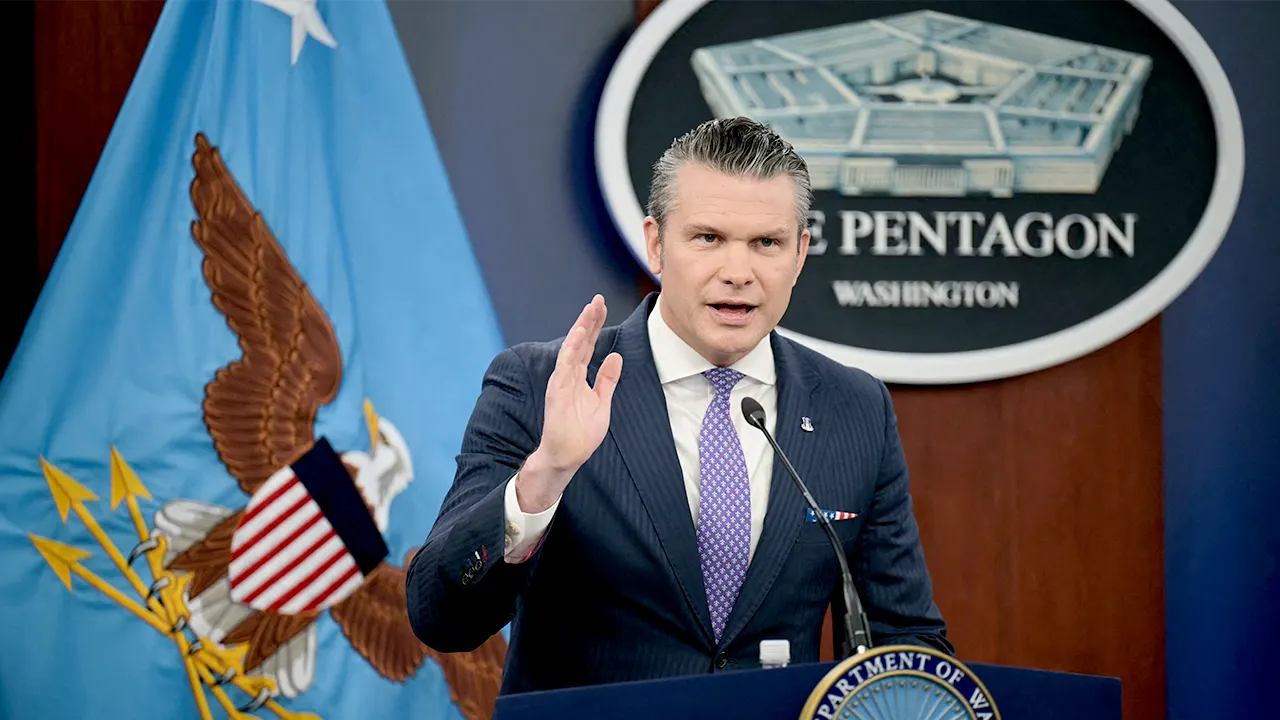
Speaking at a Pentagon press conference, Hegseth told assembled journalists that U.S. military operations had successfully crippled Iran’s defense capabilities, though he provided limited details about the extent of the damage or specific targets that had been neutralized during the campaign.
The announcement marks a significant development in U.S.-Iranian relations, which have deteriorated sharply in recent months following a series of escalating confrontations in the Persian Gulf and disputed territories in the Middle East. Tensions between Washington and Tehran have been at their highest point since the Trump administration withdrew from the Iran nuclear deal in 2018.
Military analysts suggest that the declaration of victory, coupled with the agreement to a temporary truce, indicates a potential shift in U.S. strategy regarding Iran. The two-week ceasefire could provide diplomatic channels with an opportunity to reopen, though skepticism remains high given the troubled history between the two nations.
The conflict has contributed to volatility in global oil markets, with crude prices fluctuating dramatically as traders respond to developments in the Persian Gulf. Iran, as OPEC’s third-largest oil producer, remains a crucial player in global energy markets despite years of sanctions that have limited its export capabilities.
Regional allies have expressed mixed reactions to the announcement. Israel, Saudi Arabia, and the United Arab Emirates—all strategic U.S. partners who view Iran as a significant security threat—have yet to issue formal statements regarding the ceasefire agreement.
Military engagement with Iran represents a significant escalation from the “maximum pressure” economic sanctions that characterized the earlier years of U.S. policy toward Tehran. Critics have questioned whether military action was necessary or proportionate, while supporters maintain that decisive action was needed to counter Iran’s regional influence and nuclear ambitions.
Human rights organizations have called for transparency regarding civilian casualties and infrastructure damage resulting from the military operations. The United Nations has repeatedly urged restraint from all parties involved in the conflict.
Congressional reaction has fallen largely along partisan lines, with Republican lawmakers praising the administration’s assertive stance while Democratic representatives have questioned the constitutional basis for military action without explicit congressional approval.
The Defense Department has not released comprehensive assessments of battle damage or disclosed which specific Iranian military installations were targeted during operations. Questions remain about whether Iran’s nuclear facilities were among the targets, and what impact the strikes may have had on Tehran’s nuclear program.
Iranian officials have dismissed Hegseth’s victory claims as propaganda, with state media reporting minimal damage to critical infrastructure. Independent verification of either side’s claims remains challenging, as international journalists have limited access to affected areas.
The two-week truce could prove pivotal in determining whether the conflict escalates further or whether diplomatic solutions might emerge. State Department officials are reportedly engaged in back-channel communications through neutral intermediaries to establish parameters for potential negotiations.
The Pentagon has indicated that briefings with more detailed information about the military operations will be forthcoming as the situation develops.
Fact Checker
Verify the accuracy of this article using The Disinformation Commission analysis and real-time sources.

17 Comments
Hopeful this ceasefire can pave the way for productive diplomacy to address the core issues driving US-Iran tensions. Constructive dialogue is the best path forward, not continued military escalation.
This announcement seems more like political posturing than an accurate assessment of the military situation. Skeptical that Iran’s capabilities have been truly crippled without more concrete evidence.
Valid point. Transparency around the specifics of this ‘victory’ is needed to evaluate its true significance.
Given the history of hostility, I’m not surprised by the Pentagon’s bombastic rhetoric. But actions speak louder than words – the true test will be whether this ceasefire leads to meaningful negotiations.
Agreed. Resolving long-standing grievances between the US and Iran will take time and good faith on both sides. Maintaining an open dialogue is crucial.
Interesting to see the Pentagon framing this as a ‘decisive victory.’ I wonder how that assessment aligns with the perspective of military analysts and foreign policy experts who have been closely tracking the US-Iran situation.
Decisive military victory over Iran? That seems like a bold and rather dubious claim. More details are needed to assess the actual impact on Iran’s capabilities and the broader strategic implications.
This announcement raises more questions than it answers. Curious to see how the international community, particularly US allies in the region, respond to the Pentagon’s claims of a decisive victory over Iran.
Absolutely. The reactions and interpretations of key regional players will be crucial in understanding the true impact and implications of this purported US military success.
Interesting development in the ongoing tensions between the US and Iran. Curious to see if this ‘decisive victory’ leads to any meaningful diplomatic progress or just another temporary truce.
Agreed, the devil will be in the details. A ceasefire is a positive step, but long-term resolution requires good-faith engagement on both sides.
While a ceasefire is welcome, I remain skeptical about the Pentagon’s assessment of a ‘decisive victory.’ Significant doubts linger about the true extent of damage inflicted on Iran’s military capabilities.
The US-Iran conflict is highly complex, with a long history of mutual mistrust and escalation. This announcement seems more like political posturing than a realistic evaluation of the military situation on the ground.
I agree. Maintaining a balanced, fact-based perspective is important when assessing claims of victory or defeat in such a volatile geopolitical environment.
While a ceasefire is a positive step, I’m skeptical that this announcement reflects the full reality on the ground. The US and Iran have a long history of exaggerating their own successes and demonizing the other side.
Good point. Maintaining an objective, fact-based perspective is important when evaluating claims of military victories or losses in this complex geopolitical conflict.
The US-Iran conflict remains incredibly complex. While a temporary truce is welcome, lasting peace will require concessions and compromise from both sides. Cautiously optimistic about the potential for progress.