


Listen to the article
Former Hegseth Advisor Returns to Government Role Amid Ongoing Iran Conflict
A senior defense advisor who was dismissed during a controversial leak investigation last year has secured a position within the Office of the Director of National Intelligence, according to a source familiar with the appointment.
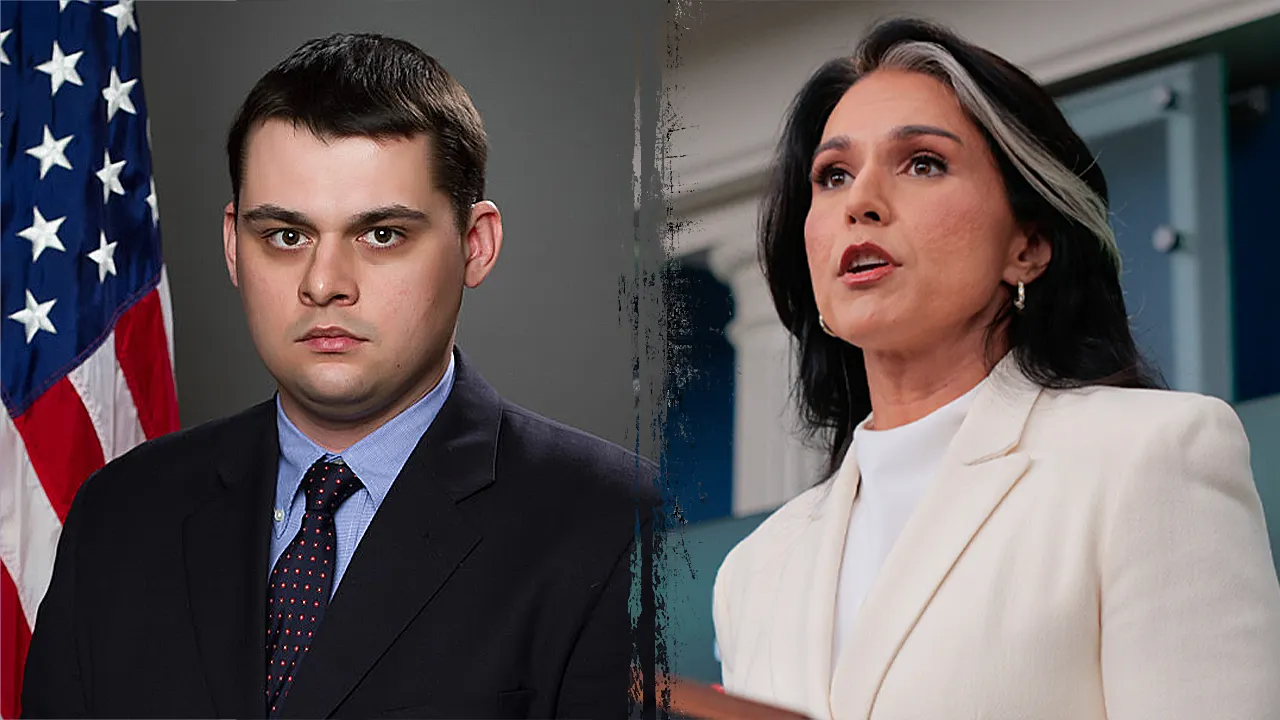
Dan Caldwell, who previously served as a top advisor to War Secretary Pete Hegseth before being abruptly removed from the Pentagon, has joined Director of National Intelligence Tulsi Gabbard’s team in what was described as an “administrative role.” The position will reportedly focus on internal management and coordination rather than direct involvement in intelligence assessments or national security policy.
The appointment comes at a particularly sensitive moment for the administration, which is currently navigating an escalating war with Iran and experiencing internal tensions over foreign policy direction. Earlier Tuesday, National Counterterrorism Center Director Joe Kent resigned in protest of the Iran conflict, publicly stating that Tehran did not pose an imminent threat to the United States—a rare break from within the administration.
Caldwell’s return to government service appears to signal the conclusion of a high-profile leak investigation that began in April 2025, when he and two other senior Pentagon officials—Darin Selnick and Colin Carroll—were escorted out of the Pentagon amid accusations of leaking classified information. All three aides denied any involvement in leaks, and no public evidence supporting the allegations has emerged since their removal.
Despite Hegseth’s public assertions that the aides were “attempting to leak and sabotage the president’s agenda,” none of the officials were ever charged with wrongdoing. The Pentagon has not disclosed whether the investigation remains active or has concluded.
According to the source, Caldwell has completed a polygraph test and passed multiple background and security checks as part of the onboarding process. He retains his security clearance despite last year’s controversy.
The hiring places a prominent advocate for restrained foreign policy within the intelligence community at a time when the administration is deeply divided over military intervention abroad. A recent Quinnipiac poll found Americans similarly split on the issue, with 53% opposing military action against Iran while 40% supported the intervention.
Caldwell, a Marine Corps veteran who previously advised Hegseth primarily on European issues, has been outspoken against prolonged U.S. military engagements overseas. His views align with a faction inside the administration that has long cautioned against entering another major Middle East conflict.
The Office of the Director of National Intelligence plays a crucial role in coordinating intelligence across 18 federal agencies and shapes the president’s daily intelligence briefing, making it a significant position even in an administrative capacity.
After his firing last year, Caldwell suggested the removal of himself and his colleagues may have been related to internal power struggles, stating, “We threatened a lot of established interests inside the building and outside the building.” Fox News Digital previously reported that the three aides had clashed with then-chief of staff Joe Kasper, who was also later removed from his position.
The appointment also raises questions about Director Gabbard’s stance on the current conflict. Gabbard built much of her political identity opposing regime-change wars but has remained largely quiet publicly about the Iran situation despite overseeing the nation’s intelligence apparatus.
The Pentagon declined to comment on Caldwell’s hiring and the status of the investigation. The Air Force’s Office of Special Investigations did not respond to requests for comment, nor could Gabbard’s office be immediately reached.
Fact Checker
Verify the accuracy of this article using The Disinformation Commission analysis and real-time sources.

16 Comments
The administration’s decision to bring back a previously ousted advisor like Caldwell is intriguing. His experience could be valuable, but the circumstances of his dismissal warrant scrutiny.
With the resignation of the National Counterterrorism Center Director, the internal dynamics around the Iran conflict are clearly complex. Caldwell’s role could shape the intelligence landscape.
Interesting development amidst the Iran tensions. Curious to see how Caldwell’s experience will shape the intelligence community’s approach during this delicate situation.
The administration seems to be navigating a tricky balance between internal policy disagreements and external conflicts. Caldwell’s role could provide valuable coordination.
With tensions high, the administration’s choice to bring back a previously ousted advisor is intriguing. Caldwell’s expertise could be an asset, but his past dismissal warrants close scrutiny.
The resignation of the National Counterterrorism Center Director suggests underlying policy disagreements. Caldwell’s role could either help bridge those divides or exacerbate them.
Caldwell’s return to government service amid the Iran tensions is a noteworthy development. His expertise could be an asset, but the administration must demonstrate a commitment to objective intelligence.
The administration will need to navigate this delicate situation carefully, balancing internal policy disagreements and the need for a unified, fact-based approach to the Iran conflict.
This move to bring in a previously ousted advisor raises questions about the administration’s priorities and decision-making processes. Maintaining a unified, fact-based approach is crucial.
The optics of this appointment are certainly interesting. It will be important to monitor how Caldwell’s role evolves and whether it impacts the government’s Iran strategy.
Given the complex geopolitical landscape, having experienced personnel like Caldwell in key positions could prove valuable. However, his past dismissal raises concerns about internal dynamics.
The administration will need to demonstrate a commitment to objective intelligence and sound decision-making if it hopes to navigate the Iran conflict effectively.
The resignation of the National Counterterrorism Center Director over the Iran conflict is quite telling. It suggests there are diverging views on the threat level within the administration.
I wonder how Caldwell’s appointment will impact the intelligence assessments and policy decisions around Iran. Transparency will be key during this sensitive period.
It’s a bold move to appoint Caldwell to this sensitive intelligence role amid the Iran conflict. His past dismissal raises questions about the administration’s decision-making process.
Transparency and objectivity will be crucial as the administration navigates this delicate situation. Caldwell’s influence on intelligence assessments bears close watching.