


Listen to the article
Conservation Groups Return to Court Over Columbia River Dams After Trump Scraps Salmon Recovery Deal
Conservation groups, Native American tribes, and the states of Oregon and Washington are heading back to federal court Friday to seek operational changes to dams on the Snake and Columbia Rivers after former President Donald Trump dismantled a landmark agreement aimed at saving endangered salmon populations.
The legal battle resurfaced after Trump canceled the Resilient Columbia Basin Agreement last June, a pact that had paused ongoing litigation. The Biden administration had committed $1 billion over ten years to salmon restoration efforts while supporting tribal clean energy projects. Trump rejected the deal, calling it “radical environmentalism” that could have led to breaching four controversial Snake River dams.
At the heart of the dispute is whether current dam operations violate the Endangered Species Act by threatening already imperiled salmon runs. Plaintiffs are requesting the court order significant changes at eight major hydropower dams, including lowering reservoir water levels to help fish move through them faster and increasing water spill over dams to prevent juvenile salmon from passing through potentially lethal turbines.
“We’re returning to court because the situation for the salmon and the steelhead in the Columbia River Basin is dire,” said Kristen Boyles, managing attorney with Earthjustice, the nonprofit law firm representing conservation, clean energy, and fishing groups. “There are populations that are on the brink of extinction, and this is a species which is the center of Northwest tribal life and identity.”
Federal officials have pushed back strongly against the proposed changes, arguing in court documents that they represent a “sweeping scheme to wrest control” of the dam system. The government contends such measures would compromise safe and efficient operations while potentially raising utility rates for customers throughout the region.
The Columbia River Basin, covering an area roughly the size of Texas, was historically the world’s most productive salmon river system, supporting at least 16 distinct stocks of salmon and steelhead. Today’s reality is stark—four stocks are extinct, and seven are listed as endangered or threatened. The decline also impacts other endangered species, including a population of killer whales that depends on Columbia River salmon as a critical food source.
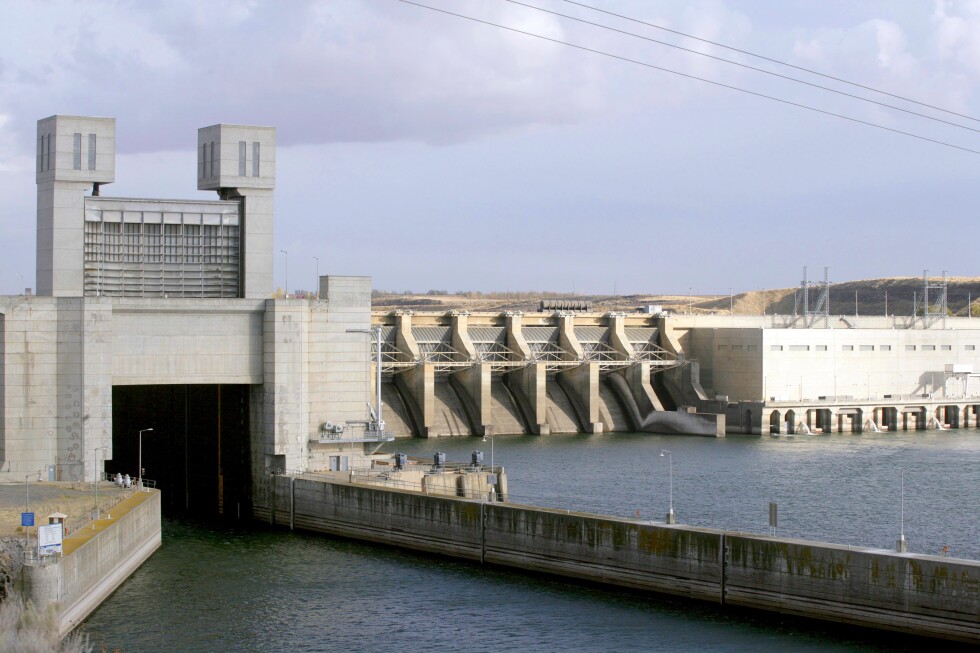
The dams targeted for operational changes include four on the Snake River (Ice Harbor, Lower Monumental, Little Goose, and Lower Granite) and four on the Columbia River (Bonneville, The Dalles, John Day, and McNary). These massive infrastructure projects have transformed the Pacific Northwest since the first were built during the Great Depression.
The dams have created significant economic benefits, providing hydroelectric power, flood control, and a 465-mile inland navigation system that allows barges to reach Lewiston, Idaho—the most inland seaport on the West Coast. Agricultural interests rely heavily on this water transport system for moving crops to market.
The Inland Ports and Navigation Group has previously warned that increasing water spill at dams “can disproportionately hurt navigation, resulting in disruptions in the flow of commerce that has a highly destructive impact on our communities and economy.”
For Native American tribes in the region, however, the dams represent an existential threat to salmon, which hold profound cultural and spiritual significance. The Nez Perce Tribe and Yakama Nation have joined the litigation as “friends of the court,” supporting the motion for a preliminary injunction.
The case highlights the ongoing tension between economic interests, energy production, and environmental protection in the Pacific Northwest. Federal dam management has been the subject of decades of litigation, with conservation groups arguing that more drastic measures—potentially including dam removal—may be necessary to prevent salmon extinction.
The U.S. District Court in Portland will hear oral arguments Friday, with the outcome potentially reshaping how the federal government balances competing interests in managing the Columbia River Basin’s water resources. Whatever the court decides, the future of both the region’s iconic salmon runs and its hydropower infrastructure hang in the balance.
Fact Checker
Verify the accuracy of this article using The Disinformation Commission analysis and real-time sources.

10 Comments
Seems like a complex issue with competing interests at play. I’m curious to see how the courts will balance environmental concerns with energy and economic factors in their decision.
Definitely a challenging situation without any easy solutions. The impacts on salmon populations and tribal communities need to be carefully weighed.
It’s encouraging that the Biden administration had committed significant funding for salmon restoration efforts. Hopefully the courts can find a balanced approach that protects the environment while minimizing economic disruption.
You raise a good point. Maintaining healthy salmon runs is crucial, but the implications for the power grid and local communities also have to be considered.
Interesting to see this dispute resurfacing after the Trump administration scrapped the previous recovery agreement. I wonder what new evidence or arguments the plaintiffs will bring to court this time.
Yeah, it will be important for the court to carefully review the latest scientific data and weigh the various stakeholder concerns in reaching its decision.
The Endangered Species Act is an important piece of legislation, but its application can certainly be contentious when it comes to issues like dam operations and energy production. I hope the court can find a sensible compromise.
Absolutely, balancing environmental protection and economic/energy needs is always a tricky balance. Curious to see the court’s rationale and proposed remedies.
This is a complex situation with no easy answers. I’ll be interested to follow the court proceedings and see how they rule on the various requests for operational changes to the dams.
Agreed, this is a high-stakes case with major implications for the region. The court will need to weigh all the evidence and perspectives carefully.