


Listen to the article
New York Lawmaker Alleges Big Tech Pressure Weakened State AI Regulations
New York State Assemblyman Alex Bores has accused major technology companies of pressuring Governor Kathy Hochul to dilute his proposed artificial intelligence safety legislation, just as President Donald Trump moved to centralize AI regulation at the federal level.
Bores, a Democrat representing Manhattan’s 73rd district who is running to replace Rep. Jerry Nadler in Congress, claims the governor’s decision to substantially rewrite his Responsible AI Systems Evaluation (RAISE) Act followed a $100 million advertising campaign funded by tech industry leaders, including OpenAI President Greg Brockman and venture capital firm Andreessen Horowitz.
“My reaction was, ‘Oh, this is a message to the governor’ — this is not just about defeating me,” Bores told Rolling Stone. “They want the governor to be intimidated by the idea they might target her next.”
The RAISE Act initially aimed to impose strict safety protocols on advanced AI developers, including requirements to document detailed safety procedures, report incidents causing serious harm within 72 hours to the state attorney general, and prohibit releasing models posing “unreasonable risk.”
However, Hochul’s revisions significantly weakened these provisions. The amended version extends the incident reporting period from 72 hours to 15 days, eliminates the prohibition on potentially dangerous new AI models, and reduces penalties for non-compliance.
“AI oligarchs want to take over our safety, our workforce and our minds for their own personal profit and power,” Bores told Fox News Digital. “They’ve already bought the White House and are trying very aggressively to try to buy statehouses, too. That can’t happen, and I won’t let it.”
State Senator Andrew Gounardes, who co-sponsored the bill, expressed similar concerns on social media: “NY can be a leader on critical AI safety, or we can cave to the pressure of the same Big Tech and VC bullies pushing Trump’s AI safety ban. I know which side I’m fighting on.”
The timing of Hochul’s revision is notable, coming just before Trump signed an executive order Thursday aimed at establishing a federal regulatory framework that would supersede state-level AI regulations. During the White House signing ceremony, Trump emphasized the need for centralized oversight to compete with China in what he described as a global AI arms race with “only one winner.”
“We want to have one central source of approval,” Trump stated, arguing that requiring “50 different approvals from 50 different states” puts America at a competitive disadvantage against countries with more streamlined regulatory environments.
According to Trump advisor Will Scharf, more than 1,000 AI-related regulatory bills are currently making their way through state legislatures nationwide, highlighting the growing patchwork of regulations the administration seeks to harmonize.
Some industry experts, however, see benefits in aligning New York’s regulations with California’s existing framework. Julie Samuels of TechNYC argues that such alignment could “help create a de facto national standard” in the absence of comprehensive federal legislation.
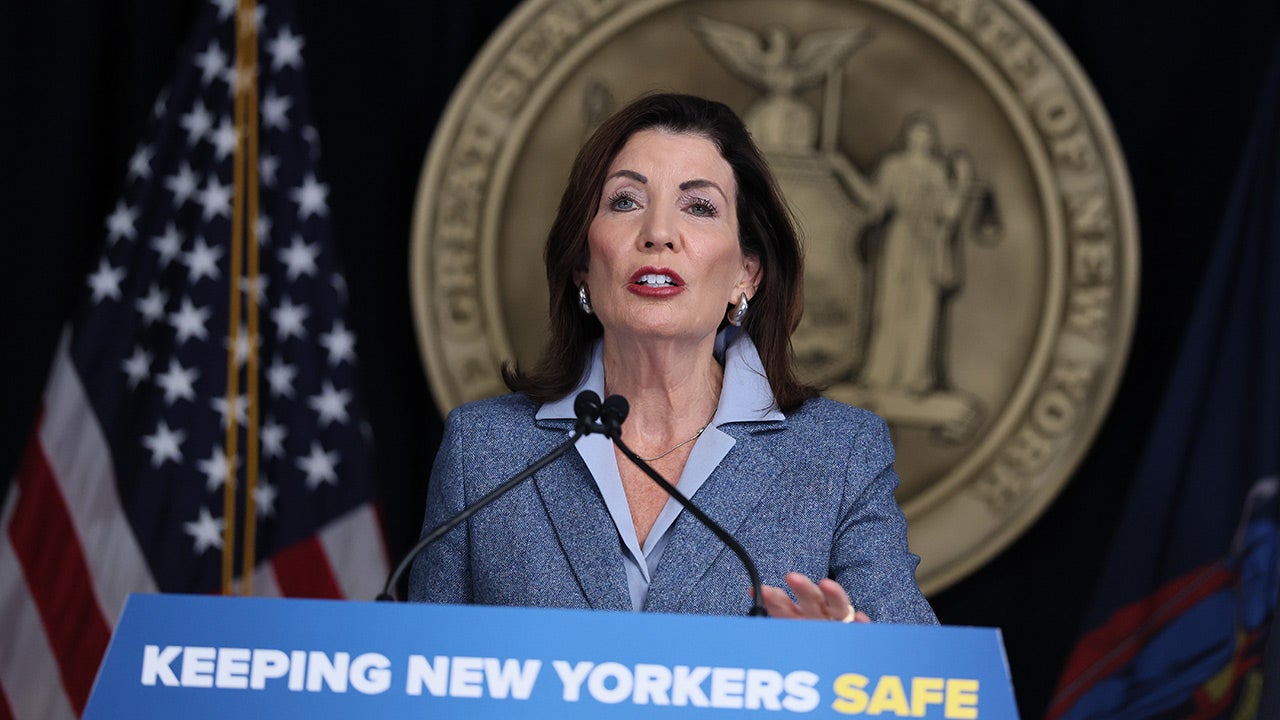
When contacted for comment, Governor Hochul’s office defended her approach without directly addressing the allegations of industry pressure. A spokesperson highlighted the “absence of federal leadership on responsible AI” and asserted that New York has been “leading with commonsense laws to protect children, families and consumers.”
“Our approach should be a model for the nation,” the spokesperson added. “Governor Hochul has been at the forefront of the innovation economy and remains committed to advancing AI responsibly as she reviews the legislation.”
The conflict highlights the growing tension between state-level safety initiatives and industry concerns about regulatory fragmentation, with both the economic benefits of AI development and potential risks to public safety hanging in the balance as federal and state authorities navigate this rapidly evolving technological landscape.
Fact Checker
Verify the accuracy of this article using The Disinformation Commission analysis and real-time sources.

10 Comments
I’m disappointed to see the governor weakening this important legislation. Tech companies shouldn’t be able to use their wealth and influence to override public safety concerns. Hopefully the legislation can be strengthened again.
This is concerning news. It’s crucial that AI safety legislation is not watered down due to industry pressure. We need robust regulation to protect the public from the risks of advanced AI systems.
It’s concerning to hear about the lobbying efforts by big tech to undermine AI safety regulations. We need strong, independent oversight to ensure these powerful technologies are developed responsibly. I hope the legislature can push back against industry pressure.
This is a complex issue without easy answers. While I understand the tech industry’s concerns, I hope the governor will work to find a balanced approach that prioritizes public safety without stifling innovation.
Concerning to hear about the lobbying efforts to weaken this legislation. Responsible development of advanced AI systems is crucial for public safety. I hope the lawmakers can find a way to enact strong safeguards.
This is an important issue that deserves robust public debate, not backroom deals with industry lobbyists. I hope the governor will reconsider and strengthen the AI safety legislation to properly safeguard the public.
I agree, the public interest should come before industry interests when it comes to regulating transformative technologies like AI. Transparent and accountable policymaking is critical here.
While I understand the tech industry’s desire for flexibility, public safety has to come first when it comes to transformative AI. I hope the lawmakers can find a balanced approach that protects the public without stifling innovation.
You make a good point. There has to be a way to address the risks of advanced AI while still allowing for technological progress. It will take careful policymaking to strike the right balance.
I’m frustrated to see the governor cave to industry pressure on this. We can’t let tech companies dictate the terms of AI safety regulation. Lawmakers need to stand firm and put the public good first.