


Listen to the article
NTSB Chair Criticizes House Aviation Safety Bill as Inadequate, Misleading
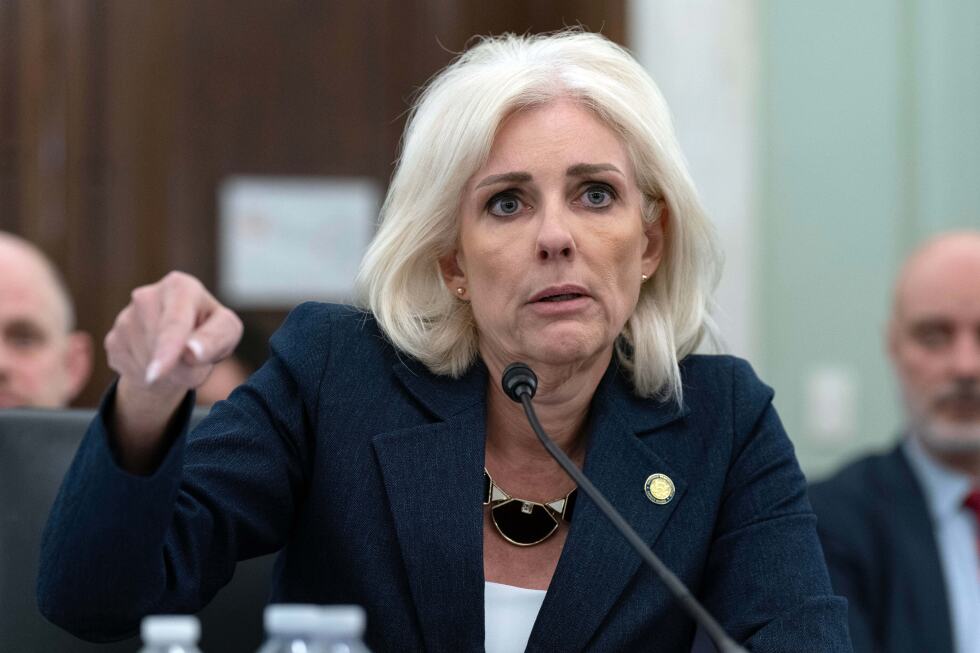
The National Transportation Safety Board’s Chairwoman Jennifer Homendy delivered sharp criticism Thursday of a House aviation safety reform package, claiming lawmakers are misleading the public by suggesting their proposal adequately addresses the agency’s recommendations following a deadly 2005 midair collision near Washington, D.C.
Homendy characterized the House bill as a “watered-down” measure that falls significantly short of preventing future tragedies similar to the crash that killed 67 people. She expressed particular frustration with how some representatives have presented the legislation.
“We can have disagreements over policy all day. But when something is sold as these are the NTSB recommendations and that is not factually accurate, we have a problem with that,” Homendy said. “Because now you’re using the NTSB and you’re using people who lost loved ones in terrible tragedies. You’re using their pain to move your agenda forward.”
The NTSB formalized its opposition Thursday afternoon through a letter to two key House committees, stating they cannot support the bill in its current form. The agency also released a side-by-side comparison highlighting the numerous ways the House proposal fails to fully implement their safety recommendations.
At the heart of the dispute is the implementation of Automatic Dependent Surveillance-Broadcast (ADS-B) technology. While ADS-B Out systems, which broadcast an aircraft’s location, are already mandated around busy airports, the NTSB has been recommending since 2008 that all aircraft should also be equipped with ADS-B In systems. These critical components allow pilots to receive precise location data about nearby aircraft.
The House bill stops short of explicitly requiring ADS-B In technology. Instead, it directs the Federal Aviation Administration to draft rules requiring “the best locator technology” and includes exemptions for business jets and small planes in certain airspace. According to Homendy, the legislation also contains weak provisions regarding military protocols for these systems.
“When we issue a recommendation, those recommendations are aimed at preventing a tragedy from happening again. And if you’re just going to give us half a loaf, it’s not going to do it. We’re not gonna save lives,” Homendy emphasized.
The House bill, known as the ALERT Act, stands in contrast to the Senate’s ROTOR Act, which received unanimous Senate approval but fell one vote short in the House earlier this week. Homendy indicated the Senate proposal would be substantially more effective in implementing the NTSB’s safety recommendations.
Representatives Sam Graves and Rick Larsen, leaders of the House Transportation and Infrastructure Committee, declined to directly address Homendy’s criticism. However, they have previously defended their bill as effectively addressing the 50 recommendations issued by the NTSB following its investigation.
“From the beginning, we have stressed the importance of getting this right, and we are confident that we will achieve that goal,” Larsen and Graves said in a joint statement. House Speaker Mike Johnson has also expressed commitment to advancing the legislation.
The families of crash victims have aligned with the NTSB’s position. Doug Lane, who lost his wife and son in the 2005 disaster, characterized the House bill as “not really a serious attempt to address the NTSB recommendations.” He suggested the bill’s introduction just days before the vote on the Senate’s ROTOR Act appeared designed to “scuttle” that legislation and relegate the ADS-B In recommendation to a lengthy rulemaking process.
Matt Collins, whose brother Chris died in the crash, was unequivocal: “As far as the ALERT act — the way it’s written now, I can’t endorse the way its written now. It needs to include ADS-B In. It’s non-negotiable for us as family members, extremely non-negotiable.”
The NTSB has previously identified systemic weaknesses and years of ignored warnings as primary causes of the 2005 collision between an American Airlines jet and an Army Black Hawk helicopter. Homendy has stated that if both aircraft had been equipped with functioning ADS-B In systems, the tragedy could have been prevented.
At the time of the crash, Army policy required helicopters to fly with location systems turned off to conceal their positions, despite the Black Hawk involved being on a training flight rather than a sensitive mission.
The House Transportation Committee is expected to mark up the bill within the next few weeks, setting the stage for continued debate over these critical aviation safety measures.
Fact Checker
Verify the accuracy of this article using The Disinformation Commission analysis and real-time sources.

9 Comments
Sixty-seven lives were tragically lost in the 2005 midair collision near Washington. It’s deeply concerning that the House’s proposed aviation safety reforms may not adequately prevent future similar accidents. The NTSB’s expertise should be heeded to improve aviation safety.
The NTSB’s strong opposition to the current House aviation safety bill is troubling. If the legislation falls short of the agency’s recommendations, it risks failing to prevent future tragedies like the 2005 midair collision. Policymakers should prioritize public safety over political agendas.
The NTSB chair’s comments highlight the importance of not just appearing to address safety concerns, but truly implementing the agency’s recommendations. Watered-down legislation that falls short is unacceptable given the tragic loss of life. Rigorous oversight is needed.
The NTSB’s strong opposition to the current House bill is worrying. Using the pain of past tragedies to push through inadequate reforms is highly problematic. Policymakers need to work closely with the NTSB to craft meaningful, evidence-based aviation safety measures.
I agree, it’s concerning that the NTSB feels the House bill is misleading the public. Lawmakers should prioritize safety over politics when it comes to aviation reform.
Deeply concerning to hear the NTSB chair’s scathing criticism of the House aviation safety bill as ‘watered-down’ and misleading the public. Implementing the agency’s expert recommendations should be the top priority, not using past tragedies to advance a political agenda.
Concerning to hear the NTSB chair’s criticism of the ‘watered-down’ House aviation safety bill. If the legislation doesn’t adequately address past recommendations, it may put lives at risk. Transparency and following expert guidance are crucial for improving aviation safety.
While policy disagreements are understandable, the NTSB chair is right to criticize the House bill for misrepresenting its alignment with the agency’s recommendations. Misleading the public on safety measures is unacceptable. Lawmakers must work transparently with the NTSB.
The NTSB’s forceful rejection of the House aviation safety bill is alarming. If the legislation doesn’t adequately address the agency’s past recommendations, it risks failing to prevent future accidents and loss of life. Lawmakers must work transparently with the NTSB to craft meaningful reforms.