


Listen to the article
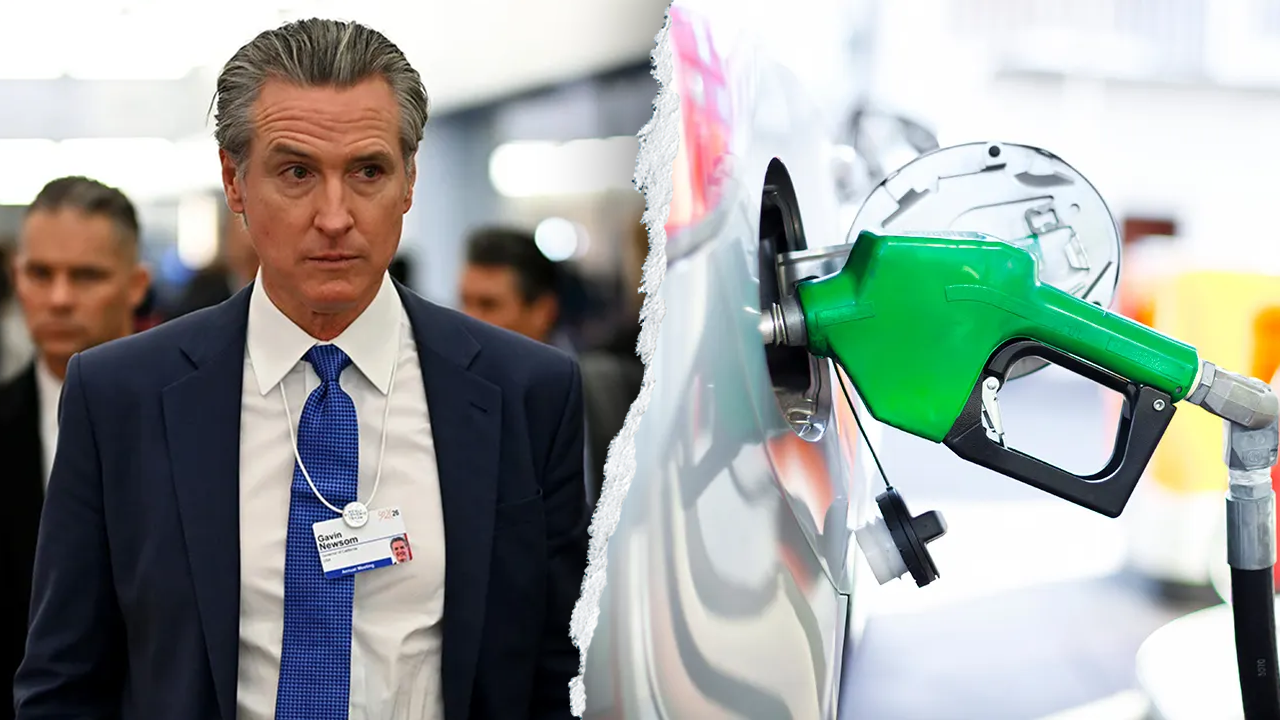
California’s gas prices have ignited a heated political debate, with Governor Gavin Newsom facing criticism for blaming international tensions while critics point to state policies as the primary culprit for record-high fuel costs.
On Tuesday, Newsom took to social media platform X to claim that “Americans will pay $1.5 BILLION MORE at the gas pump just this week because of Donald Trump’s war with Iran.” The Democratic governor, widely considered a top contender for the 2028 presidential nomination, promised that California “will continue using the tools we’ve spent years developing to help fight price spikes and lessen the blow from Trump’s recklessness.”
The remarks quickly drew rebuke from Steve Hilton, a Republican candidate challenging Newsom for the governor’s office, who pointed to California’s state-level policies as the real issue. “California has the highest gas taxes and fees in America,” Hilton noted, adding that while California drivers face prices approaching $6 per gallon, most Americans are paying around $3.
“It’s not the war in Iran,” Hilton argued, “It’s entirely because of Gavin Newsom’s insane climate dogma that we have the highest gas taxes in the country.”
Data supports claims about California’s exceptional fuel costs. According to AAA, the state’s average price hovers around $5.33 per gallon – significantly higher than both the national average of $3.57 and the next most expensive states, Washington and Hawaii, at $4.72 and $4.69 respectively. The U.S. Energy Information Administration confirms that California imposes the nation’s steepest gas tax at approximately 70 cents per gallon.
The price disparity has drawn attention from federal officials as well. Interior Secretary Doug Burgum weighed in on social media, declaring that “California is KILLING their economy!” He contrasted Newsom’s approach of “closing refineries & driving up gas prices” with federal efforts to approve over 6,000 drilling permits to “advance American Energy Dominance Agenda & lower gas prices nationwide.”
Industry leaders have also raised alarms about California’s energy policies. Chevron President Andy Walz recently warned Newsom and state regulators that proposed “cap-and-invest” amendments by the California Air Resources Board threaten the viability of the state’s remaining refineries. The board aims to aggressively reduce pollution by pulling 118.3 million allowances from the state’s market between 2027 and 2030, with a target of 90% carbon reduction by 2045.
In a letter obtained by The California Globe, Walz cautioned that these regulations would “cripple the survivability of the state’s remaining refineries,” potentially leading to higher fuel prices, significant job losses including union positions, and reduced funding for essential public services. He also warned of threats to “critical energy and national security assets.”
Tim Stewart, spokesperson for the U.S. Oil & Gas Association, expressed concern that “California’s energy malaise is beginning to infect other western states’ economies.” Stewart characterized the situation as becoming “a national security issue” with broad impacts on “agriculture, manufacturing, housing, the financial system.”
Roxanne Hoge, chair of the Los Angeles County GOP, called Newsom’s blame-shifting “a textbook case of projection,” arguing that California’s higher gas prices long predate current international tensions. “He has driven supply down by banishing producers while not fixing infrastructure with gas tax money as promised,” she told Fox News Digital.
The dispute highlights the complex intersection of state and federal energy policies, environmental regulations, and consumer costs at a time of heightened international tensions. As California continues pursuing ambitious climate goals, the resulting economic impacts have become a focal point in both state and national political debates.
Fact Checker
Verify the accuracy of this article using The Disinformation Commission analysis and real-time sources.

9 Comments
While I can understand the governor’s desire to deflect blame, he needs to be more accountable for the state-level policies that have contributed to California’s high gas prices. Transparent analysis and pragmatic solutions should be the priority here.
I agree, it’s important for both sides to move beyond political posturing and work towards constructive solutions. Californians deserve honest, fact-based dialogue on this critical issue.
Californians are understandably frustrated with high gas prices, but using this as a political cudgel isn’t constructive. I’d be curious to see a nonpartisan assessment of the various policy and market forces shaping fuel costs in the state.
That’s a good point. An objective, data-driven examination of the issue would be far more useful than the current partisan back-and-forth. Policymakers should be focused on finding pragmatic solutions, not scoring political points.
This debate highlights the need for a more holistic approach to energy policy that considers both state and federal factors. Simplistic finger-pointing won’t help lower costs for Californians struggling with high gas prices.
This is a classic case of political finger-pointing. While geopolitical tensions may play a role, state-level policies are likely the bigger factor driving California’s high gas prices. It would be helpful to see an objective analysis of the various contributing factors.
I agree, it’s important to look at the full picture rather than just blaming political opponents. Transparency around the policy decisions and their impacts would be valuable for voters.
The debate over gas prices in California highlights the complexity of energy policy. Both state and federal actions can influence costs, and it’s important to carefully examine all the factors at play rather than resorting to political attacks.
Absolutely, level-headed analysis is key here. Simplistic partisan narratives won’t help resolve the real challenges Californians are facing at the pump.