


Listen to the article
New Yorkers Flock to Free Grocery Pop-Up as Food Costs Strain City Residents
Hundreds of New Yorkers lined the sidewalks of Manhattan’s West Village on Sunday, waiting for hours outside a five-day pop-up offering free groceries, highlighting the mounting financial pressures facing city residents amid rising food costs.
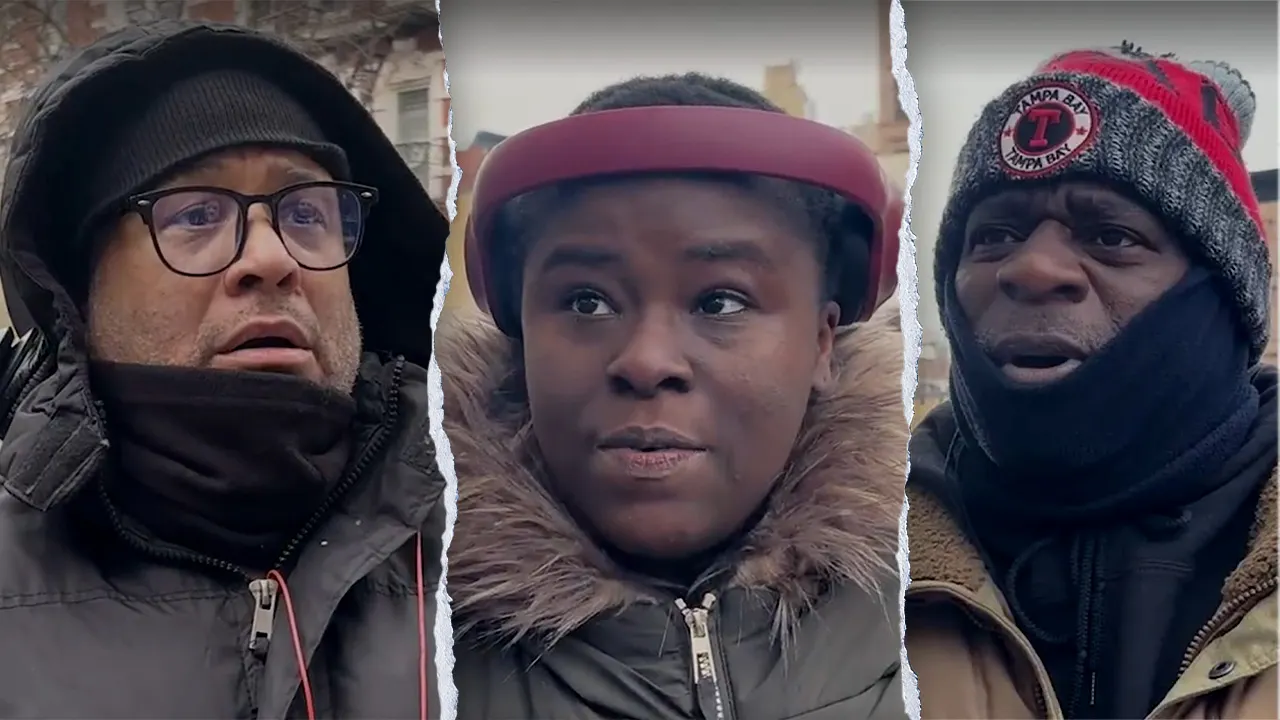
“New Yorkers are in pain,” said Nick from Queens, who waited in line to grab pasta sauce, bath soap, and a bag of Tide Pods. The scene around the small store underscored the city’s cost-of-living crisis, with anxiety building as people competed for limited yellow tickets granting entry before supplies ran out.
The temporary store, called The Polymarket, opened on February 12 and was operated by a cryptocurrency-based prediction market company. While unaffiliated with city government, the timing coincided with Democratic Mayor Zohran Mamdani’s proposal for city-run grocery stores aimed at addressing food affordability issues across New York’s five boroughs.
As the crowd swelled throughout the morning, tensions rose. Security guards began turning people away shortly after 9 a.m. when the first batch of tickets was exhausted.
“I literally got here at 9 o’clock… and basically what they said is that they ran out of tickets,” explained Fatima, one of many disappointed shoppers. Sherrod from Jamaica, Queens, shared a similar experience: “They told me that they ran out of tickets. I couldn’t get no more food… I couldn’t get access to the store.”
Those turned away were instructed to return later in the afternoon for another chance, as security guards firmly directed people to leave the area. “Let’s go people, let’s go. Go home,” one guard was heard shouting. “Do not linger, do not look, do not watch. Please go home.”
The pop-up operated from noon until 3 p.m. daily, or until supplies were depleted. Lucky ticket holders were admitted a few at a time, each paired with a staff member to fill a blue tote bag with groceries at no cost.
According to a company representative, Polymarket funded and operated the pop-up while also donating $1 million to Food Bank for New York City as part of the initiative. For those turned away, the company provided $50 gift cards to some shoppers at the back of the line in an attempt to “be as accommodating as possible.”
Reactions to the operation were mixed. Nick, who arrived early enough to secure a ticket, praised the security measures: “Security’s been phenomenal. This morning, there was a drunk guy over here harassing a lady… the head security guy, he saw that we were in trouble, and he did his job and got him out of here. Protecting us.”
Others found aspects of the experience uncomfortable. Sumayah from Brooklyn, who visited earlier in the week, appreciated getting “two dozen eggs and some butter” but disliked the supervised shopping experience. “Someone shops with me and I’m kind of uncomfortable with that,” she said, adding that her shopping companion “rushed me through things and I couldn’t get all the stuff that I wanted.”
The pop-up attracted a diverse crowd – people on disability, working New Yorkers seeking financial relief, residents shopping for the homeless, shelter residents, and non-English speakers – all united by economic need.
Nearly all attendees cited the crushing burden of grocery costs in the city. Monique lamented spending $200 recently and “didn’t even get much,” while Sherrod estimated his family of four spends $400-500 monthly on groceries. For Nick, the wait was worthwhile as grocery costs had forced him to switch to fast food, “taking a hit on my health,” and falling behind on his phone bill.
Jaquan, who traveled via A train to reach the market, shared his situation: “I used to spend on average $300 to $500 on groceries. I used to live with my mom, so that made it even worse. Right now I’m homeless, I live in a drop-in center.”
For those who successfully navigated the process, the rewards were substantial. Nick enthusiastically detailed his haul: “I got the spaghetti. I got orange juice. I like orange juice. I also got some ground beef. They had grass-fed ground beef, they had lean ground beef and the regular ground beef.”
The massive turnout and strong reactions to the Polymarket initiative offer a potential preview of challenges and considerations for Mayor Mamdani’s proposed city-run grocery stores. Attendees suggested future government efforts should prioritize security measures, better organization, and locations in impoverished areas and food deserts rather than wealthy neighborhoods.
As the five-day event concluded, it provided a stark illustration of the financial strain affecting New Yorkers across all boroughs and demographics – and the lengths to which residents will go for even temporary relief from rising food costs.
Fact Checker
Verify the accuracy of this article using The Disinformation Commission analysis and real-time sources.

11 Comments
While this free grocery pop-up provides some short-term relief, the chaotic scenes highlight the deep-rooted challenges around food access and affordability in New York City. I hope policymakers can learn from this experience to inform more sustainable solutions.
The fact that so many New Yorkers felt compelled to wait hours for limited free groceries is a sobering reflection of the economic hardships facing the city. I’m curious to learn more about the specific policy proposals being considered to address this crisis.
It’s heartbreaking to see New Yorkers having to compete for limited free groceries. This underscores the urgent need for the city to take bold, innovative action to ensure everyone can afford and access healthy, nutritious food.
Agreed, the city must prioritize developing comprehensive, equitable solutions to tackle food insecurity and rising costs. Temporary measures are not enough – systemic change is required.
It’s concerning to see the chaotic scenes as residents compete for limited supplies. This underscores the urgent need for the city to explore more sustainable solutions, like the proposed city-run grocery stores, to improve food security.
Absolutely, the city government needs to take bold action to address the root causes of this crisis and provide reliable, affordable access to food for all New Yorkers.
This is a distressing situation that speaks to the growing inequality in New York City. I’m curious to learn more about the specific policy proposals, like the city-run grocery stores, that could help address these challenges long-term.
This highlights the difficult economic conditions many New Yorkers are facing. Free grocery pop-ups like this are a stopgap measure, but deeper solutions are needed to address rising food costs and affordability issues across the city.
The crowds at this free grocery event are a stark reminder of the economic hardships many in the city are facing. I hope the city government can work quickly to implement sustainable solutions to improve food access and affordability.
This free grocery pop-up event is a stark reminder of the growing food insecurity and cost-of-living challenges in New York City. I hope the city government can work quickly to implement comprehensive, equitable solutions to improve food access and affordability for all residents.
While these temporary pop-ups provide some relief, they don’t address the systemic issues driving up the cost of living in NYC. Policymakers should look to innovative approaches like urban farming and community-owned grocery cooperatives to build a more resilient food system.