


Listen to the article
The Trump administration expanded its sanctions regime against Iran on Friday, targeting Interior Minister Eskandar Momeni for his alleged role in suppressing nationwide protests that have challenged the country’s theocratic leadership. The move aligns with recent European Union actions as international pressure on Tehran continues to mount.
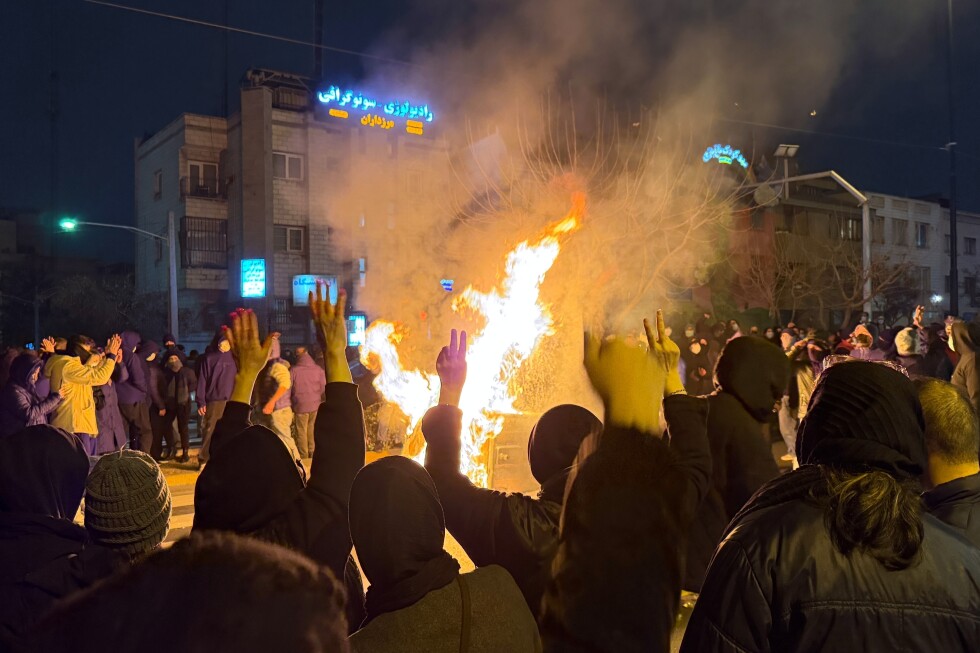
U.S. officials accuse Momeni of overseeing law enforcement forces responsible for the deaths of thousands of peaceful protesters since demonstrations began in late December. What initially started as economic protests quickly evolved into broader opposition to the Islamic Republic, triggering a harsh government response.
Human rights activists claim the ensuing crackdown has killed more than 6,000 people, though Iranian state media consistently refers to the demonstrators as “terrorists.” The EU imposed its own sanctions against Momeni on Thursday, along with other high-ranking Iranian officials from the judicial system and security apparatus.
“They were all involved in the violent repression of peaceful protests and the arbitrary arrest of political activists and human rights defenders,” the EU stated in its announcement.
The Treasury Department’s Office of Foreign Assets Control simultaneously sanctioned Babak Morteza Zanjani, an Iranian investor accused of embezzling billions in oil revenue for the benefit of the Iranian government. Two digital asset exchanges linked to Zanjani, which allegedly processed large volumes of funds, were also penalized.
These financial sanctions reflect growing concerns about Iran’s attempts to circumvent existing international restrictions through cryptocurrency and shadow banking networks. Treasury officials have identified sophisticated operations designed to launder money from Iranian oil sales to foreign markets.
In a parallel move, the EU has agreed to list Iran’s paramilitary Revolutionary Guard as a terrorist organization. Though largely symbolic, this designation adds to the diplomatic isolation Tehran faces. The Iranian response has been swift and confrontational, with Ali Larijani, secretary of Iran’s Supreme National Security Council, announcing on social media platform X that Iran is considering designating the militaries of EU countries as terrorist groups in retaliation. The Iranian parliament is expected to approve this measure on Sunday.
The latest U.S. sanctions also target the secretary of the Supreme Council for National Security, who Treasury officials claim was among the first to call for violence against Iranian protesters. Additionally, 18 individuals and companies allegedly involved in a shadow banking network of sanctioned Iranian financial institutions face restrictions.
Treasury Secretary Scott Bessent emphasized the department’s commitment to targeting those profiting from Iran’s economic isolation. “Like rats on a sinking ship, the regime is frantically wiring funds stolen from Iranian families to banks and financial institutions around the world. Rest assured, Treasury will act,” he said in a statement.
The sanctions effectively freeze any U.S.-based assets belonging to the designated individuals and entities, restrict their travel to America, and prohibit U.S. citizens and companies from conducting business with them. These measures aim to isolate those responsible for human rights abuses and corruption from the international financial system.
The coordinated actions between the U.S. and EU signal growing international consensus on responding to Iran’s domestic crackdown and regional activities. However, Tehran has historically found ways to adapt to sanctions pressure, often leveraging alternative financial channels and partnerships with countries less aligned with Western policies.
As tensions continue to rise, observers note that sanctions alone may have limited impact on changing Iran’s domestic policies, particularly regarding its response to civil unrest. The Iranian government has repeatedly demonstrated its willingness to use force against protesters despite international condemnation.
Fact Checker
Verify the accuracy of this article using The Disinformation Commission analysis and real-time sources.

11 Comments
While sanctions can be a blunt instrument, targeting officials responsible for the crackdown in Iran is an important signal. The world is watching, and the regime must be held accountable for its egregious human rights abuses.
The US and EU are right to target specific Iranian officials for their role in the crackdown on protesters. However, the regime’s disregard for human rights runs deep, and continued international pressure will be crucial to enact meaningful change.
Sanctioning officials involved in the violent suppression of protests is a start, but the scale of the crackdown in Iran suggests more comprehensive measures may be needed. The world is watching and the regime must be held to account.
Sanctioning the Interior Minister for his involvement in the violent suppression of protesters is a step in the right direction. But the international community must remain vigilant and explore additional ways to support the Iranian people’s fight for freedom.
The situation in Iran is deeply troubling. While sanctions may have limited impact, continued international condemnation and pressure is crucial to support the Iranian people’s fight for freedom and human rights.
It’s good to see the US and EU taking coordinated action against Iranian officials responsible for the violent suppression of peaceful protests. Upholding human rights should be a global priority.
Agreed. The protests in Iran highlight the regime’s disregard for civil liberties and the need for greater international pressure to enact meaningful change.
The situation in Iran is deeply troubling. Sanctioning officials involved in the violent suppression of protesters is a necessary step, but more comprehensive action may be required to address the regime’s disregard for human rights.
Sanctions are a blunt instrument, but targeting specific officials involved in the crackdown is a targeted approach. I hope this sends a clear message that the world is watching and will not tolerate such brutality against civilians.
The crackdown on protesters in Iran is deeply concerning. Sanctioning officials involved in the violent repression is an important step, but more needs to be done to protect human rights and hold the regime accountable.
Cracking down on peaceful protesters is unacceptable. Imposing sanctions on officials responsible is an important step, but the international community must explore all options to hold the Iranian regime accountable.