


Listen to the article
Wisconsin’s Legislative Transparency Crisis as C-SPAN Equivalent Goes Dark
The abrupt shutdown of WisconsinEye in mid-December has created a significant transparency gap in the state’s legislative process, leaving lawmakers meeting without public broadcast for the first time since 2007. The nonprofit network, which served as Wisconsin’s version of C-SPAN, ceased operations amid ongoing financial struggles, cutting off citizens from viewing floor sessions, court hearings, committee meetings and other government proceedings.
“WisconsinEye has become a vital part of our democracy in Wisconsin,” said Bill Lueders, president of the Wisconsin Freedom of Information Council. “We’ve lost, at least temporarily, this precious resource for participating and understanding the workings of our democracy.”
The situation has placed Wisconsin in a rare position nationally. According to the National Conference of State Legislatures, every state had been broadcasting legislative sessions via video, audio or both as of a 2022 review. Most states rely on public broadcasting networks or government-funded operations to ensure legislative transparency, unlike Wisconsin’s independent nonprofit model.
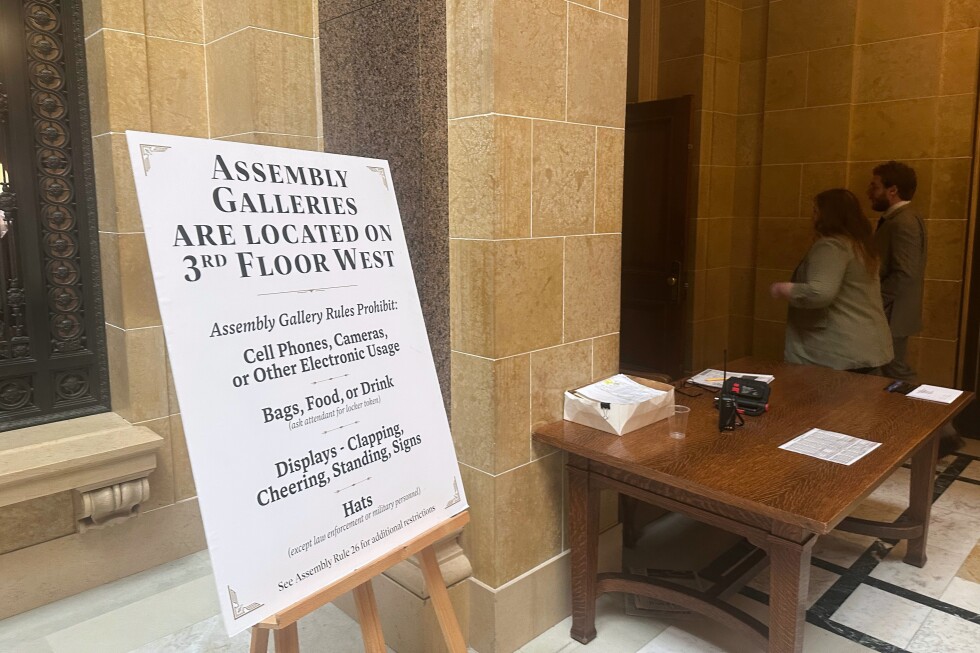
The impact has been immediate and far-reaching. When legislators convened in January, Republican leaders who control both chambers began enforcing pre-WisconsinEye rules that prohibit the public from recording or livestreaming proceedings. When a Democratic lawmaker attempted to livestream committee meetings, Republican committee chairs shut down those efforts.
“I’m really baffled that they are doing that,” Lueders said. “With WisconsinEye sidelined, it’s more important than ever for citizens to be able to broadcast the proceedings.”
Critical hearings on issues affecting residents’ daily lives, including regulations for data centers, have occurred without any video record of the proceedings. Additionally, the network’s website shutdown has rendered its archive of more than 30,000 hours of historical footage inaccessible to the public.
WisconsinEye’s financial troubles stem from a challenging funding model. Throughout its 18-year history, the network relied on private donations from individuals, foundations and businesses. However, competition for charitable dollars intensified after the 2020 pandemic, pushing the organization toward seeking public support.
The state legislature responded by establishing a $10 million endowment three years ago, but with a significant catch – WisconsinEye would need to match the entire amount to access the funds. The network initially raised only $210,000, prompting the state to provide $250,000 and extend the deadline. Despite these efforts, WisconsinEye failed to secure enough funding to cover its $887,000 operating budget for 2026, forcing its closure.
In a last-ditch effort to resume operations, WisconsinEye launched a GoFundMe campaign last week with a target of $250,000 to fund three months of broadcasts. As of Thursday, the campaign had raised approximately $49,000 – far short of its goal.
Government entities accustomed to WisconsinEye’s comprehensive coverage have implemented varying stopgap measures. The Wisconsin Supreme Court, which has offered live audio of oral arguments since 1997, announced plans to provide its own livestream for arguments scheduled in mid-February. The state Senate has begun streaming sessions with a single stationary camera – a stark contrast to WisconsinEye’s multi-camera setup that identified speakers and bills under discussion. Meanwhile, the Assembly has not broadcast any of its four floor sessions held in January.
A potential solution emerged Thursday when Assembly Democrats and Republicans unveiled a proposal that would allow WisconsinEye to access interest generated by the $10 million endowment, with fundraising covering the remainder of operational costs. However, the measure still requires Senate approval, and support there remains uncertain.
Senate Republican Majority Leader Devin LeMahieu expressed hesitation, saying lawmakers “will not commit to blindly giving money to an organization” without reviewing details about WisconsinEye’s finances and operations.
WisconsinEye CEO Jon Henkes responded that the organization was an “open book” and welcomed legislative scrutiny. He expressed optimism that the proposed legislation would pass, potentially making the network stronger than before.
Democratic Governor Tony Evers has signaled support for a fundraising arrangement to revive the network, provided the state doesn’t bear the entire financial burden. “I think there has to be some skin in the game,” Evers said earlier this month.
As the impasse continues, Wisconsin residents remain cut off from the transparent access to government proceedings they’ve come to expect over the past two decades.
Fact Checker
Verify the accuracy of this article using The Disinformation Commission analysis and real-time sources.

9 Comments
The shutdown of WisconsinEye is a setback for civic engagement and accountability in Wisconsin. Lawmakers should work quickly to establish an alternative platform to stream legislative sessions and hearings.
Absolutely. Public access to government proceedings should not be contingent on the financial health of a private organization. This is an opportunity for the state to strengthen its commitment to transparency.
This is a troubling development. Shutting off public access to legislative proceedings sets a dangerous precedent. Wisconsin must find a way to ensure its citizens can continue to observe and participate in the democratic process.
This is concerning news. Wisconsin has historically been a leader in legislative transparency, so this development is disappointing. I hope a solution can be found to restore public access to these important proceedings.
This is very concerning. Transparency in government proceedings is crucial for a well-functioning democracy. I hope a solution can be found to restore public access to the Wisconsin legislature’s activities.
Agreed. Relying on independent nonprofits to provide legislative transparency is a risky model. States should ensure there are robust, publicly-funded systems in place to broadcast government meetings.
The shutdown of WisconsinEye is worrying. Citizens have a right to observe and engage with their government, and this move undermines that. I hope Wisconsin can quickly establish an alternative platform to restore public access.
Agreed. Transparent and accessible government is a cornerstone of a healthy democracy. Wisconsin lawmakers should make this a top priority.
Losing WisconsinEye is a significant blow to the state’s democratic process. Lawmakers need to prioritize finding a sustainable, publicly-funded solution to broadcast legislative activities. Transparency should not be optional.