


Listen to the article
Naturalized Citizens Fear Erosion of Rights Under New Immigration Policies
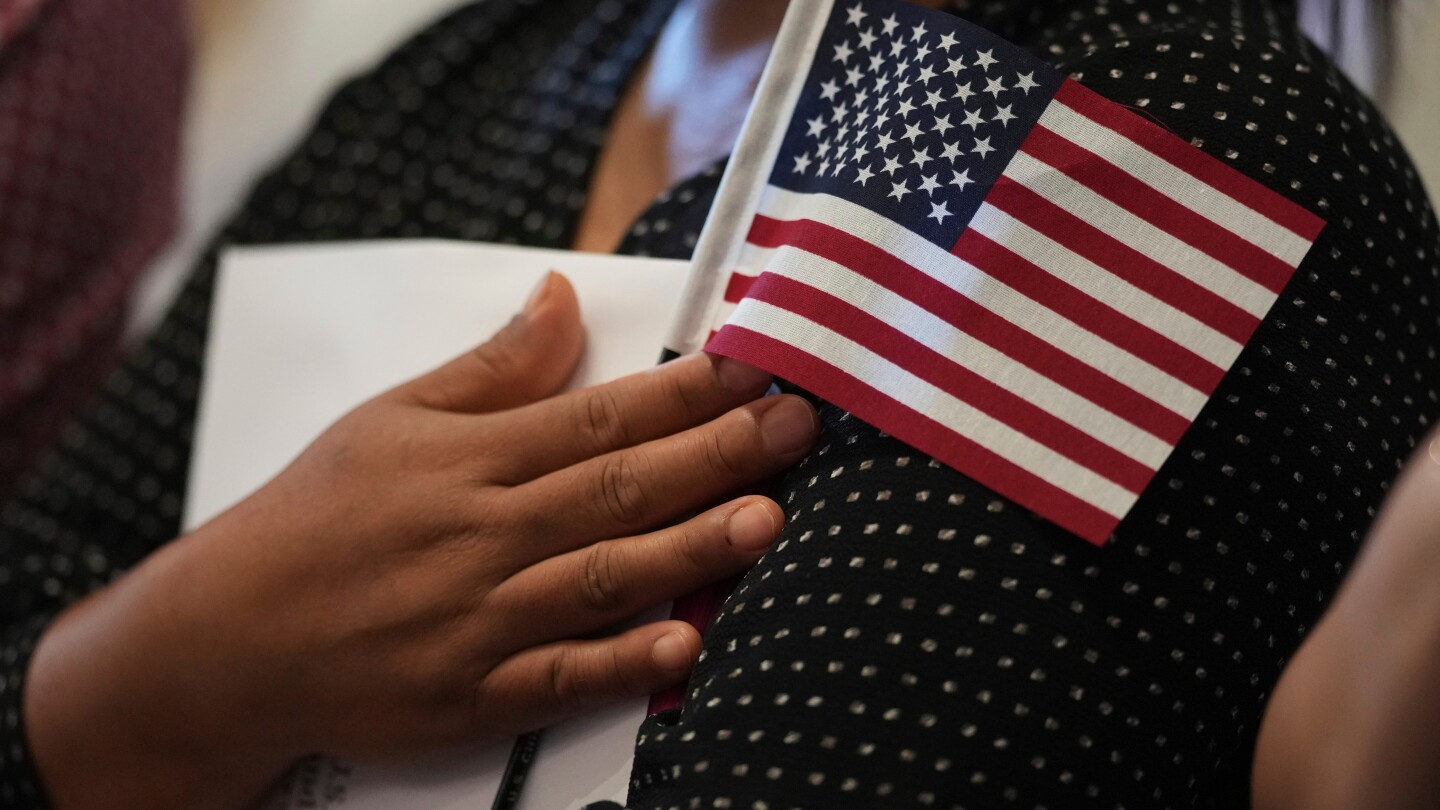
For Dauda Sesay, becoming an American citizen represented a sacred bond with his new homeland. After escaping civil war in Sierra Leone and spending nearly a decade in a refugee camp, naturalization offered him not just legal status but a profound sense of belonging and protection.
“When I raised my hand and took the oath of allegiance, I did believe that moment the promise that I belonged,” said Sesay, 48, who arrived in Louisiana over 15 years ago and now advocates for refugee integration.
But that sense of security has been shattered for many naturalized Americans in recent months as President Trump’s administration implements aggressive immigration policies. What once seemed like bedrock protections now feel increasingly uncertain, with many naturalized citizens fearing their status could be vulnerable despite their legal standing.
Some naturalized Americans have become hesitant to travel abroad, worried they might face difficulties returning home based on reports of citizens being questioned or detained by border agents. Others have begun carrying passports for domestic travel, concerned about the growing reach of immigration enforcement actions.
“I don’t travel domestically anymore without my passport, despite having a REAL ID,” Sesay explained, referring to the federally mandated identification card that meets stringent security standards.
The anxiety has intensified following immigration enforcement operations in cities like Chicago and New York, where masked federal agents have conducted sweeps that occasionally netted American citizens. One U.S. citizen who reports being detained twice by immigration agents has filed a federal lawsuit over his treatment.
Adding to these concerns, the Justice Department issued a summer memo announcing increased efforts to denaturalize immigrants who have committed crimes or are considered national security risks. In one high-profile instance, Trump publicly threatened the citizenship of Zohran Mamdani, the 34-year-old democratic socialist mayor-elect of New York City who naturalized as a young adult.
The climate of uncertainty has spread even to communities where naturalized citizens previously felt secure. New Mexico state Sen. Cindy Nava, who grew up undocumented before obtaining DACA protection and eventually citizenship through marriage, has witnessed this shift firsthand.
“I had never seen those folks be afraid… now the folks that I know that were not afraid before, now they are uncertain of what their status holds in terms of a safety net for them,” Nava observed.
While no evidence indicates an increase in actual denaturalizations under the current administration, the rhetoric and enforcement actions have created a palpable atmosphere of vulnerability. Many naturalized citizens now avoid speaking publicly about their concerns, fearing they might draw unwanted attention.
This fluctuating definition of citizenship has historical precedent, according to Stephen Kantrowitz, professor of history at the University of Wisconsin-Madison. He notes that the Constitution itself does not clearly define citizenship, leaving its interpretation subject to political forces.
“When the Constitution is written, nobody knows what citizenship means,” Kantrowitz explained. “It’s a term of art, it comes out of the French revolutionary tradition. It sort of suggests an equality of the members of a political community, and it has some implications for the right to be a member of that political community. But it is… so undefined.”
American history contains numerous examples of citizenship being expanded or restricted. The first naturalization law in 1790 limited citizenship to “free white persons” of good character. African descendants gained eligibility only after the Civil War, while the 14th Amendment established birthright citizenship. Asian immigrants remained ineligible for naturalization until 1952, when racial restrictions were finally removed.
The nation’s past also includes periods when citizenship was revoked entirely, as after the 1923 Supreme Court ruling in U.S. vs. Bhagat Singh Thind, which led to dozens of Indian Americans being denaturalized. During World War II, the citizenship rights of Japanese Americans were effectively suspended when they were forced into internment camps.
“Political power will sometimes simply decide that a group of people, or a person or a family isn’t entitled to citizenship,” Kantrowitz said.
For Sesay and others who pledged allegiance to America with full faith in its promises, the current situation feels like a profound betrayal of the covenant they believed they were entering.
“The United States of America — that’s what I took that oath of allegiance, that’s what I make commitment to,” Sesay said. “Now, inside my home country, and I’m seeing a shift… Honestly, that is not the America I believed in when I put my hand over my heart.”
Fact Checker
Verify the accuracy of this article using The Disinformation Commission analysis and real-time sources.

12 Comments
This is a concerning development. Naturalized citizens deserve the same protections as native-born Americans. Targeting this group undermines the promise of citizenship and the principles of equality and justice.
I agree. The administration’s aggressive immigration policies seem to be eroding the rights and security of naturalized citizens. This is unacceptable and goes against American values.
This is a troubling trend that deserves more attention. Naturalized citizens have just as much a right to feel secure in their status and belonging as native-born Americans. The government should be working to uphold, not erode, the promise of citizenship.
Absolutely. Targeting naturalized citizens sends the wrong message and undermines the inclusive, welcoming spirit that has long defined America. The administration needs to reconsider these policies and reaffirm its commitment to equal rights for all.
It’s deeply concerning to see naturalized citizens facing increased uncertainty and fear. Citizenship should represent a permanent bond with the country, not a tenuous status. The government must do more to protect the rights and dignity of all Americans, regardless of birthplace.
Well said. Naturalized citizens have often faced immense challenges to become part of this country. Undermining their status and rights is unacceptable and goes against the very principles of the American democracy.
This is a worrying development that warrants closer scrutiny. Naturalized citizens should not have to live in fear of losing their hard-earned status and protections. The government needs to uphold its commitment to equal treatment and the rule of law for all.
I agree. Targeting naturalized citizens in this way erodes the very foundation of citizenship and the American dream. The administration should be working to strengthen, not undermine, the rights and security of all Americans.
As a naturalized citizen myself, this hits close to home. We should be celebrating the contributions of immigrants, not making them feel like second-class citizens. The government needs to uphold its commitment to protect all Americans, regardless of birthplace.
Well said. Naturalized citizens have often made immense sacrifices to become part of this country. Undermining their rights is a betrayal of the American dream.
It’s alarming to see reports of naturalized citizens facing difficulties and uncertainty. Immigration policy should focus on securing the border, not undermining the status of those who have already gone through the proper legal channels to become Americans.
I agree. The administration’s actions seem to be creating an environment of fear and distrust, which is the opposite of what citizenship should represent. Naturalized citizens deserve the same respect and protections as anyone else.