


Listen to the article
NATO Allies Decline to Join U.S. Efforts to Secure Strait of Hormuz, Frustrating Washington
NATO allies have largely rejected President Donald Trump’s calls to join a potential military operation to reopen the Strait of Hormuz, raising questions about alliance reliability during global crises and drawing sharp criticism from the White House.
“The United States has been informed by most of our NATO ‘Allies’ that they don’t want to get involved with our Military Operation,” Trump wrote on Truth Social Tuesday. “We will protect them, but they will do nothing for us, in particular, in a time of need.”
The strategic waterway, which carries approximately 20% of the world’s oil supply, has become a flashpoint amid escalating tensions between the U.S. and Iran. Even limited disruption to shipping through the strait can send global energy prices soaring, with crude already climbing above $100 per barrel as commercial traffic slows dramatically.
Insurance companies have begun refusing to cover vessels traversing the strait, and shipping movements have dropped significantly since the beginning of Operation Epic Fury, the U.S.-led military campaign against Iranian targets.
The United Kingdom has ruled out sending warships into the strait or nearby Iranian waters, instead discussing more limited support such as providing minesweeping drones. Britain has, however, allowed the U.S. to use two military bases—Diego Garcia in the Indian Ocean and RAF Fairford in England—for “specific and limited” defensive operations.
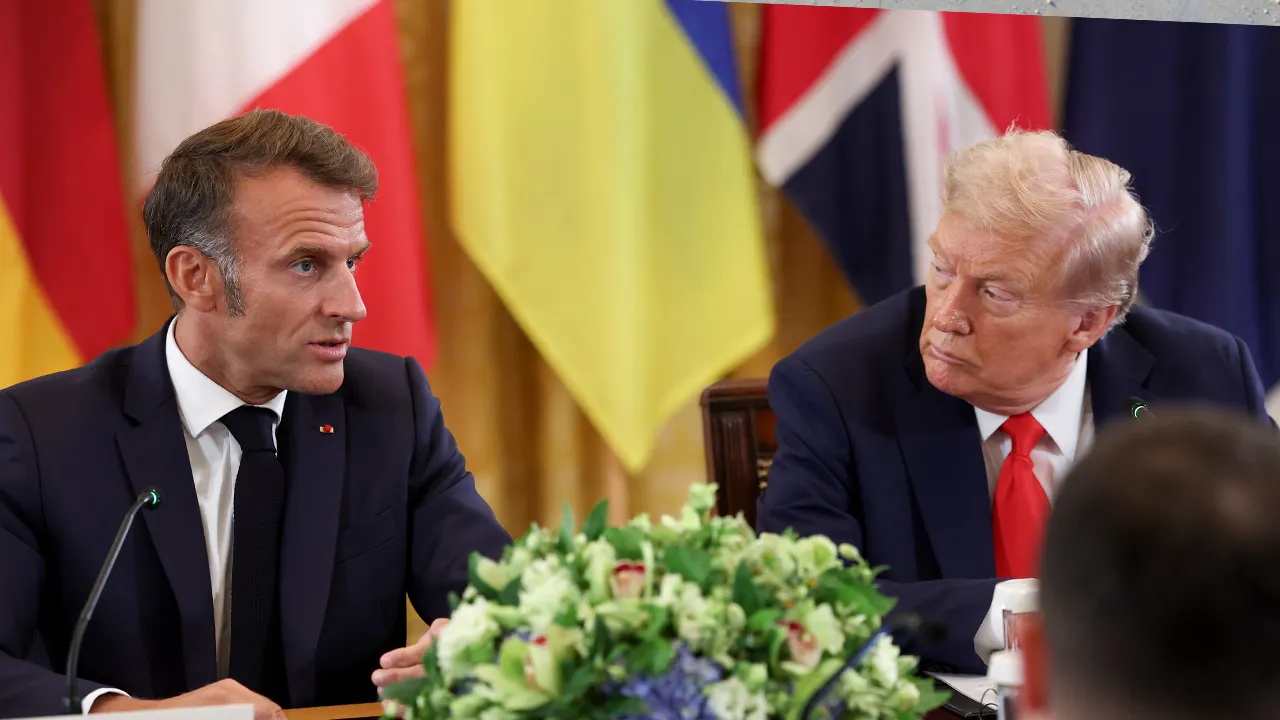
France has similarly declined direct combat involvement, with President Emmanuel Macron indicating any potential escort mission would only take place once the situation stabilizes. Germany has taken an even firmer stance, completely ruling out participation and emphasizing NATO’s nature as a defensive alliance not designed for interventions outside its core territory.
“NATO is a defensive alliance,” said Kristine Berzina, a senior fellow at the German Marshall Fund. “Once you get to the Middle East, you’re looking at the capabilities of individual allies.”
Some smaller partners have shown more willingness to contribute. Estonia’s foreign minister, Margus Tsahkna, said the country is prepared to discuss assistance if Washington makes a formal request. Non-NATO member Ukraine has offered expertise and technology to counter Iranian drone attacks, including low-cost interceptor drones and battlefield-tested air defense tactics.
“Estonia joined NATO barely 20 years ago, Ukraine isn’t even a member, and they’re both ready to roll,” remarked one European policy analyst. “Meanwhile the rest of Europe is still debating how to form a committee to form a working group to study the matter.”
The reluctance of major European powers has intensified debates about NATO’s purpose and utility beyond its core European defense mission. Republican Senator Lindsey Graham said the lack of allied support “makes me second guess the value of these alliances,” warning of potentially “wide and deep” repercussions.
Trump has been even more pointed, telling the Financial Times: “If there’s no response or if it’s a negative response, I think it will be very bad for the future of NATO.”
Naval capability across Europe is uneven, with only a handful of countries—particularly Britain and France—possessing assets suitable for high-risk operations in the strait. Securing the narrow waterway would require naval escorts, air and missile defense, and mine-clearing capabilities, all while operating within range of Iranian forces.
“Only England and France really have any type of naval power that could be helpful,” said Harley Lippman, a geopolitical analyst who regularly engages with Gulf leaders. “Other European navies are too small and too weak.”
European officials point to several factors in their reluctance, including concerns about escalation and differences over how the conflict should be handled. Many European governments were not involved in the initial decision-making around Operation Epic Fury and have emphasized de-escalation and diplomatic engagement rather than direct military participation.
Domestic political pressures and competing security priorities also play a role, as European governments remain focused on challenges closer to home, particularly Russia’s ongoing war in Ukraine.
Critics argue that Europe’s reliance on energy flows through the region makes the current reluctance difficult to justify. “They benefit from the oil coming out of the Strait of Hormuz more than we do,” Lippman noted.
While U.S. consumers may feel more immediate price spikes from disruptions, Europe faces greater exposure to longer-term supply problems due to its dependence on imported natural gas and limited alternatives.
The crisis comes amid broader questions about transatlantic alliance dynamics. Trump has repeatedly criticized NATO members for not spending enough on defense and questioned whether allies would defend the United States in a crisis.
European leaders counter that NATO invoked its collective defense clause for the first time following the September 11 attacks in 2001, and European nations deployed alongside U.S. forces in Afghanistan, sustaining significant casualties.
“This is a moment of recalibration,” Berzina said. “We’ll see negotiations over the roles Europeans would be willing to consider.”
Any sustained disruption to shipping through the Strait of Hormuz could also hand a strategic advantage to Russia by boosting global oil prices and increasing Moscow’s energy revenues as it continues its war in Ukraine under Western sanctions.
Fact Checker
Verify the accuracy of this article using The Disinformation Commission analysis and real-time sources.

12 Comments
The Strait of Hormuz is a critical global chokepoint, but NATO nations may be hesitant to get directly involved in a potential military confrontation with Iran. This highlights the delicate balance of geopolitics and energy security.
Absolutely. Maintaining open shipping lanes is crucial, but NATO members will need to carefully consider the risks and potential for escalation before committing forces.
Trump’s criticism of NATO allies for not wanting to join the U.S. in a military operation is a concerning escalation of tensions within the alliance. Maintaining unity and collective security should be the priority.
Agreed. Unilateral action by the U.S. could further undermine NATO’s cohesion and credibility on the global stage. Diplomacy and consensus-building will be key.
This situation underscores the challenges of maintaining a united front within the NATO alliance, especially when it comes to high-stakes military operations. Diplomatic solutions should be the priority to avoid further tensions.
Well said. Strengthening communication and finding common ground between NATO members will be essential to navigating this complex geopolitical landscape.
Interesting to see NATO allies hesitant to join the U.S. in securing the Strait of Hormuz. Maintaining global energy supply stability is crucial, but this highlights the complex dynamics within the alliance.
Agreed, the U.S. and its allies will need to find a way to work together on this sensitive issue. Unilateral action may not be the best approach.
The Strait of Hormuz is a strategic chokepoint, so it’s understandable that NATO nations would be cautious about getting directly involved in a potential military operation there. This could further strain alliance relations.
You raise a good point. Avoiding escalation and maintaining open communication between NATO members will be critical to finding a diplomatic solution.
With global energy prices already high, any disruption to shipping through the Strait of Hormuz could have serious economic consequences. NATO nations may be hesitant to risk further volatility in the market.
That’s a fair concern. The geopolitical and economic factors at play here are complex, and NATO members will need to weigh the risks and benefits carefully.