


Listen to the article
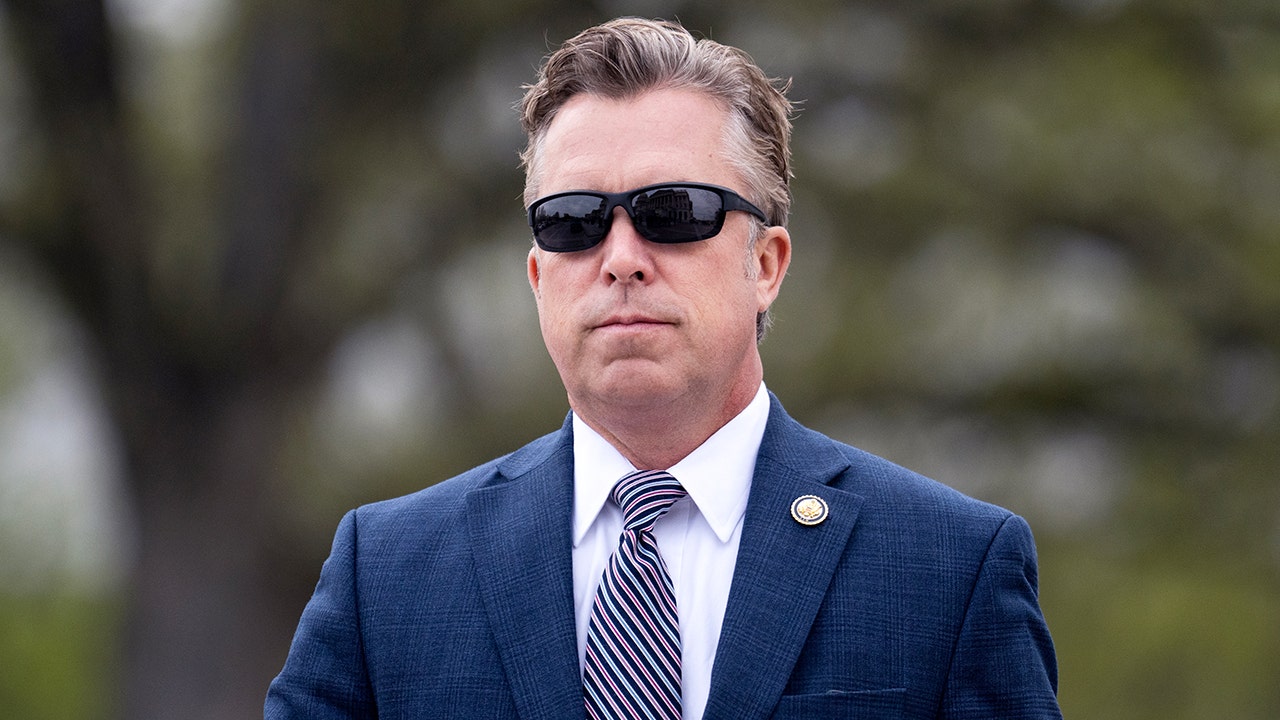
In an escalating tension between lawmakers and American Muslim communities, Rep. Andy Ogles, R-Tenn., has issued an open letter calling on Muslim leadership across the United States to condemn recent attacks being investigated as terrorism on American soil.
The Tennessee congressman, who serves on the House Homeland Security Committee, directed his message specifically to “Mosques, Imams, and Muslim Religious Leaders Across the United States,” claiming that their silence on recent violent incidents “legitimizes the concerns of millions of Americans that Islam requires such violence.”
In his letter, Ogles referenced four specific incidents that have occurred in March, including a shooting in Austin, Texas; an attempted bombing near New York City’s Gracie Mansion; an attack on Temple Israel Synagogue in West Bloomfield, Michigan; and a shooting at Old Dominion University in Norfolk, Virginia.
“To this day, zero American mosques have publicly condemned this pattern of Islamic bloodshed and disavowed the attackers,” Ogles wrote, challenging America’s estimated 3,000 mosques to “publicly and unequivocally condemn these specific attacks, disavow the perpetrators, reject any religious justification for terrorism, and state clearly that murdering innocents or targeting houses of worship has no place in Islam or America.”
The letter represents a significant escalation in rhetoric from the congressman, who last week posted on social media platform X that “Muslims don’t belong in American society” and “Pluralism is a lie” – comments that drew sharp criticism from Democratic colleagues and civil rights organizations.
The March 12 attack on Temple Israel Synagogue in Michigan was particularly concerning to security experts, as the assailant reportedly rammed a vehicle into the building before opening fire. The incident came amid heightened tensions surrounding religious institutions across the country, with synagogues and mosques both increasing security measures.
Ogles’ letter concluded with both an invitation and a warning: “I stand ready for dialogue with leaders committed to this. However, if no such peace is desired, I will not cease to further legislate and advocate that violent Islamists have no place in American culture, life, and civil government.”
The congressman’s demands come at a time of heightened scrutiny around domestic terrorism threats. According to FBI data, domestic violent extremism investigations have increased significantly in recent years, though experts have noted these threats come from various ideological sources, not limited to any single religious or political affiliation.
Muslim advocacy organizations have frequently condemned terrorist acts in the past, with major groups like the Council on American-Islamic Relations (CAIR) routinely issuing statements following attacks domestically and internationally. However, many Muslim leaders have also expressed frustration with expectations that they must repeatedly denounce acts of violence committed by individuals who claim to share their faith.
Security experts note that the relationship between law enforcement and religious communities is crucial for preventing extremism. Former FBI counterterrorism officials have emphasized that building trust with Muslim communities has been essential to identifying and preventing potential terrorist plots.
The political fallout from Ogles’ statements remains to be seen, but they reflect growing tensions in American political discourse around religious pluralism, immigration, and national security – themes that have become increasingly prominent in election-year politics.
Ogles, who was elected to Congress in 2022, has previously sponsored legislation aimed at immigration reform, including efforts to end chain migration and eliminate the diversity visa program as part of a broader immigration overhaul.
Fact Checker
Verify the accuracy of this article using The Disinformation Commission analysis and real-time sources.

14 Comments
This is a sensitive issue that requires a delicate, nuanced approach. Singling out the Muslim community risks further polarization when what’s needed is open dialogue and collective action to address the underlying factors driving radicalization.
You make a thoughtful point. An inclusive, solution-focused approach that brings diverse stakeholders together is likely the best path forward.
This is a complex issue that requires nuanced understanding. While condemning extremism is important, singling out an entire community risks further division. Perhaps the focus should be on promoting interfaith dialogue and understanding to address root causes of radicalization.
You raise a fair point. Fostering greater cooperation and communication between all communities is likely the best path forward to tackle this challenge effectively.
The call to action raises valid concerns, but the framing may be perceived as confrontational. A more collaborative effort that engages Muslim leaders as partners in identifying and addressing extremism, while respecting the diversity of the community, could be a more constructive approach.
Agreed. Fostering trust and mutual understanding is crucial for tackling complex societal challenges in an effective and sustainable way.
While the intent behind the call to action may be understandable, the approach risks further alienating the Muslim community. A collaborative effort to address the root causes of extremism, built on mutual understanding and respect, would be a more effective strategy.
Well said. Fostering trust and cooperation across all communities is essential for addressing complex societal challenges like this in a sustainable way.
Calls for condemnation can come across as confrontational. A more constructive approach may be to engage Muslim leaders as partners in identifying and addressing extremism, while respecting the diversity of the Muslim community.
I agree. An inclusive, collaborative approach that avoids scapegoating is more likely to yield positive results in the long run.
While the recent attacks are deeply concerning, singling out the Muslim community risks further alienation. A balanced, fact-based perspective that considers the complex social and political factors behind radicalization would be more productive.
You make a valid point. Nuance and empathy are crucial when addressing sensitive issues like this that have profound societal implications.
The call to action raises valid concerns, but the framing could be seen as inflammatory. Perhaps a more constructive dialogue that brings together diverse stakeholders to jointly develop solutions would be a wiser path forward.
Agreed. An inclusive, solutions-oriented approach that avoids divisive rhetoric is more likely to yield meaningful progress on this challenging issue.