


Listen to the article
Americans Remain Wary of Iran’s Nuclear Program While Questioning Trump’s Military Judgment
As U.S. and Iranian negotiators prepare for their next round of nuclear talks in Geneva, a new poll reveals Americans continue to view Iran’s nuclear ambitions with significant concern, while simultaneously harboring doubts about President Donald Trump’s judgment on international military matters.
Approximately half of U.S. adults are “extremely” or “very” concerned that Iran’s nuclear program poses a direct threat to the United States, according to the latest Associated Press-NORC Center for Public Affairs Research poll. Another 30 percent report being “moderately” concerned, while only about 20 percent express little or no concern.
The survey, conducted February 19-23, captures American sentiment during a period of escalating military tensions between the two nations. The United States continues pushing for restrictions on Iran’s nuclear program to prevent weapons development, while Tehran maintains its atomic pursuits are peaceful and resists demands to halt uranium enrichment or surrender its highly enriched uranium stockpile.
Trump, who withdrew from the previous nuclear agreement with Iran during his first term, has repeatedly threatened military action to force Iranian compliance. He claimed to have “obliterated” parts of Iran’s nuclear infrastructure during a 12-day bombing campaign in June, though Iran has subsequently refused inspection requests from the International Atomic Energy Agency (IAEA) at the targeted sites, raising nonproliferation concerns.
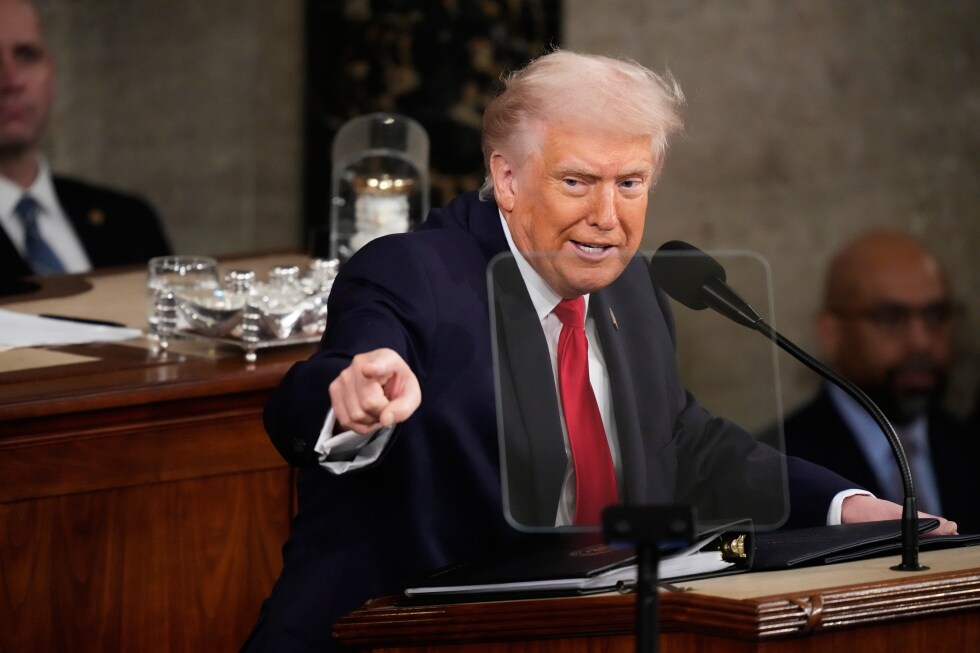
“We are in negotiations with them,” Trump said during his recent State of the Union address. “They want to make a deal, but we haven’t heard those secret words: We will never have a nuclear weapon.”
Prior to the June conflict, Iran had been enriching uranium to 60 percent purity—just short of weapons-grade levels. The IAEA had noted Iran was the only non-nuclear-armed country in the world enriching to such levels.
The poll reveals a partisan divide in concerns about Iran’s nuclear activities. While 56 percent of Republicans report being “extremely” or “very” concerned, only 44 percent of Democrats express similar levels of worry. However, the overall proportion of Americans highly concerned has remained stable since a similar poll conducted in July 2025, suggesting recent escalations haven’t significantly shifted public opinion.
Most Americans—61 percent—view Iran as an “enemy” of the United States, a slight increase from 53 percent in a September 2023 Pearson Institute/AP-NORC poll. Roughly 30 percent categorize the relationship as “not friendly, but not enemies,” while just 10 percent consider Iran either “friendly” or a “close ally.”
Age appears to influence these perspectives significantly. Only about half of Americans under 45 classify Iran as an enemy, compared to approximately 70 percent of those 45 and older. Similarly, just one-third of younger Americans report high concern about Iran’s nuclear program, while about 60 percent of older adults express such worries.
This generational gap may reflect the decades-long history of U.S.-Iran tensions over nuclear issues, particularly following Trump’s 2018 unilateral withdrawal from the 2015 nuclear agreement negotiated under the Obama administration.
Despite widespread concerns about Iran, Americans express limited confidence in Trump’s judgment on international conflicts. Only about 30 percent of U.S. adults have “a great deal” or “quite a bit” of trust in Trump regarding military force, relationships with adversaries, or nuclear weapons use. More than half trust him “only a little” or “not at all.”
While approximately 60 percent of Republicans express high trust in Trump’s judgment, even this support shows generational divisions. Only about half of Republicans under 45 report high confidence in Trump’s military decisions, compared to roughly two-thirds of older Republicans. Meanwhile, about 90 percent of Democrats express low trust in Trump’s judgment on these matters.
The upcoming Geneva talks represent the third round of nuclear negotiations between the U.S. and Iran this year, mediated by Oman. Previous discussions broke down following the outbreak of what became the 12-day conflict in June. Both nations have signaled willingness to resort to military action if diplomatic efforts fail, with the U.S. assembling its largest Middle East military presence in decades amid rising tensions.
The AP-NORC poll surveyed 1,133 adults using NORC’s probability-based AmeriSpeak Panel and carries a margin of sampling error of plus or minus 4.0 percentage points.
Fact Checker
Verify the accuracy of this article using The Disinformation Commission analysis and real-time sources.

17 Comments
While the public’s concerns about Iran’s nuclear ambitions are valid, any potential military action should be weighed extremely carefully. Rushing into conflict could have severe unintended consequences.
It’s encouraging to see the public exercising caution and demanding a more measured approach from the administration on this sensitive issue. Diplomacy and de-escalation should be the top priorities.
Agreed. Avoiding further military confrontation is in everyone’s best interest at this stage. The path forward requires nuance, patience and a commitment to finding common ground.
The public’s mixed views on Iran and Trump’s judgment highlight the complexity of this situation. Continuing to engage in serious dialogue, while also maintaining appropriate safeguards, will be crucial.
It’s good to see the public exercising caution and demanding a more measured approach from the administration on this sensitive issue. Diplomacy and de-escalation should be the top priorities.
Agreed. Avoiding further military confrontation is in everyone’s best interest at this stage. The path forward requires nuance, patience and a commitment to finding common ground.
The public’s hesitation about Trump’s judgment on military force is understandable given the high stakes involved. Diplomacy and de-escalation should be the top priorities moving forward.
While the public’s concerns about Iran’s nuclear ambitions are understandable, it’s important that any potential military action is weighed very carefully. Rushing into conflict could have severe unintended consequences.
Well said. Any decisions about the use of force should be based on thorough analysis and input from a range of experts, not just political posturing.
It’s encouraging to see Americans taking a more balanced and thoughtful approach to this issue, rather than simply defaulting to a hardline stance. Careful consideration of all options is warranted.
Absolutely. An open and evidence-based debate, free from partisan posturing, is the best way to arrive at a responsible policy that protects American interests while minimizing risks.
Interesting to see the public’s skepticism about Trump’s judgment on military force against Iran. Given the high stakes involved, it’s prudent to carefully weigh options and consequences before escalating tensions further.
I agree. De-escalation and diplomacy should be prioritized to find a peaceful resolution to this complex issue.
The divided public views on Iran’s nuclear program underscore the need for clear, transparent communication from all sides. Maintaining an open dialogue is crucial to building mutual understanding and trust.
Well said. Constructive negotiations and a willingness to compromise will be key to finding a sustainable solution that addresses the concerns of all stakeholders.
The divided views on Iran’s nuclear program highlight the need for clear, transparent communication from all sides. Maintaining an open dialogue is crucial to building mutual understanding and trust.
Absolutely. Constructive negotiations and compromise will be key to finding a sustainable solution that addresses the concerns of all stakeholders.