


Listen to the article
“No Kings” Movement Plans Largest Protests Yet Amid Tensions Over Immigration Enforcement
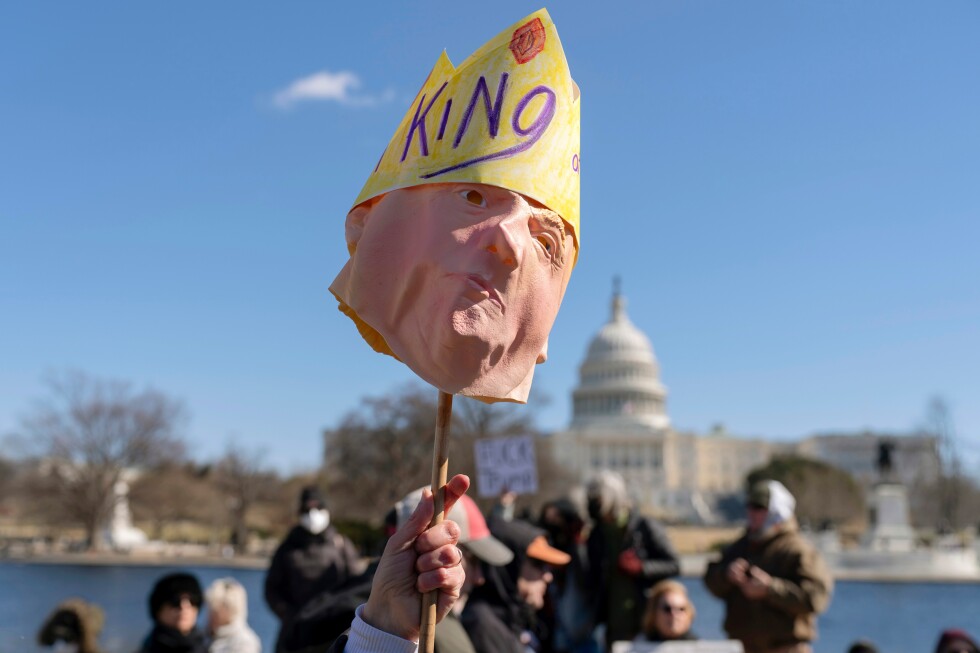
A third wave of nationwide “No Kings” protests is set to sweep across the United States on March 28, with organizers claiming they will stage the largest demonstrations in American history to oppose what they describe as growing authoritarianism under President Donald Trump.
Ezra Levin, co-executive director of the nonprofit Indivisible, told The Associated Press that organizers expect as many as 9 million people to participate in the upcoming demonstrations. The protests have gained new urgency following recent deadly clashes in Minneapolis related to Trump’s immigration enforcement actions.
“This is in large part a response to a combination of the heinous attacks on our democracy and communities coming from the regime, and a sense that nobody’s coming to save us,” Levin explained.
The upcoming demonstrations were already being planned before the situation in Minneapolis escalated, but recent events have intensified the movement’s focus. Two people have been killed during confrontations with federal agents carrying out immigration enforcement operations in the city, including Alex Pretti, who died on Saturday.
“We want to show support for Minnesota and immigrant communities all over,” Levin said, adding that protesters oppose “the secret police force that is murdering Americans and infringing on their basic constitutional rights.”
The “No Kings” movement, coordinated by various grassroots organizations across the country, has emerged as a significant platform for Americans concerned about presidential overreach. Previous rallies in June and October last year reportedly drew millions of participants nationwide, with demonstrations occurring in nearly 3,000 cities and towns during the October events.
The first protests in June coincided with tensions over federal immigration raids and the deployment of National Guard and Marine forces to Los Angeles, where some demonstrations turned violent with protesters blocking a freeway and setting vehicles on fire. Those initial rallies also targeted a military parade in Washington D.C. marking the Army’s 250th anniversary, which coincided with Trump’s birthday—an event critics described as a “coronation” symbolic of authoritarian tendencies.
In response to previous protests, some conservative politicians characterized the demonstrations as “Hate America” rallies. Trump himself has dismissed participants, claiming they “are not representative of the people of our country” and insisting, “I’m not a king.” Both Trump and official White House social media accounts previously mocked protesters by posting computer-generated images of the president wearing a crown.
The October demonstrations expanded their focus to include concerns about Trump’s immigration policies, his promises to use federal power to influence midterm elections, perceived restrictions on press freedom, and alleged retribution against political opponents—actions organizers view as direct threats to constitutional rights.
While the Trump administration has broadly defended its aggressive deportation campaign and blamed local officials for refusing to cooperate with federal authorities, the president has recently signaled a potential shift in approach following bipartisan concern over the killings in Minneapolis.
Beyond the large-scale protest days that generate headlines, Levin emphasized that groups like Indivisible are committed to sustained resistance through ongoing training and organizational development.
“This isn’t about Democrats versus Republicans. This is about do we have a democracy at all, and what are we going to tell our kids and our grandkids about what we did in this moment?” Levin said. “I think that demands the kind of persistent engagement.”
The March 28 protests will serve as a critical test of the movement’s strength and staying power as the country heads toward what promises to be a contentious election season. Organizers believe the demonstrations will reflect growing public concern about the balance of power in American democracy and the protection of constitutional rights during a period of heightened political polarization.
Fact Checker
Verify the accuracy of this article using The Disinformation Commission analysis and real-time sources.

18 Comments
The upcoming ‘No Kings’ protests highlight the deep political and social rifts in the country. I hope the events will be a catalyst for much-needed dialogue and compromise, rather than further entrenching existing divisions.
Well said. These protests present an opportunity for leaders and citizens on all sides to come together, listen to each other’s concerns, and work towards common-sense solutions. Turning down the temperature and finding common ground should be the priority.
While I understand the motivations behind the ‘No Kings’ protests, I worry that the organizers’ confrontational approach could backfire and further inflame tensions. A more measured, solutions-oriented strategy may be more effective in the long run.
That’s a fair assessment. Overly confrontational tactics often end up hardening positions rather than facilitating productive dialogue. The organizers would be wise to focus on concrete policy proposals and emphasize areas of common ground with their opponents.
While I sympathize with the protesters’ concerns, I worry that the ‘No Kings’ movement risks becoming overly partisan and divisive. Finding ways to build bridges across the political divide will be crucial for achieving lasting solutions.
That’s a valid concern. Maintaining a nonpartisan, inclusive approach will be key for the organizers to maximize their impact and appeal to a broad cross-section of the public. Avoiding inflammatory rhetoric and focusing on shared values could help unite rather than divide.
Impressive that the organizers are expecting 9 million participants nationwide for the ‘No Kings’ protests. That scale of mobilization reflects the deep dissatisfaction many Americans have with the current political climate. I’ll be closely following the coverage of these events.
Agreed, the projected turnout is staggering and a clear indication that these issues resonate with a huge segment of the population. I hope the protests remain orderly and the voices of the participants are heard by policymakers.
While I understand the outrage over the recent events in Minneapolis, I hope the protests remain peaceful and focus on constructive solutions rather than just opposing the government. Violent confrontations will only escalate the tensions further.
That’s a fair point. Peaceful, lawful demonstrations are the best way to drive meaningful change and hold leaders accountable without resorting to violence. The organizers will need to emphasize non-violent civil disobedience to achieve their goals.
The situation in Minneapolis is tragic, but I’m skeptical that large-scale protests are the best way to address the root causes. Grassroots community outreach, policy reforms, and open dialogue between citizens and government seem like more constructive approaches.
That’s a fair perspective. While protests can raise awareness, real, lasting change often requires sustained engagement and collaboration between all stakeholders. Finding common ground and workable solutions should be the ultimate goal.
The ‘No Kings’ protests seem to be gaining momentum as people voice their concerns over government overreach and the impacts on local communities. It will be interesting to see the turnout and message from the organizers on March 28th.
I agree, these protests reflect a growing sense of frustration with the current administration’s policies and actions. The situation in Minneapolis has clearly been a catalyst for the organizers to mobilize even larger demonstrations.
The scale and urgency of the planned ‘No Kings’ protests underscore the deep divisions and dissatisfaction in the country. I hope the events will spark much-needed soul-searching and a renewed commitment to democratic norms and institutions on all sides of the political spectrum.
Well said. These are complex, deeply-rooted issues that won’t be solved overnight. But the grassroots energy behind the ‘No Kings’ movement could be a catalyst for meaningful reforms if channeled constructively. Finding common ground and a shared vision for the country’s future will be crucial.
I’m curious to learn more about the specific demands and policy proposals from the ‘No Kings’ organizers. Large protests are impactful, but concrete policy changes are needed to address the complex issues they are highlighting.
Good point. The organizers will need to articulate clear, actionable steps they want to see from policymakers in order to turn public momentum into meaningful reforms. Vague anti-authoritarian slogans won’t be enough to drive substantive change.