


Listen to the article
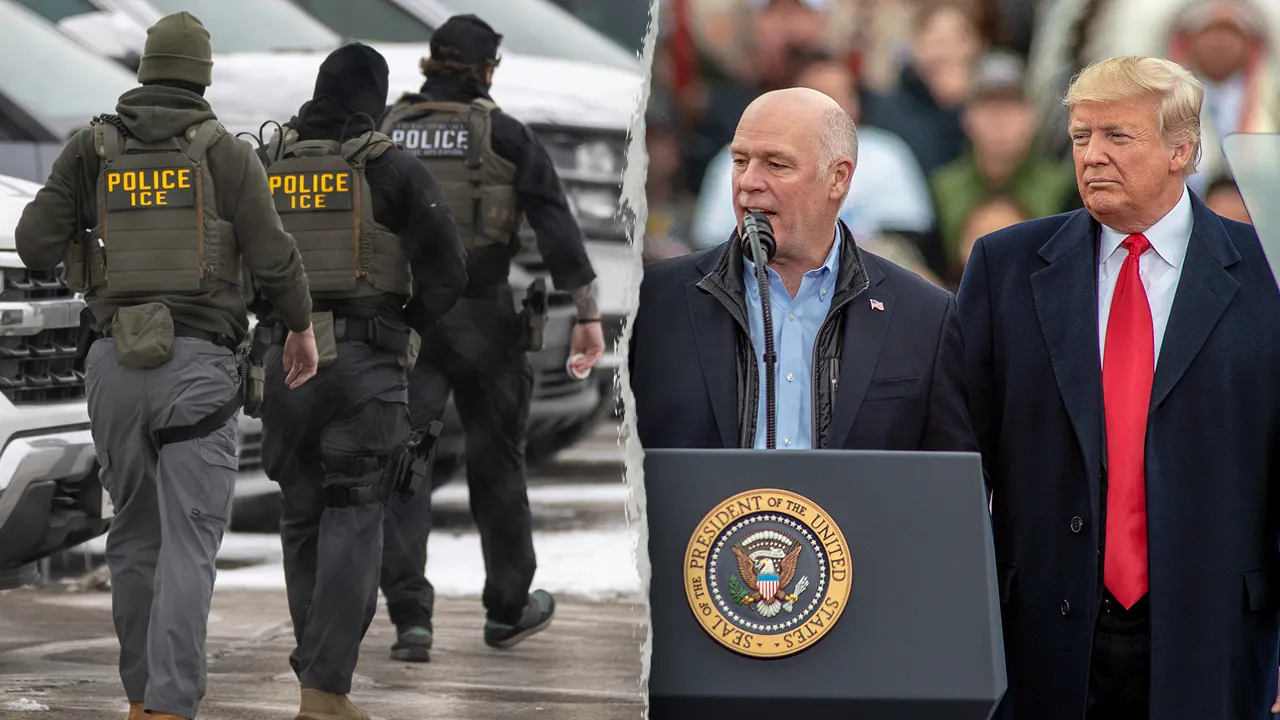
Montana’s governor and attorney general have launched an investigation into the capital city of Helena for potentially violating the state’s ban on sanctuary cities, marking a significant escalation in the state’s immigration enforcement stance.
Governor Greg Gianforte and Attorney General Austin Knudsen, both Republicans, announced they will investigate whether Helena’s recent policies limiting cooperation with federal immigration authorities violate Senate Bill 200, which prohibits sanctuary jurisdictional policies throughout Montana.
“In Montana, we don’t tolerate defiance and we support our law enforcement officers,” Gianforte told Fox News Digital. “While the attorney general’s initial investigation will focus on the city of Helena, we’re really sending a message to all local governments across the state: If you are found to be in violation of state law, there will be penalties.”
The investigation follows a vote by Helena City Commissioners that aims to prevent local coordination with federal immigration enforcement. Gianforte expressed “serious concerns” about the resolution’s compliance with state law, which mandates that no state or local agency may refuse to cooperate with the Department of Homeland Security.
In a formal letter to Knudsen requesting his office’s cooperation, Gianforte connected the issue to broader national immigration politics, referencing former President Donald Trump’s deportation priorities and criticizing the previous administration’s border policies.
The governor characterized Helena’s resolution as “clearly designed to obstruct federal law enforcement operations,” citing provisions that order local officers not to assist other agencies or detain individuals based on suspicion of immigration violations.
Attorney General Knudsen took a similarly firm stance, telling the Flathead Beacon that Helena appears to be “thumbing its nose to the Montana Legislature” and emphasized that municipalities do not make state law. “I encourage [the city] to retain counsel [and] get a lobbyist,” he added.
The state’s sanctuary city ban, originally authored by Republican State Representative Kenneth Holmlund from Miles City, allows for civil legal action and financial penalties against jurisdictions found in violation. Under SB 200, local governments that refuse to cooperate with federal immigration authorities could face substantial consequences.
Helena officials responded cautiously to news of the investigation. A city spokeswoman told Fox News Digital they had not received any formal communication about the matter from the governor and declined detailed comment on potential litigation. However, she defended the city’s position, stating, “Helena’s resolution was drafted with careful consideration of applicable local, state, and federal law, and the City believes the resolution is consistent with those legal requirements.”
The investigation comes amid heightened national tensions over immigration enforcement and sanctuary policies. Several states have enacted similar bans on sanctuary jurisdictions, while others have moved in the opposite direction, limiting local cooperation with federal immigration authorities.
While the official investigation currently focuses only on Helena, local reports indicate concerns about similar policies in Missoula, Montana’s second-largest city behind Billings. A Missoula spokesperson told the Montana Free Press that the city has never been a sanctuary city, though they acknowledged that police officers there do not inquire about immigration status during public interactions.
The confrontation in Montana reflects the growing polarization around immigration enforcement nationwide, with states increasingly taking divergent approaches to cooperation between local law enforcement and federal immigration authorities. As the investigation proceeds, it could establish significant precedents for how sanctuary city bans are enforced throughout the country.
Fact Checker
Verify the accuracy of this article using The Disinformation Commission analysis and real-time sources.

10 Comments
This development in Montana’s immigration enforcement is certainly noteworthy. I’ll be curious to see how the investigation into Helena’s policies unfolds and whether it sets a precedent for other local governments in the state.
Agreed. It’s an important issue that touches on the complex relationship between state and local authorities. The outcome could have significant implications for how immigration enforcement is handled across Montana.
I’m curious to see how this plays out. On one hand, the state has a right to enforce its laws, but on the other, local communities may feel they need some flexibility to address their specific situations. It will be worth following the investigation closely.
This is a tricky balance to strike. Local governments want to maintain good relations with their communities, but also need to uphold state laws. It will be an interesting test case.
This crackdown on sanctuary cities in Montana is a significant escalation in the state’s immigration enforcement stance. It will be interesting to see how the investigation into Helena’s policies plays out and whether other local governments follow suit.
It’s a complex issue with valid arguments on both sides. While the state has the authority to enforce its laws, local governments may feel they need to balance enforcement with community needs.
The governor’s crackdown on sanctuary cities in Montana is a bold move. While I understand the desire for consistent enforcement, I wonder if a more collaborative approach between state and local authorities might yield better results in the long run.
That’s a good point. Striking the right balance between state and local priorities is crucial. A heavy-handed approach may backfire, so some flexibility and open dialogue could be beneficial.
The governor’s crackdown on sanctuary cities is a bold move, but I can understand the desire for consistency in upholding state laws. At the same time, local communities may have unique needs and perspectives that warrant some flexibility. It will be interesting to see how this plays out.
You make a fair point. There’s often a delicate balance to strike between state and local priorities. A collaborative approach may be more effective than a heavy-handed crackdown in the long run.