


Listen to the article
Mississippi has joined a federal initiative aimed at addressing its critical shortage of foster homes, Governor Tate Reeves announced Tuesday. The state currently has only 52 foster homes available for every 100 children in state custody, highlighting a significant gap in the child welfare system.
The state is now the fifth to participate in the Trump Administration’s “A Home for Every Child Initiative,” following Louisiana, Missouri, Oklahoma, and Tennessee. As part of this program, Mississippi will share updated data on its child-to-home ratio with the federal government, which will be displayed on an online dashboard for transparency.
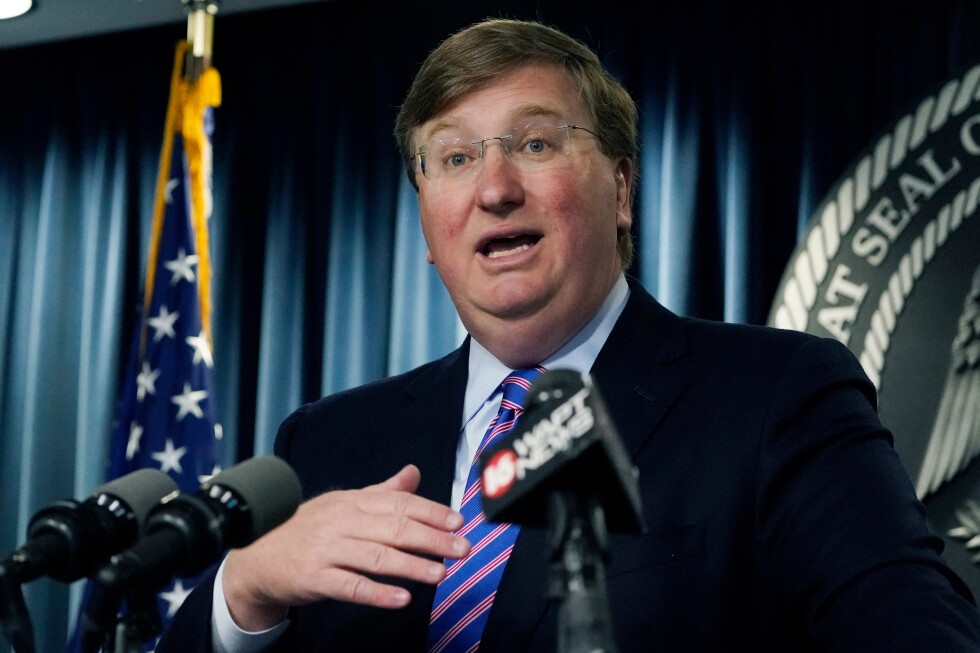
“Instead of broad recruitment efforts that don’t always meet specific needs, we are moving towards targeted recruitment, identifying the right families for the right types of placements,” Governor Reeves said during the announcement. “At the same time, we are working to cut unnecessary red tape that discourages qualified families from stepping up and stepping forward.”
A key incentive for states joining the initiative is the reduction of administrative burdens. Participating states will no longer be required to complete extensive paperwork associated with Children and Family Services Reviews or develop Program Improvement Plans, which historically involved hundreds of pages of documentation.
Alex Adams, assistant secretary for the Administration for Children and Families under the U.S. Department of Human Services, emphasized this benefit during the press conference in Jackson. “On average, states were sending us 300-page reports of mostly duplicated and recycled content across years that the federal agency did nothing with, frankly,” Adams said. “A lot of what this is doing is liberating the time and energy of the best caseworkers that they have to better deploy that time to actually benefiting kids.”
While the initiative does not come with additional federal funding, officials argue that the streamlined processes will allow Mississippi to better allocate existing resources toward direct casework rather than administrative compliance.
The shortage of foster homes has led to troubling situations where children in state custody are temporarily housed in short-term rentals, hotels, Airbnbs, or even government offices. “This is a beautiful building, but I don’t know that government buildings are conducive to stable, loving, nurturing environments that every child deserves,” Adams noted during the event at the Walter Sillers Building in downtown Jackson.
Andrea Sanders, director of Mississippi’s Department of Child Protection Services, announced that the agency is developing a modern, digital application process to make it easier for prospective foster parents to navigate the system. A new campaign to recruit foster families is also expected to launch soon.
“That’s part of the work that we’re doing to make sure that this becomes a transparent process where the agency is fulfilling its role to help support and provide information to foster parents,” Sanders explained.
The initiative also aims to reduce the number of children entering foster care by strengthening prevention services. The Family First Prevention Services Act, enacted in 2018 during Trump’s first term, was designed to provide states with funding for mental health services, substance abuse treatment, and in-home parenting programs to help keep biological families intact.
Mississippi only received approval for its state plan under this act last August, and the program has not yet been fully implemented.
The nationwide foster home shortage is a pressing issue. Nationally, there are 57 foster homes for every 100 children needing placement, slightly better than Mississippi’s ratio of 52 to 100.
Laurie Todd-Smith, a deputy assistant secretary for the Administration of Children and Families and former policy advisor to Governor Phil Bryant, recently visited Mississippi to support the initiative. She participated in an event with Focus on the Family to provide suitcases for foster children who often carry their belongings between homes in trash bags.
“Our goal is to get to a one-to-one ratio. A home for every child,” Todd-Smith said at the January event.
This new federal partnership represents a significant shift in how Mississippi approaches its foster care system, focusing on data-driven recruitment, streamlined processes, and ultimately, finding suitable homes for all children in the state’s care.
Fact Checker
Verify the accuracy of this article using The Disinformation Commission analysis and real-time sources.

10 Comments
The foster care crisis is a complex issue that impacts many states. While the details of this initiative remain to be seen, it’s encouraging to see Mississippi taking proactive measures to boost its pool of foster parents. Reducing bureaucratic hurdles could make a real difference.
Addressing the foster home shortage is crucial for protecting vulnerable children. I’m interested to learn more about how Mississippi’s participation in the Trump administration’s initiative will unfold and what specific strategies they’ll employ to recruit more foster parents.
Transparency through the online dashboard is a positive step, as it will allow the public to track progress. Targeted recruitment and streamlined processes could yield meaningful results if implemented effectively.
While the details of this program remain to be seen, it’s encouraging to see Mississippi taking action to address its foster care challenges. Targeted recruitment and reduced bureaucracy could make a real difference in providing stable homes for vulnerable children.
I’m curious to see how the online dashboard for tracking progress will be utilized and what insights it might provide. Transparent data could help drive further improvements to the foster care system in Mississippi.
Kudos to Mississippi for joining this federal foster care initiative. The state’s shortage of available homes is a serious problem, and any efforts to increase the pool of foster parents and reduce red tape are a step in the right direction.
This is an interesting move by Mississippi to partner with the Trump administration on the foster care initiative. I’m curious to see how effective the targeted recruitment and red tape reduction efforts will be in addressing the state’s shortage of foster homes.
It’s a challenging problem, but any steps to improve the system and provide more stable homes for vulnerable children are worth exploring. I hope this program can deliver tangible results for Mississippi.
Addressing the foster care shortage is a critical issue. It’s good to see Mississippi taking steps to increase the number of available foster homes through this federal initiative. Targeted recruitment and reducing bureaucratic barriers seem like practical approaches.
Agreed, streamlining the process while identifying the right families for specific placements could make a real difference. Transparency through the online dashboard is also an important accountability measure.