


Listen to the article
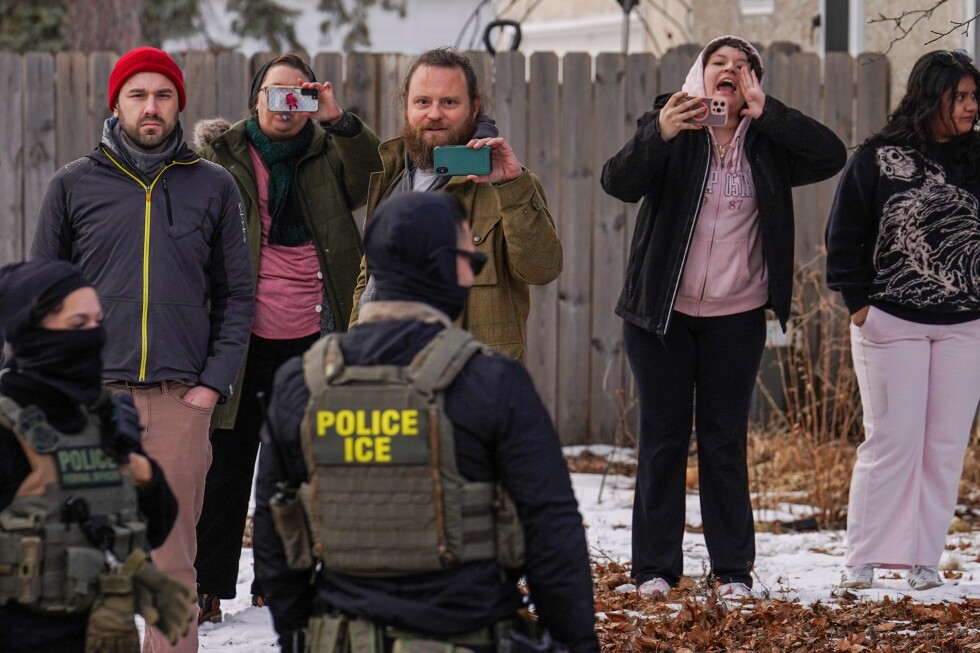
Federal authorities launched an investigation Friday into two immigration officers who allegedly made false statements under oath regarding a shooting in Minneapolis last month. This inquiry is part of a broader pattern involving at least five incidents where initial accounts from immigration officials were later contradicted by video evidence.
The investigation was announced hours after a federal judge dismissed felony assault charges against two Venezuelan men accused of attacking an Immigration and Customs Enforcement (ICE) officer with a broom handle and snow shovel on January 14. The officer had fired a shot that struck one of the men, Julio Cesar Sosa-Celis, in the thigh. Prosecutors requested the dismissal after new video evidence emerged contradicting the allegations made in the criminal complaint and during court testimony.
In the Sosa-Celis case, Homeland Security Secretary Kristi Noem had initially characterized the incident as an “ambush” of a federal officer, claiming it was an “attempted murder of federal law enforcement.” The officer reportedly fired a “defensive shot” out of fear for his life. However, during a January 21 court hearing, the officer’s testimony differed significantly from accounts provided by the defendants and three eyewitnesses. Available video did not support the officer’s claims of being assaulted with a broom and shovel.
This case parallels four other controversial shootings where initial official narratives have been challenged by video evidence.
On January 7, Renee Good was fatally shot in Minneapolis. Secretary Noem initially described the incident as an “act of domestic terrorism,” claiming Good attempted to run over ICE officers with her vehicle. However, videos from multiple angles showed Good parked diagonally on a street telling an officer, “I’m not mad at you,” before another officer grabbed at her door. As Good’s wife urged her to “drive,” ICE officer Jonathan Ross fired one shot while standing in front of the vehicle and two more while moving to the driver’s side. Good died from gunshot wounds to the head.
Alex Pretti was fatally shot on January 24 in Minneapolis. Homeland Security spokesperson Tricia McLaughlin claimed Pretti approached Border Patrol officers with a handgun and “violently resisted” when they tried to disarm him. Border Patrol senior official Greg Bovino alleged Pretti intended to “massacre law enforcement,” and Deputy White House chief of staff Stephen Miller described him as “a would-be assassin.” However, bystander videos showed Pretti holding a mobile phone, not brandishing his gun (for which he had a permit), when a masked Border Patrol officer opened fire.
During a recent congressional hearing, Republican Senator Rand Paul of Kentucky confronted immigration officials with video of the Pretti shooting, arguing that Pretti posed no threat to agents and was “retreating at every moment.”
In suburban Chicago on September 12, 2025, Silverio Villegas González was fatally shot by federal agents who claimed he drove at officers and dragged one with his car. Officials said the officer fired in self-defense and was hospitalized with “serious injuries.” Body camera footage later contradicted this account, showing the agent walking around afterward and dismissing his injuries as “nothing major.” An autopsy declared González’s death a homicide, noting he was shot at “close range.”
On October 14, 2025, in Chicago, Marimar Martinez was shot seven times but survived. A Department of Homeland Security news release labeled Martinez and another driver “domestic terrorists,” claiming she chased a Border Patrol vehicle and drove at officers. Video evidence later emerged showing agent Charles Exum steering his SUV into Martinez’s truck. Court documents revealed a text message where Exum appeared to boast about his shooting, writing: “I fired 5 rounds and she had 7 holes. Put that in your book boys.” The case against Martinez was subsequently dismissed.
These incidents raise significant questions about accountability within federal immigration enforcement agencies and the reliability of official accounts when lethal force is used during operations. As investigations continue, scrutiny is intensifying on the tactics employed in the administration’s immigration enforcement efforts.
Fact Checker
Verify the accuracy of this article using The Disinformation Commission analysis and real-time sources.

8 Comments
If initial accounts from ICE officials were indeed false, that is very concerning. Maintaining public trust requires consistent and truthful reporting from authorities.
The dismissal of charges due to contradictory evidence raises serious questions about the accuracy of initial reports from ICE officials. Restoring public trust will require thorough, unbiased investigations.
This is a concerning pattern of contradictory accounts from ICE officials. Video evidence seems crucial for transparency and accountability in these types of incidents.
This case illustrates the importance of verifying official reports, especially when they contradict video evidence. Impartial investigations are critical for upholding the rule of law.
Dismissing charges after new video evidence emerges highlights the need for thorough and impartial investigations. Transparency is key to ensure the public can have confidence in these cases.
Agreed, video footage provides crucial objective evidence that can uncover the truth. Dismissing charges based on contradictory evidence is the right move.
The apparent pattern of contradictory accounts is troubling. Robust oversight and accountability measures seem necessary to ensure transparency in these types of incidents.
It’s worrying that initial reports from authorities are being contradicted by video footage. Investigating these discrepancies is important for public trust in government.