


Listen to the article
Trump’s “Fraud Czar” Nominee Outlines Plan to Combat Taxpayer Fund Abuse
The Minnesota fraud scandal that allegedly siphoned hundreds of millions in taxpayer dollars will serve as the blueprint for a new Department of Justice division dedicated to combating fraud against the government, according to Colin McDonald, President Donald Trump’s nominee to lead the effort.
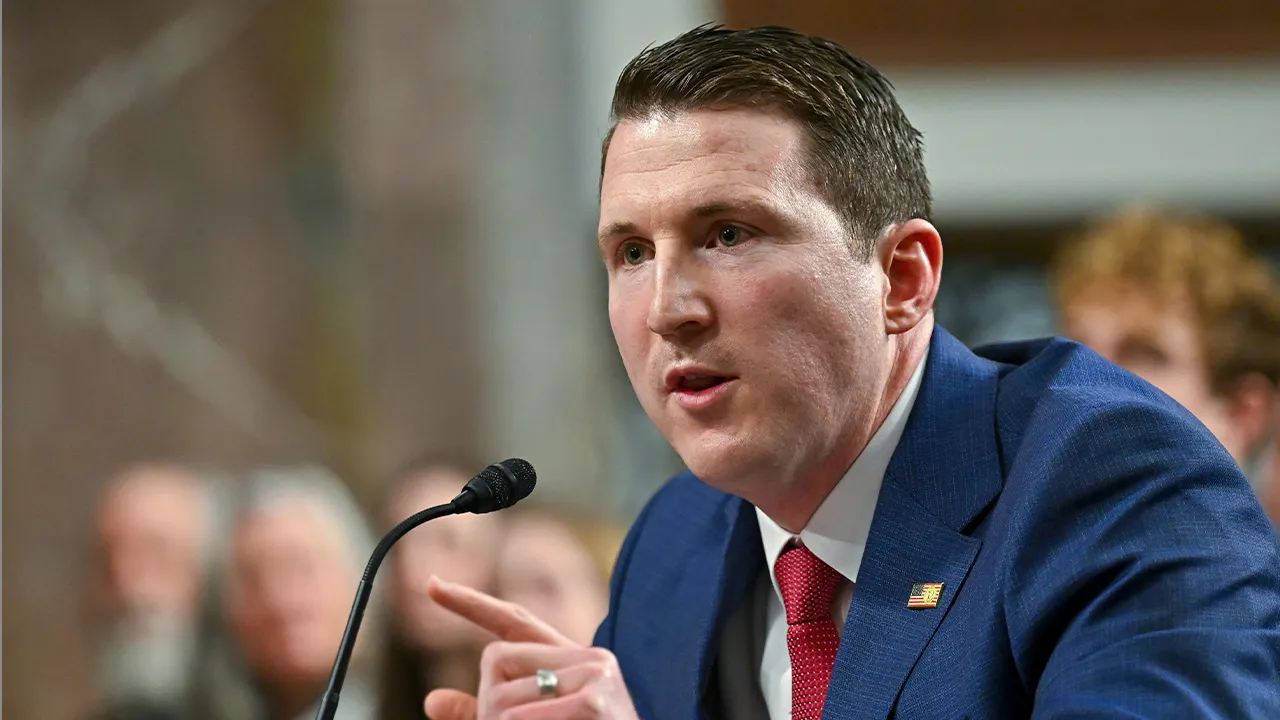
During his Senate Judiciary Committee hearing Wednesday, McDonald detailed his vision for the National Fraud Enforcement Division, explaining how it will scale up anti-fraud efforts nationwide.
“The work in Minnesota has been pivotal. The work of the U.S. Attorney’s office there, and the personnel there, has been pivotal to highlighting the problems of fraud that permeate our taxpayer funded programs,” McDonald told senators.
Trump established the new Justice Department division in January, appointing McDonald to lead what has informally become known as the “fraud czar” position. The creation of this office follows revelations of widespread fraud in Minnesota, where welfare and social services programs were allegedly defrauded of hundreds of millions of dollars.
McDonald emphasized the staggering scale of the problem, citing Government Accountability Office estimates that between $320 billion to $520 billion in taxpayer funds is lost to fraud annually across the country.
“My commitment is to work tirelessly to build a division where no fraud is too big for the Department of Justice, and no fraud is too small for the Department of Justice,” McDonald pledged during the hearing.
The nominee outlined a collaborative approach, explaining that his office will coordinate with inspectors general, federal agencies, and state and local partners to identify and prosecute fraud wherever it occurs.
During his State of the Union address Tuesday evening, Trump highlighted the administration’s commitment to tackling fraud, announcing that Vice President JD Vance will lead what he termed a “war on fraud.” Trump specifically pointed to the Minnesota case in his address, claiming the state saw an estimated $19 billion pillaged from taxpayers, while suggesting that states like California, Massachusetts, and Maine face even worse situations.
“This is the kind of corruption that shreds the fabric of a nation, and we are working on it like you wouldn’t believe,” Trump said in his address.
Committee members pressed McDonald on several specific fraud concerns. Sen. John Cornyn (R-Texas) raised issues about $21 billion in unreconciled Obamacare marketplace subsidies from tax year 2023, while Judiciary Chair Chuck Grassley (R-Iowa) highlighted that American seniors lose approximately $28 billion annually to financial scams.
McDonald committed to addressing both concerns, noting that elder fraud affects not just seniors but entire families. “My grandmother, one of them, turns 89 years old in two days. And she has seen these sorts of efforts toward her,” he said, adding that the department would use all available tools to combat these schemes.
The massive Minnesota fraud case has become a rallying point for Republican lawmakers seeking to tighten oversight of federal funding for social and welfare programs. In a Wednesday appearance on Fox News’ “America’s Newsroom,” Vice President Vance described the administration’s approach as a “full, whole government” effort to investigate fraud concerns, with the Justice and Treasury Departments taking leading roles.
“There’s a whole host of tools that we have that have never been used,” Vance said. “The president and I talked about this a couple of months ago and said, ‘What if we just did everything that we could to stop the fraud that’s being committed against the American taxpayer?'”
The anti-fraud initiative represents one of the Trump administration’s major governance priorities, with both the President and Vice President signaling that protecting taxpayer dollars from misuse will be a defining focus of their term.
Fact Checker
Verify the accuracy of this article using The Disinformation Commission analysis and real-time sources.

14 Comments
Combating fraud that drains taxpayer funds is crucial for maintaining public trust. This new division seems like a promising approach, but the real test will be in the execution.
This is an important step in the fight against government waste and abuse. Hopefully the new division can build on the Minnesota model to drive real results nationwide.
Protecting taxpayer funds from fraud and abuse should be a top priority. Glad to see the administration taking concrete steps in this direction with the new Justice Department division.
While the scale of the fraud problem is daunting, a dedicated national effort spearheaded by an experienced leader like the nominee could make a real difference. Cautiously optimistic about the potential impact.
Scaling up anti-fraud efforts is an important goal, but the devil will be in the details. Curious to see how the new division plans to work with state and local authorities to maximize its effectiveness.
The creation of a dedicated “fraud czar” position is an interesting move. Will be watching closely to see how this new division takes shape and what impact it has on reducing government waste and abuse.
The nomination of a “fraud czar” to lead this new Justice Department division is a bold move. Curious to see how they plan to implement the Minnesota approach and root out fraud in other government programs.
It will be important for the new division to work closely with state and local authorities to share best practices and coordinate efforts. Tackling fraud is a complex challenge.
Glad to see the administration taking this issue seriously and empowering federal prosecutors to ramp up anti-fraud efforts. Curious to learn more about the specific strategies and tools they plan to deploy.
Protecting seniors from scams is a crucial part of this effort. Glad to see the plan aims to address fraud against vulnerable populations as well as government programs.
Definitely, elder fraud is a major problem that needs more attention. A comprehensive approach targeting multiple types of fraud is the right way forward.
Tackling healthcare and senior fraud should be a top priority. The Minnesota model provides a solid foundation, but implementing it nationwide will be a significant challenge.
Interesting to see how the Minnesota model could be used to combat fraud and protect taxpayer funds. Scaling up anti-fraud efforts nationwide seems like a smart approach to tackle this issue head-on.
Agreed, the scale of the fraud problem highlighted in Minnesota is concerning. A dedicated national division to focus on these issues could make a real difference.