


Listen to the article
Minnesota Pushes for $250 Million to Continue Lead Pipe Removal Efforts
A coalition of Minnesota cities is advocating for $250 million in state funding to maintain momentum on lead service line replacement projects that would otherwise face a funding cliff after 2027.
Minnesota has positioned itself ahead of federal timelines by committing to remove all lead water pipes by 2033, four years earlier than the federal mandate that requires states to complete replacements by 2037. This federal requirement, established during the Biden administration, is expected to continue under the incoming Trump administration.
“We took it seriously,” said Elizabeth Wefel, a lobbyist with the Coalition of Greater Minnesota Cities, referring to the state’s aggressive approach to addressing the public health hazard.
Since 2023, Minnesota has allocated $243 million in state funding for lead line replacement. These efforts have been bolstered by approximately $350 million in federal funding through the bipartisan Infrastructure Investment and Jobs Act. However, both funding sources are projected to be depleted by 2027 without further legislative action.
“The program would just fall off a cliff without continuing investment in it,” Wefel explained. “We’ve got programs that are set up or getting set up and we need to continue that momentum.”
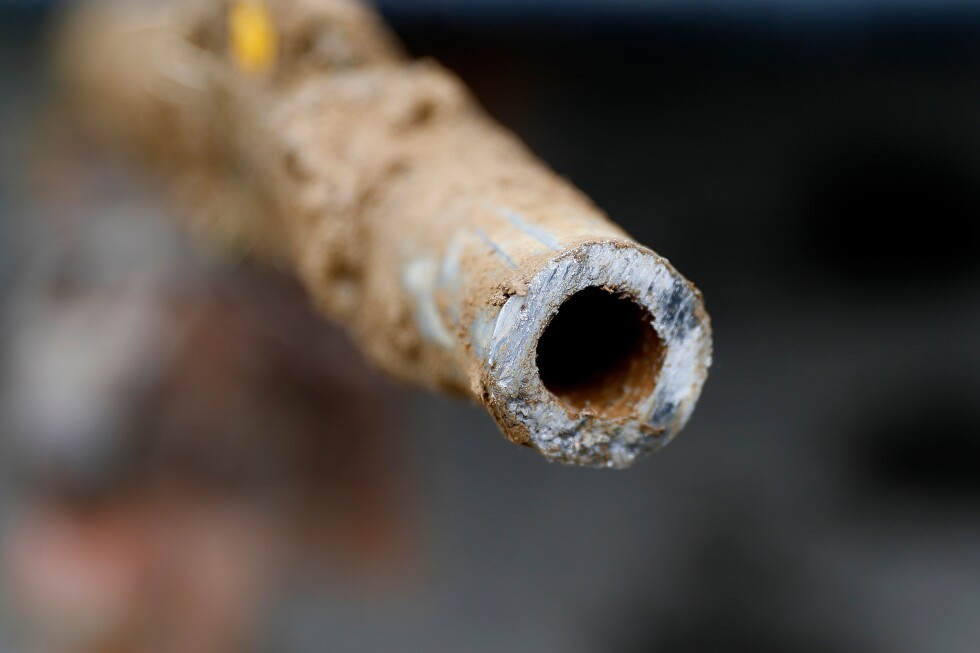
Lead service lines, which connect water mains to individual properties, were commonly used until Congress banned the practice in 1986. Despite the ban, an estimated 87,000 known lead lines still require replacement across Minnesota, with thousands more yet to be identified. The University of Minnesota and the Minnesota Department of Health have developed a searchable map to help residents locate known lead lines.
The total cost to replace all lead service lines in Minnesota is estimated at $1.5 billion, according to a report submitted to the Legislature by the Public Facilities Authority. In 2023 alone, the agency received requests for 221 projects totaling $428 million.
For individual cities, the financial burden is substantial. In New Ulm, replacing at least 317 lead service lines would cost between $12,000 and $25,000 per line, according to Mayor Kathleen Backer.
“Our local residents or property owners aren’t able to take on that burden of replacement of the lead lines,” Backer said during a February press conference.
The scale of the challenge varies considerably by location. Moorhead has a relatively low 2% of service lines containing lead, amounting to 20-30 replacements per year over a decade. By contrast, approximately 18% of St. Paul Regional Water Services’ properties have lead lines, with the utility aiming to replace 2,100 lines in 2026 alone. In Duluth, Mayor Roger Reinert reported more than 7,000 lines still needing replacement, representing one of the largest undertakings in Greater Minnesota.
Marc Pritchard, Moorhead’s water plant manager, emphasized the critical importance of continued funding: “The state funding is absolutely crucial for success. For other cities within Minnesota that have a lot higher percentage of lead services lines, they’d be in a tough spot too.”
Funding lead line replacement presents unique challenges compared to other infrastructure projects. Traditional bonding bills typically can’t be used because many lead lines run under private property. Service lines often have split ownership—publicly owned from the water main to the curb and privately owned from the curb to the household. This necessitates alternative funding mechanisms like federal or state appropriations and specialized loan or grant programs.
While Governor Tim Walz’s budget proposal includes $7 million in general funds for the lead line replacement program, the Coalition of Greater Minnesota Cities and its partners in the lead pipes coalition are pushing for the much larger $250 million allocation.
Nels Paulsen of Conservation Minnesota, another member of the coalition, stressed the urgency of securing this funding. “If we don’t get funding in the 2026 legislative session, it’s going to be a challenge to have a significant construction season,” he said. Cities need adequate planning time for 2027 projects, which requires funding certainty.
Despite legislative challenges, lead line replacement has an advantage in that it’s a finite project with a clear endpoint. “If we can bite out chunks of a couple hundred million at a time, it’s going to help us keep moving on down the road toward this finish line,” Paulsen added.
For communities like Moorhead, the prospect of renewed funding brings hope for continued progress. “Whenever I get a chance to thank the people who got the funding started, I do, and I tell them to keep it rolling if at all possible,” Pritchard said.
Fact Checker
Verify the accuracy of this article using The Disinformation Commission analysis and real-time sources.

17 Comments
Getting lead pipes replaced is crucial for public health, especially in older cities. Kudos to Minnesota for taking this issue seriously and setting an ambitious 2033 timeline. Securing sufficient funding will be key to staying on track.
Absolutely. The federal funding from the infrastructure bill has been a big help, but more state support will be needed to sustain the replacement effort over the next decade.
Lead exposure is a major public health concern, so I’m glad to see Minnesota taking such a proactive approach. Replacing all lead pipes by 2033 is an admirable goal, but securing adequate funding will be critical to making it a reality.
You’re right. The infrastructure bill funding has been helpful, but ongoing state support will be key to sustaining the replacement effort and avoiding a funding cliff in the coming years.
This is an important issue that many states and cities are grappling with. Kudos to Minnesota for setting an ambitious timeline, but the funding challenges highlight how much work remains to be done nationwide to address lead pipe infrastructure.
Replacing lead water lines is essential for protecting public health, but the costs can be prohibitive for many communities. I hope Minnesota can secure the additional $250 million needed to keep their ambitious 2033 timeline on track.
Replacing lead pipes is crucial for protecting public health, especially in older cities. Minnesota’s 2033 goal is admirable, but the funding challenges highlight the scale of the challenge facing many communities across the country.
Lead exposure is a serious public health concern, so I’m glad to see Minnesota taking such a proactive approach. Securing the necessary funding will be critical to keeping their ambitious 2033 replacement timeline on track.
Absolutely. The federal infrastructure funding has been helpful, but ongoing state support will be essential to sustaining the replacement effort over the long term.
This is an important issue that many states and cities are grappling with. Minnesota’s 2033 goal for replacing lead pipes is admirable, but the funding needs underscore the significant work that remains to be done nationwide.
This is an important infrastructure challenge that many states and cities are grappling with. It’s good to see Minnesota taking a proactive approach, but the funding needs highlight how much work remains to be done nationwide.
Agreed. Lead pipes pose serious health risks, especially for children. Securing the necessary resources to accelerate replacement projects should be a top priority for policymakers.
Replacing lead pipes is essential for protecting public health, especially in older cities. Minnesota’s 2033 goal is admirable, but securing the $250 million in additional funding will be critical to staying on track.
Lead in drinking water is a serious public health hazard, so I’m glad to see Minnesota taking such a proactive approach. Securing the necessary funding will be crucial to keeping their 2033 replacement timeline on track.
Absolutely. The federal infrastructure funding has been helpful, but additional state support will be needed to sustain the replacement effort over the long term.
Lead in drinking water is a major public health concern, so I’m glad to see Minnesota taking such a proactive approach. Replacing all lead pipes by 2033 is an ambitious target, but the funding challenges highlight the scale of the challenge.
You’re right. The federal infrastructure funding has been helpful, but ongoing state support will be crucial to sustaining the replacement effort and avoiding a potential funding cliff in the coming years.