


Listen to the article
Minnesota State Worker Blows Whistle on Department of Human Services Fraud Risk
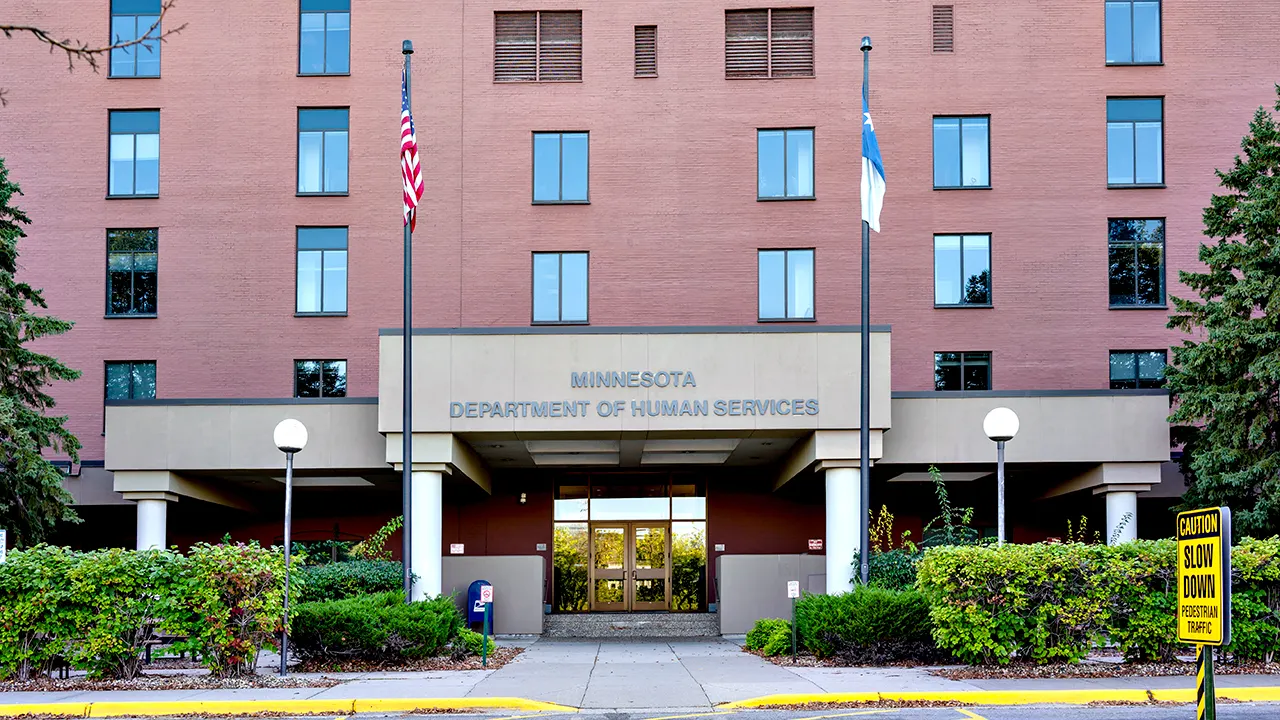
A veteran employee of Minnesota’s Department of Human Services has come forward with alarming claims about systemic vulnerabilities that she believes enabled billions in fraud throughout the state’s healthcare system.
Faye Bernstein, who has worked at DHS for two decades in contract management and compliance roles, told City Journal that serious red flags became apparent to her in 2018 and 2019 after a promotion gave her greater visibility into the department’s operations.
“Over the years, I had often thought that DHS is sloppy,” Bernstein said. “But 2018 and 2019 are when I saw, oh gosh, this is beyond normal. If we don’t have fraud today, we’re going to have fraud soon.”
Her concerns proved prescient. Federal prosecutors now estimate that as much as $9 billion was stolen through a network of fraudulent operations masquerading as daycare centers, food programs, and health clinics across Minnesota. The majority of those charged thus far in the ongoing investigation are reportedly from Minnesota’s Somali community.
Bernstein described being shocked by what she discovered in her lead position, where she could review all contracts being processed by her division. She noticed numerous conflicts and risk factors that left the system “completely open to fraud.” The lack of basic safeguards particularly alarmed her.
When Bernstein attempted to report these issues to her deputy director, she claims she was instructed to stop asking questions. What followed, according to Bernstein, was a pattern of retaliation where most of her duties were reassigned, and she was “shuffled from one job to another.”
“Even our human resources people would tell us, ‘If your supervisor tells you to do something, you must do it,'” she recalled. “And when you didn’t, the word ‘insubordination’ came up. They considered it insubordinate if you resisted an unlawful direction.”
The workplace culture Bernstein describes appears to have stifled internal watchdogs who might have helped prevent the massive fraud scheme. Recently, Bernstein has been reviewing emails from 2024 showing that members of the public had repeatedly warned the department about potential fraud.
“I was really surprised at how much notification we had,” she said. “Did we really ignore all those people writing in? Members of the public had advised us of this [alleged fraud] in email after email after email.”
The scandal has drawn significant political attention. House Republicans have characterized the Minnesota investigation as potentially just “the tip of the iceberg,” suggesting similar vulnerabilities may exist in other states. There have also been allegations that whistleblowers faced retaliation when they tried to sound the alarm years earlier.
Despite the controversy, Minnesota’s DHS is defending its record. The department released a statement last Friday citing federal data showing Minnesota’s Medicaid program has a significantly lower improper payment rate than the national average—2.1% compared to 6.1% nationally.
State officials emphasized that this data was collected before Minnesota implemented additional anti-fraud measures. “We’re committed to making Minnesota a national model for preventing fraud and catching errors,” said Shireen Gandhi, Minnesota’s interim human services commissioner. “This review shows we have strong internal controls that we continue to improve, and we are not stopping there as we accelerate our efforts to fight fraud.”
Bernstein, who described herself as a lifelong Democratic voter, insisted that the fraud issues transcend partisan politics. “This is definitely not something that the Republicans are making up,” she stated. “This is real.”
The implications of this case extend beyond Minnesota, raising questions about oversight of federal assistance programs nationwide. Federal authorities, including Homeland Security investigators, have been actively involved in the investigation, which continues to unfold as officials attempt to recover stolen funds and prevent future fraud schemes.
Fact Checker
Verify the accuracy of this article using The Disinformation Commission analysis and real-time sources.

9 Comments
This is an unfortunate situation, but I’m glad the whistleblower came forward. Exposing these types of systemic issues is important, even if it’s uncomfortable. Reforms are clearly needed to protect taxpayer dollars.
It’s concerning that the majority of those charged so far are from the Somali community. I hope the investigation remains objective and focuses only on the facts, without unfairly targeting any particular group.
I agree, the investigation must be fair and impartial. Scapegoating specific communities would only undermine public confidence further.
As a taxpayer, I’m dismayed to hear about this massive fraud. Whistleblowers play a vital role in uncovering waste and abuse. I hope the authorities take swift action to recover the stolen funds and hold the culprits accountable.
This is a very troubling report. If true, the lack of safeguards at the Minnesota Department of Human Services is deeply concerning and enabled massive fraud. I hope the whistleblower’s claims are thoroughly investigated.
The scale of this fraud is simply staggering. It’s critical that the state of Minnesota takes immediate steps to strengthen its internal controls and oversight mechanisms to prevent such egregious misuse of public resources in the future.
I’m curious to learn more about the specific red flags the whistleblower identified. What systems or processes failed to catch these fraudulent activities early on? Improving internal controls seems critical to restoring public trust.
This is a troubling situation that requires a thorough, transparent investigation. Identifying the root causes and implementing robust safeguards should be the top priorities to prevent future fraud.
Wow, $9 billion in fraud is a staggering amount. It’s alarming that these vulnerabilities went unaddressed for so long. Proper oversight and accountability are crucial to prevent this kind of abuse of public funds.