


Listen to the article
Minnesota Attorney General Denies ICE Agreement Claimed by Border Czar Homan
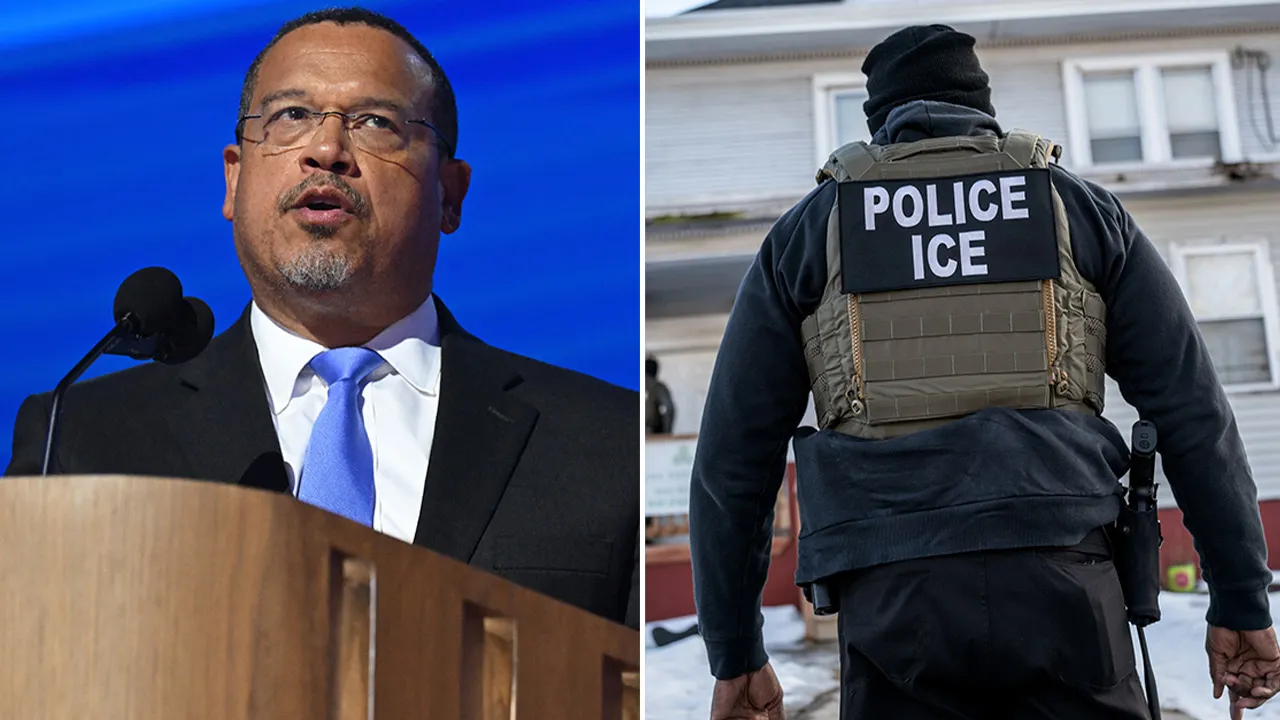
Minnesota Attorney General Keith Ellison firmly denied Thursday that he made any agreement with federal border czar Tom Homan regarding county jail notifications to U.S. Immigration and Customs Enforcement (ICE), contradicting claims made earlier by Homan.
“I did not make, and could not have made, any agreement with him about how sheriffs share with ICE information about people in their county jails,” Ellison said in a statement, refuting Homan’s assertion that the two had reached a cooperative arrangement.
Ellison’s office clarified that Minnesota law requires state prisons—not county jails—to notify federal authorities when undocumented individuals are convicted of felonies. County jails operate independently under the authority of local sheriffs and county governments, which maintain discretion over whether to cooperate with ICE notifications or detainer requests.
The dispute highlights the ongoing tension between federal and local authorities regarding immigration enforcement. Homan, who was dispatched to Minnesota on Monday by President Donald Trump, had claimed during a Thursday morning news conference that he had a “very productive” meeting with Ellison, during which the Attorney General allegedly agreed to notify ICE when local jails were releasing undocumented individuals with violent criminal histories.
“One ICE agent can arrest one bad guy when he’s behind the safety and security of a jail when he’s behind bars and we know he doesn’t have weapons,” Homan said, explaining why jail notifications matter to federal law enforcement. “But when you release that public safety threat illegal alien back into the community – we have a job to do. We’re going to arrest him, so we’re going to find him.”
Homan was sent to Minnesota amid escalating tensions between ICE agents and protesters in Minneapolis. During his news conference, he vowed to remain in the state “until the problem is gone,” referring to what the administration characterizes as increased unrest in the Minneapolis area.
“President Trump wants this fixed, and I’m going to fix it with your help,” Homan declared, while demanding an end to what he called “hostile rhetoric” and threats against ICE officers. He emphasized that federal agents would continue their operations in the Twin Cities despite local opposition.
The deployment comes after heated confrontations between anti-ICE protesters and federal agents across the Twin Cities metropolitan area. The unrest has reportedly resulted in the deaths of two U.S. citizens, Renee Nicole Good and Alex Pretti, at the hands of law enforcement, further inflaming tensions in the region.
The conflicting statements from Ellison and Homan reflect the broader national debate over immigration enforcement policies. Minnesota has become a flashpoint in this discussion, with Minneapolis Mayor Jacob Frey planning a visit to Washington D.C. to advocate for ending what he terms “unlawful ICE operations” following warnings from the Trump administration.
Minnesota has also taken legal action against ICE, filing court documents in an effort to pause the immigration crackdown. This comes as Governor Tim Walz has accused the Trump administration of engaging in “organized brutality” through its immigration enforcement tactics, characterizing ICE’s approach as “un-American.”
The Department of Homeland Security has not yet responded to requests for comment on the contradictory claims between Homan and Ellison.
As federal immigration operations continue in Minnesota, the dispute underscores the complex relationship between federal immigration priorities and local law enforcement policies, particularly in states where local officials have expressed resistance to certain federal immigration enforcement tactics.
Fact Checker
Verify the accuracy of this article using The Disinformation Commission analysis and real-time sources.

14 Comments
The dispute between the Minnesota AG and federal border official underscores the complexities and sensitivities around immigration enforcement policies and the balance of authority.
Appreciate the AG taking a firm stance to protect the rights and autonomy of county jails in his state. These issues can be politically charged.
Interesting dispute over immigration enforcement cooperation between federal and state/local authorities. It highlights the complexities and tensions around these issues.
Seems there are differing interpretations of the law and agreements between AG Ellison and ICE official Homan. Curious to see how this plays out.
The dispute between the Minnesota AG and federal border official highlights the complexities of cooperative immigration enforcement agreements. Seems there are differing interpretations of the law.
Curious to see if this leads to any legal or policy changes regarding the notification and cooperation requirements between state/local and federal authorities.
This disagreement over immigration enforcement cooperation highlights the ongoing tensions between state/local authorities and the federal government. Curious to see how it gets resolved.
The AG’s clear denial of any agreement with the federal official suggests he is committed to upholding state/local discretion on these matters.
This case underscores the ongoing challenges in balancing immigration enforcement, local law enforcement discretion, and civil liberties. Glad to see the AG clearly stating Minnesota’s position.
Appreciate the AG taking a firm stance to protect the rights and autonomy of county jails in his state. These are sensitive and politically-charged issues.
The dispute between the Minnesota AG and the federal border official underscores the nuances and challenges in navigating the balance of authority between state/local and federal immigration enforcement.
Glad to see the AG taking a principled stand to protect the autonomy of county jails in his state. These are thorny issues without easy solutions.
This disagreement over immigration enforcement cooperation between state and federal officials is another example of the ongoing tensions and debates in this policy area.
It will be interesting to follow if this dispute results in any clarification or changes to the legal framework governing state-federal cooperation on immigration matters.