


Listen to the article
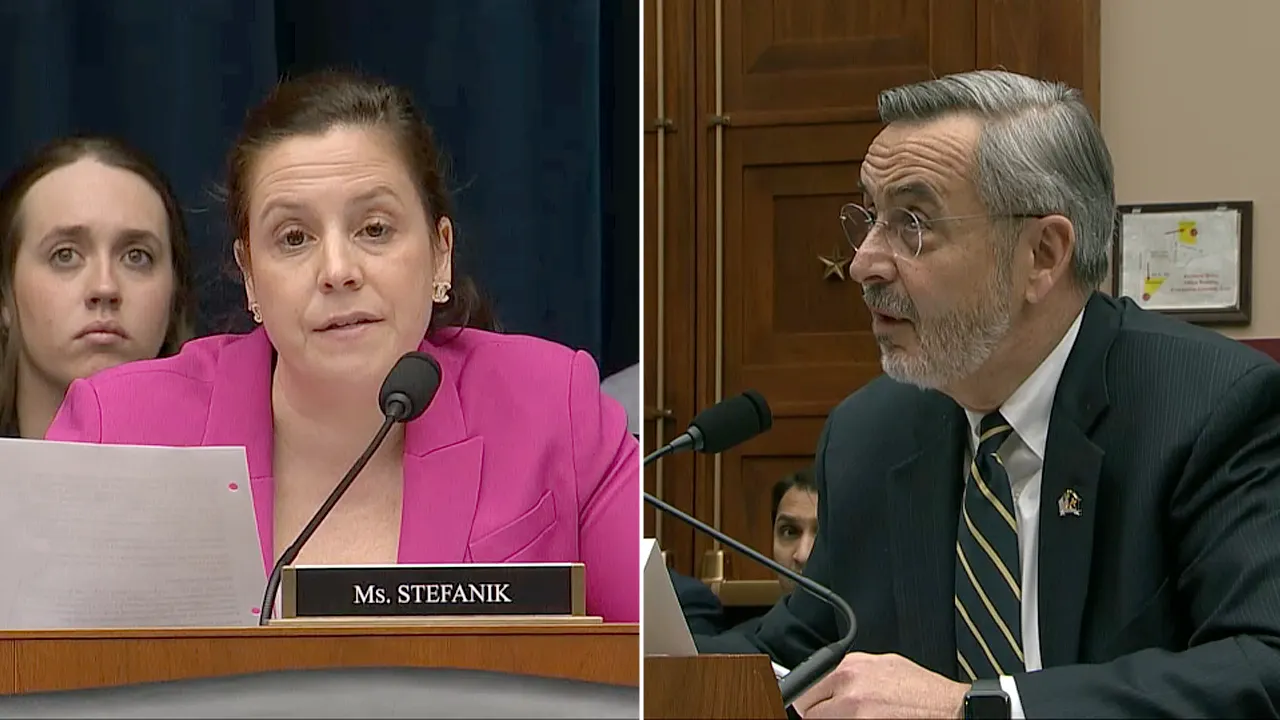
Republican Representative Elise Stefanik confronted University of Michigan’s interim president Domenico Grasso during a congressional hearing Thursday over potential Chinese espionage activities connected to the university, challenging the institution’s security protocols for foreign students and research.
During the pointed exchange, Stefanik pressed Grasso about a concerning incident from last year when five Chinese students from the university were caught photographing U.S. military equipment during nighttime drills at Camp Grayling, a military installation in Michigan.
“These students lied and misled U.S. law enforcement about their motives and later conspired on the CCP-controlled messaging app WeChat to clear their phones and cameras of photos and evidence,” Stefanik stated during the hearing.
The New York congresswoman specifically asked whether the university had “conducted a full audit to determine what intellectual property or federally funded research was compromised” following the incident. She noted that the university had ended its partnership with Shanghai Jiao Tong University after facing congressional pressure related to the espionage concerns.
Grasso’s response appeared to downplay the potential security implications. He stated that “without an audit, we are unaware of any research that was compromised by these individual students,” while emphasizing that the alleged spying occurred “miles and miles away from campus.”
Unsatisfied with this explanation, Stefanik pressed further, acknowledging the off-campus nature of Camp Grayling but reiterating her question about whether any security audit had been conducted. Grasso ultimately admitted that no such audit had taken place.
The interim president attempted to minimize concerns by explaining that the individuals in question “were not researchers” but “undergraduate students,” suggesting they would not have had access to sensitive research. “We did not do an audit… they did not have any access to any of our research,” Grasso stated.
Stefanik pushed back firmly on this reasoning, noting, “Well, they did do something nefarious off campus. I think it would be important for the university to ensure that there is a full audit conducted to make sure that no research, that they didn’t take any nefarious acts there.”
When further questioned, Grasso acknowledged that he does “not know what all of our researchers are involved in,” though he expressed doubt that the Department of Defense would grant the students access to classified information on campus.
The hearing comes amid growing national security concerns regarding potential Chinese espionage at American academic institutions. Universities across the country have faced increased scrutiny over their partnerships with Chinese institutions and the activities of Chinese nationals studying in the United States, particularly in fields that could have military or technological applications.
In his concluding remarks, Grasso indicated that the university has been working to enhance its vetting processes, stating, “We have improved, and we’re continuing to improve our background checks for all of our researchers and students that come into the country.” He also emphasized the need for closer cooperation with federal intelligence agencies to ensure proper screening of international students before visa issuance.
This exchange is part of a broader pattern of Stefanik’s aggressive questioning of academic leaders during congressional hearings. The representative has gained significant attention for her confrontational approach toward university administrators on issues related to antisemitism, foreign influence, and national security concerns in higher education.
The incident highlights the ongoing tension between maintaining open academic environments that welcome international students and addressing legitimate national security concerns, particularly regarding sensitive research and potential foreign intelligence gathering on American soil.
Fact Checker
Verify the accuracy of this article using The Disinformation Commission analysis and real-time sources.

8 Comments
This incident underscores the importance of robust counterintelligence measures at American universities, particularly those with significant international student populations and research collaborations. The university’s response will be closely monitored.
This is a concerning situation that warrants a thorough investigation. The university must take strong measures to protect its research and intellectual property from foreign espionage threats. Ensuring proper security protocols for international students is crucial.
I agree. The university needs to be transparent about any potential breaches and take swift action to address vulnerabilities. Maintaining academic integrity and national security should be top priorities.
The alleged actions of these Chinese students are deeply troubling. The university must conduct a comprehensive audit to determine the full extent of any intellectual property or research that may have been compromised. Robust security measures are essential to safeguard sensitive information.
Absolutely. The university’s response will be critical in restoring public trust and demonstrating its commitment to protecting sensitive data and research. Stricter oversight of international students is clearly needed.
This is a complex issue that highlights the need for heightened vigilance when it comes to foreign influence and espionage activities targeting American universities. The university’s handling of this situation will be closely watched.
The university’s partnership with Shanghai Jiao Tong University raises further questions about its vetting processes and oversight of international collaborations. A full audit is necessary to ensure the integrity of the institution’s research and data security.
Agreed. The university must take a hard look at all of its international partnerships and closely scrutinize any potential national security risks. Transparency and accountability will be crucial in rebuilding trust.