


Listen to the article
A Mexican drug cartel member who once faked his death to evade authorities has been sentenced to over 11 years in U.S. federal prison for money laundering activities tied to one of Mexico’s most notorious criminal organizations.
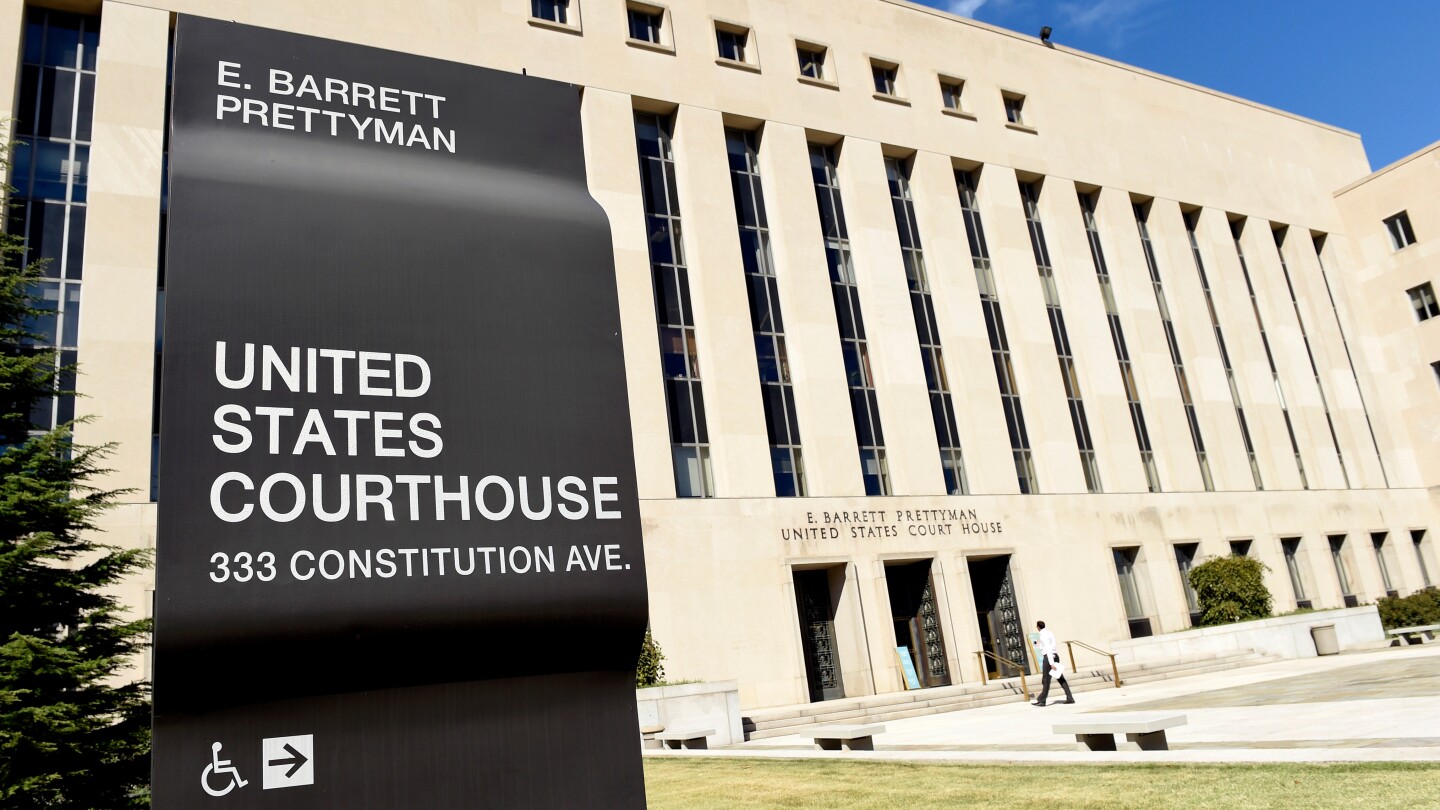
Cristian Fernando Gutierrez-Ochoa received a sentence of 11 years and eight months from U.S. District Judge Beryl Howell in Washington on Thursday. The 28-year-old had been living under a false identity in California until his arrest in November 2024.
“It’s a dangerous way to make a living. It’s a dangerous way to live,” Judge Howell remarked during the sentencing, emphasizing the violent nature of the Jalisco New Generation Cartel (CJNG), which she described as a “dangerous force” both in Mexico and the United States.
Gutierrez-Ochoa has significant connections to the cartel’s leadership. He is the boyfriend of the daughter of Nemesio Rubén Oseguera Cervantes, better known as “El Mencho” – the fugitive leader of CJNG who currently has a $15 million State Department reward offered for information leading to his capture.
According to a Drug Enforcement Administration affidavit, Mexican authorities wanted Gutierrez-Ochoa for allegedly kidnapping two Mexican Navy members in 2021. The kidnapping was reportedly carried out to secure the release of El Mencho’s wife after her arrest by Mexican authorities.
In a dramatic twist that underscores the brutal internal discipline of drug cartels, El Mencho had told associates that he had killed Gutierrez-Ochoa for lying. However, authorities revealed that Gutierrez-Ochoa had actually staged his death and fled to Riverside, California, where he and his girlfriend, a U.S. citizen, lived what prosecutors described as “a CJNG-sponsored life of abundance” in a $1.2 million home purchased with laundered cartel funds.
During the hearing, Gutierrez-Ochoa expressed remorse through a translator: “I regret all of this. Never again will I make a mistake like this in my life.”
Federal prosecutors had sought a 14-year prison term, portraying Gutierrez-Ochoa as a dangerous, trained operative secretly embedded in the United States to serve the cartel’s interests. They highlighted the devastating impact of the CJNG’s operations in court documents.
“The CJNG kills, tortures, and corrupts to traffic staggering quantities of cocaine, methamphetamine and other drugs into the United States and elsewhere — all for profiting and enrichment, which in turn fund the cycle of violence, ravaging countless lives and communities,” prosecutors wrote.
Defense attorneys had requested a more lenient seven-year sentence, arguing that their client was genuinely remorseful and committed to rehabilitation. “Mr. Gutierrez’s rehabilitation is not performative,” they wrote. “It reflects a young man who now fully understands the magnitude of his mistakes and who seeks to rebuild his life with integrity.”
This case represents part of a broader crackdown on the CJNG, which has emerged as one of Mexico’s most powerful and violent criminal organizations. In February, the Trump administration designated CJNG as a foreign terrorist organization, providing law enforcement with enhanced tools to prosecute cartel members and associates.
Judge Howell has previously sentenced other high-ranking CJNG figures. In June, she sentenced José González Valencia, El Mencho’s brother-in-law, to 30 years in prison after he pleaded guilty to drug trafficking conspiracy charges. Earlier, in March, El Mencho’s son, Rubén Oseguera (“El Menchito”), received a life sentence following his conviction for conspiring to distribute cocaine and methamphetamine for U.S. importation and using a firearm in a drug conspiracy.
The CJNG has established itself as a dominant force in Mexico’s criminal landscape, controlling territory across several Mexican states and establishing extensive drug trafficking networks reaching into the United States, Europe, and Asia. Law enforcement officials estimate the organization has been responsible for a significant portion of the illegal drugs entering the U.S. market in recent years.
Fact Checker
Verify the accuracy of this article using The Disinformation Commission analysis and real-time sources.

8 Comments
This is a complex issue with geopolitical and economic implications beyond just law enforcement. I wonder how the US and Mexico can work together more effectively to address the root causes of the drug trade, like poverty and corruption, in addition to interdiction efforts.
Wow, faking his own death to evade authorities is a bold move. I’m curious to learn more about the cartel’s tactics and how they were able to operate across the border like that. What security measures are in place to prevent this kind of transnational crime?
This is a troubling case that highlights the global reach and violent nature of Mexico’s drug cartels. It’s good to see the US justice system holding cartel members accountable, but the underlying issues of corruption and impunity in Mexico remain a major challenge.
Absolutely. Cooperation between US and Mexican law enforcement will be crucial to dismantling these cartels and stemming the flow of drugs and illicit money across the border.
An 11-year sentence seems appropriate given the severity of the crimes and the cartel’s ties to violence. Hopefully this sets a precedent and deters other cartel members from attempting similar schemes in the future.
Faking his own death is a bold tactic, but it’s good to see the US justice system was able to uncover the ruse and bring this individual to justice. Holding cartel members accountable, even across borders, is an important step.
The close relationship between this cartel member and the cartel leader is troubling. I hope the authorities can use this case to gain further intelligence and insights that could help locate the elusive ‘El Mencho’.
Agreed. Disrupting the leadership of these cartels is crucial, but it’s an ongoing battle as new figures emerge to fill the power vacuum.