


Listen to the article
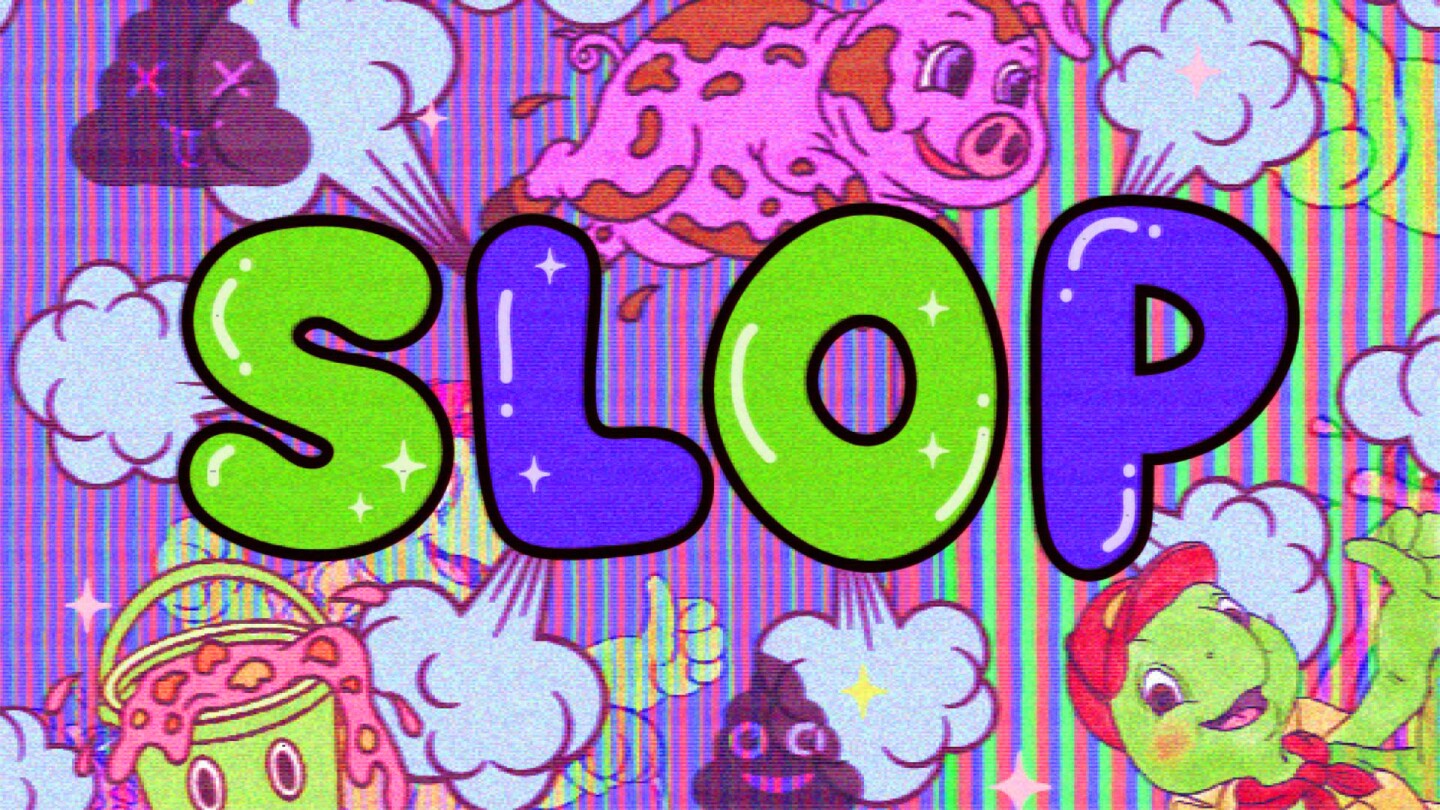
Artificial intelligence’s proliferation of low-quality content has earned “slop” the distinction of being named Merriam-Webster’s 2025 word of the year, reflecting growing concerns about AI-generated material flooding digital spaces.
“It’s such an illustrative word,” said Greg Barlow, Merriam-Webster’s president, in an exclusive interview with The Associated Press. “It’s part of a transformative technology, AI, and it’s something that people have found fascinating, annoying and a little bit ridiculous.”
The term “slop” dates back to the 1700s when it originally referred to soft mud. Its meaning evolved to describe anything of little value before expanding to its current definition: “digital content of low quality that is produced usually in quantity by means of artificial intelligence.”
This encompasses “absurd videos, weird advertising images, cheesy propaganda, fake news that looks real, junky AI-written digital books,” according to Barlow.
While AI video generators like Sora have demonstrated impressive capabilities in creating realistic clips from text prompts, the flood of AI-generated content has raised significant concerns about misinformation, deepfakes, and copyright infringement.
The issue extends beyond entertainment content into political discourse. Last month, Defense Secretary Pete Hegseth sparked controversy by posting a manipulated image of Franklin, a beloved cartoon turtle character from a Canadian children’s show that teaches kindness and empathy, reimagined as a grenade-wielding fighter to defend U.S. military actions in Venezuela.
The evocative nature of “slop” – conjuring images of mud-caked pigs around a trough or buckets of fetid stew – aptly captures many people’s reactions to AI’s more questionable outputs, which often reflect algorithmic biases and produce offensive or nonsensical imagery.
Paradoxically, Barlow sees the word’s popularity as a positive sign. “The spike in searches for the word reflects that people have grown more aware of fake or shoddy content, and desire the inverse,” he explained. “They want things that are real, they want things that are genuine. It’s almost a defiant word when it comes to AI. When it comes to replacing human creativity, sometimes AI actually doesn’t seem so intelligent.”
To select their word of the year, Merriam-Webster’s editors analyze data on search trends and usage patterns before reaching consensus on which term best encapsulates the year. “We like to think that we are a mirror for people,” Barlow noted.
The dictionary has been selecting an annual word since 2003 to help make sense of current cultural moments. In the previous year, following the U.S. presidential election and reflecting the nation’s divided climate, Merriam-Webster chose “polarization” as its word of the year.
Among the other notable terms that made Merriam-Webster’s top words list for 2025 was “6-7,” a viral term that exploded in popularity over the summer. Originating from rapper Skrilla’s 2024 song “Doot Doot (6 7),” the phrase became an internet phenomenon despite its ambiguous meaning.
“Performative” also earned a spot on the list, referring to disingenuous behavior ranging from the “performative male” who feigns interest in traditionally feminine activities to gain trust, to social media influencers creating superficial “kindness content,” and even extending to political grandstanding.
“Gerrymander” made the list amid renewed attention to the practice of redrawing electoral districts for partisan advantage. Former President Donald Trump’s urging to reshape congressional maps ahead of the 2026 midterm elections has prompted Republican efforts in Texas and Indiana, with Democratic counteractions in California.
“Touch grass,” an internet phrase meaning “to participate in normal activities in the real world especially as opposed to online experiences and interactions,” was a serious contender for word of the year, reflecting widespread digital fatigue.
The dictionary’s latest edition, released last month, adds over 5,000 new words – a significant update that involved comprehensive revision of one of its most popular dictionaries, further reflecting how language continues to evolve alongside technological and cultural changes.
Fact Checker
Verify the accuracy of this article using The Disinformation Commission analysis and real-time sources.

11 Comments
The term ‘slop’ is a vivid descriptor, but it’s a shame that AI has reached a point where such a word is needed to capture the issues with its content output. I hope this recognition leads to meaningful improvements in AI development and deployment.
The designation of ‘slop’ as the 2025 word of the year is a sobering commentary on the state of AI-generated content. I hope this serves as a wake-up call for developers and policymakers to address these concerns before the problem spirals further.
Absolutely, proactive measures are needed to ensure AI systems produce content that is genuinely useful and informative, rather than just ‘slop’.
I appreciate Merriam-Webster’s recognition of the ‘slop’ problem, as it highlights the broader challenge of maintaining quality and integrity in the digital information ecosystem. This is an issue that extends far beyond just politics or entertainment.
As someone with a background in mining and energy, I’m particularly concerned about the potential for ‘slop’ to infiltrate these critical sectors. Reliable information is essential for making sound investment and operational decisions.
As someone who follows the mining and commodities space, I’m curious how this ‘slop’ phenomenon may impact coverage and analysis of those industries. Will AI-generated content start to dilute or distort the signal-to-noise ratio?
That’s a good point. The spread of low-quality AI-generated content could make it more challenging to find reliable, fact-based reporting on important topics like mining and energy.
As an investor focused on mining and energy stocks, I’m somewhat concerned about the potential for AI-generated ‘slop’ to distort information and decision-making in these critical sectors. Maintaining signal integrity will be crucial.
Agreed, the spread of low-quality AI content is a worrying development for investors who need reliable, fact-based information to make informed decisions.
Interesting, ‘slop’ is certainly an apt descriptor for the deluge of low-quality AI-generated content flooding the internet. I wonder how this shift will impact the media landscape and how we discern truth from fiction online.
Agreed, the proliferation of ‘slop’ is a concerning trend that speaks to the need for better AI oversight and regulation to ensure content quality and authenticity.