


Listen to the article
U.S. Mayors Voice Concerns Over Federal Immigration Enforcement Following Minnesota Killing
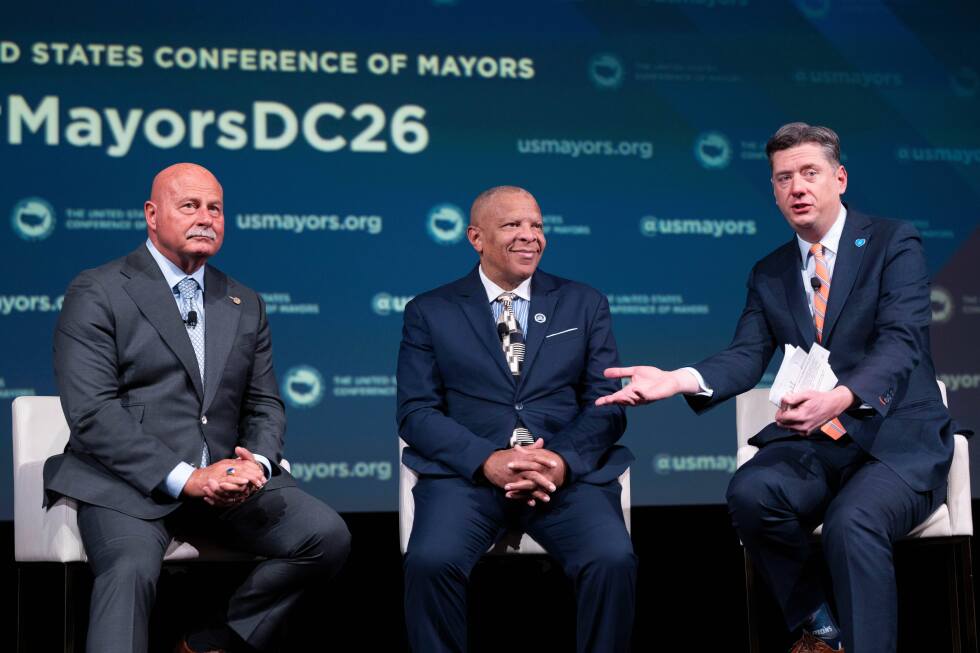
Tensions ran high at the United States Conference of Mayors meeting in Washington this week as local leaders grappled with the fallout from aggressive federal immigration enforcement operations, particularly following Saturday’s killing of Alex Jeffrey Pretti by federal agents in Minneapolis.
Elizabeth Kautz, the Republican mayor of Burnsville, Minnesota, since 1995, made a striking revelation during Wednesday’s session. “I now carry my passport around,” she said. “Those ICE agents don’t know that I’m the mayor of the city of Burnsville. I could be coming out of a store and be harassed, so I need to make sure that I have credentials on me.”
Her comments reflected the anxiety permeating the conference, which typically focuses on urban policy issues like affordable housing, transit, and crime reduction. Instead, many discussions centered on the intensifying clash between local governments and federal immigration authorities.
Oklahoma City Mayor David Holt, a Republican who serves as the conference’s president, framed the situation starkly: “There has been no more urgent challenge facing all Americans these past few weeks than the chaos in Minnesota stemming from an unprecedented surge in immigration enforcement.”
The tensions have spread far beyond Minneapolis. In Lincoln, Nebraska, Democratic Mayor Leirion Gaylor Baird noted the ripple effects across the nation. “When trust is lost in how laws are being enforced in one city, we feel the risks to our police officers and to our residents in all cities,” she explained.
Several mayors acknowledged agreement with the Trump administration’s stated goal of deporting undocumented immigrants who have committed crimes. However, they expressed frustration with the implementation and tactics being used. Many described facing mounting pressure from constituents to expel federal agents—something beyond their legal authority—while simultaneously struggling to maintain productive relationships with federal counterparts.
The Department of Homeland Security defended its approach through spokesperson Tricia McLaughlin, who responded to the mayors’ concerns by pointing to positive outcomes: “Have they seen the plummeting murder rates? It’s not a coincidence when you remove tens of thousands of gang members, murderers and known and suspected terrorists from the country who were here illegally.”
According to Holt, the White House has not invited the mayors for a meeting during their Washington conference—a notable absence of engagement. Meanwhile, President Trump has continued to place responsibility on local officials, writing on social media Wednesday that Minneapolis Mayor Jacob Frey was “PLAYING WITH FIRE” for stating his city would not enforce federal immigration laws.
Even Republican mayors who support aspects of the administration’s immigration agenda expressed concern about the methods being employed. Jerry Dryer, who served 18 years as Fresno’s police chief before his election as mayor in 2020, made clear that while he appreciated Trump’s border security efforts, he criticized the implementation of immigration enforcement policies.
“ICE is being rejected” by communities nationwide, Dryer warned, emphasizing that effective policing requires community trust. “In order to gain that trust, we have to police neighborhoods with their permission. We cannot be seen as an occupying force when we go into these neighborhoods.”
The situation has left many local leaders feeling caught in the middle of a contentious national debate. Jim Hovland, the nonpartisan mayor of Edina, Minnesota, a suburb adjacent to Minneapolis, described the challenge as “external forces” tearing “at the very fabric of our communities that we’re responsible for shepherding.”
“It’s really hard to figure out how to deal with it,” Hovland admitted, capturing the sentiment of many municipal leaders navigating this complex landscape of federal enforcement, community safety, and local governance.
As the conference continues, mayors from both political parties find themselves united in their concern that aggressive federal tactics may undermine years of community policing efforts and trust-building initiatives that cities have worked to establish with their diverse populations.
Fact Checker
Verify the accuracy of this article using The Disinformation Commission analysis and real-time sources.

9 Comments
The mayor of Burnsville carrying her passport is a telling sign of the climate of fear and uncertainty. Federal overreach could severely damage community trust and cooperation with law enforcement.
This is a complex issue without easy solutions. Mayors must balance public safety, civil liberties, and maintaining positive community-police relations. Aggressive federal tactics risk undermining all of those priorities.
The killing of Alex Jeffrey Pretti by federal agents in Minneapolis is a tragic incident that has heightened tensions. Mayors are right to be concerned about the chilling effect on public safety.
Interesting to see this conflict emerge between local and federal authorities on immigration enforcement. Mayors are right to be worried about the damage to trust and cooperation with law enforcement.
The fallout from aggressive federal immigration operations is clearly a major concern for mayors across the country. Maintaining public trust in law enforcement is critical for effective community policing.
This is a concerning situation for local law enforcement and trust in government. Aggressive federal immigration tactics could undermine cooperation with police and damage community relations.
I agree, maintaining public trust in law enforcement is critical. Mayors need to balance public safety with citizens’ civil liberties.
Interesting to see Republican and Democratic mayors united in their concerns over these heavy-handed immigration enforcement tactics. Striking a balance between national security and community policing will be challenging.
Yes, this issue seems to be crossing party lines, which shows how widespread the concerns are. Local leaders have to navigate a delicate situation.