


Listen to the article
Maryland Governor Pushes for Congressional Redistricting Despite Internal Party Opposition
Maryland Governor Wes Moore is advocating for a redrawing of the state’s congressional map, setting up a potential conflict with key Democratic lawmakers who fear the mid-decade redistricting effort could backfire on the party.
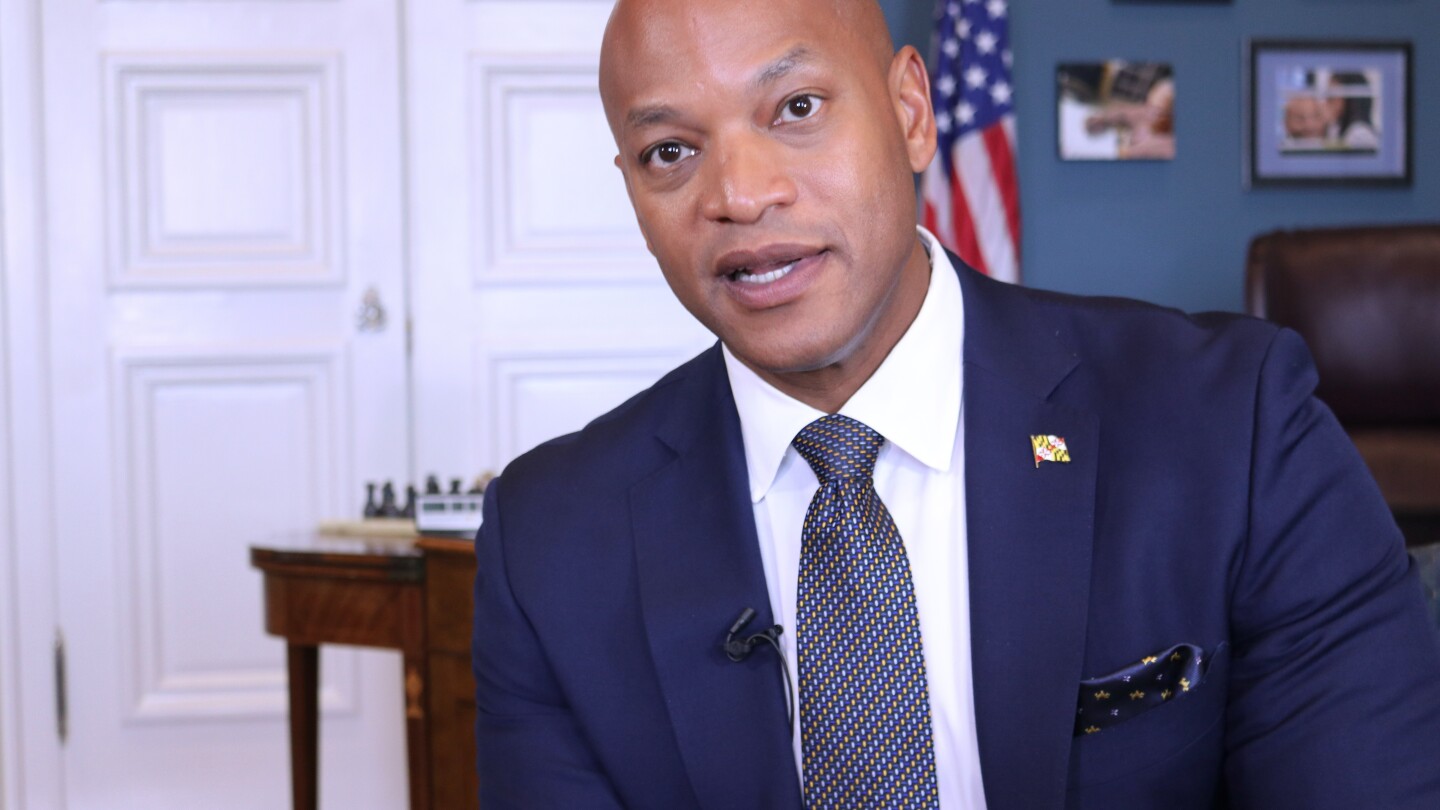
Speaking on Wednesday during the opening day of Maryland’s annual 90-day legislative session, Moore told The Associated Press that he believes the General Assembly has “not just the authority, but the responsibility” to vote on recommendations from the commission he appointed to review potential maps.
“This is a thorough process that they have gone through, and I think when they complete their work, it’ll then go in front of the House and then go in front of the Senate, and I do think that the bodies at that point should take it to their members,” Moore said.
The debate unfolds in a state where Democrats hold a significant 2-1 registration advantage over Republicans. This advantage is reflected in Maryland’s current congressional delegation, where Democrats control seven of the state’s eight U.S. House seats.
Moore’s push comes amid an unusual nationwide trend of mid-decade redistricting efforts that began last July when former President Donald Trump called on Texas Republicans to redraw their congressional map to create more GOP-friendly districts, despite the absence of new census data. This triggered redistricting battles across multiple states not typically seen since the late 19th century.
The national redistricting battle has so far resulted in nine more seats Republicans believe they can win and six more that Democrats think they can capture, giving Republicans a net advantage of three seats. However, ongoing litigation in several states means these partisan projections remain uncertain.
Moore justified his call for the Maryland commission by arguing that state officials shouldn’t “sit on their hands” while other states redraw their maps. However, his position has encountered significant resistance from within his own party.
Maryland Senate President Bill Ferguson, a Baltimore Democrat, has expressed strong concerns that a redistricting effort targeting Republican Rep. Andy Harris could endanger at least one Democratic-held seat and potentially two. Ferguson highlighted that a previous congressional map adopted in 2021 was ruled unconstitutional by a judge who described it as “a product of extreme partisan gerrymandering.”
“The reason we don’t do this is because there are huge risks associated with it that not only risk us not moving forward in the objective of having another Democratic seat,” Ferguson told the AP. “It would be, in my opinion, a higher likelihood that we would lose a seat, rather than gain.”
Ferguson claims a majority of the Senate’s 34 Democrats share his opposition to redistricting this year. He also pointed out practical concerns about disrupting Maryland’s election calendar, with the candidate filing deadline set for February 24 and the primary scheduled for June 23.
When asked whether he would allow a vote if a map reaches the Senate, Ferguson remained noncommittal. “I think that’s hypothetical,” he said. “We’ll see. I think we’re already too late generally, and so we’ll see what happens in the debate moving forward.”
The situation in Maryland reflects broader tensions in both parties over redistricting tactics. After the 2020 census, many states saw intense partisan battles over district lines, with courts intervening in multiple cases. Mid-decade redistricting adds another layer of complexity and risk, as it can prompt fresh legal challenges and potentially allow courts to impose district boundaries.
Maryland House Speaker Joseline Peña-Melnyk has taken a more cautious approach, expressing support for the redistricting commission’s work but declining to comment on next steps until she sees the recommendation.
Political analysts note that these redistricting battles highlight how geographic boundaries have become another battlefield in the struggle for congressional control, with both parties seeking whatever advantage they can secure ahead of what promises to be closely contested elections in November.
Fact Checker
Verify the accuracy of this article using The Disinformation Commission analysis and real-time sources.

11 Comments
Redistricting is a complex issue with no easy answers. Governor Moore will need to tread carefully and build broad support if he hopes to get his proposed map through the legislature.
Absolutely. Maintaining the public’s trust in the integrity of the electoral process should be the top priority, even if it means difficult compromises.
While I understand the governor’s desire to redraw the map, I hope he can find a solution that doesn’t just benefit his party. Fairness and bipartisanship should be the guiding principles here.
It’s good to see the governor taking a proactive approach to reviewing the congressional map. Periodic redistricting is important to ensure districts accurately reflect population changes and provide equal voting power for all citizens.
I’m glad to see the governor taking this issue seriously and engaging the public. Transparent and nonpartisan redistricting is crucial for a healthy democracy.
This will certainly be a contentious debate, with both parties jockeying to gain electoral advantage. The key is finding a solution that is fair and nonpartisan, which may require compromise from all sides.
Redistricting is always a thorny issue, but I think Governor Moore is right to push for a review of the congressional map. Periodic adjustments are necessary to reflect population shifts.
Redistricting is always a contentious issue, regardless of party. It will be interesting to see how Governor Moore navigates this process and balances the interests of his party with ensuring fair representation for all Marylanders.
While the current congressional map may favor Democrats, redrawing it mid-decade could be seen as a partisan power grab. Governor Moore will need to make a compelling case that this is in the best interest of the state, not just his party.
Agreed. Redistricting should be a transparent process that prioritizes fairness and balanced representation over partisan interests.
This is a complex issue with valid arguments on both sides. I’ll be interested to see how the governor navigates the political landscape and builds support for his proposed changes.