


Listen to the article
Secretary of State Rubio Engages in Secret Talks with Castro’s Grandson as Cuba Faces Crisis
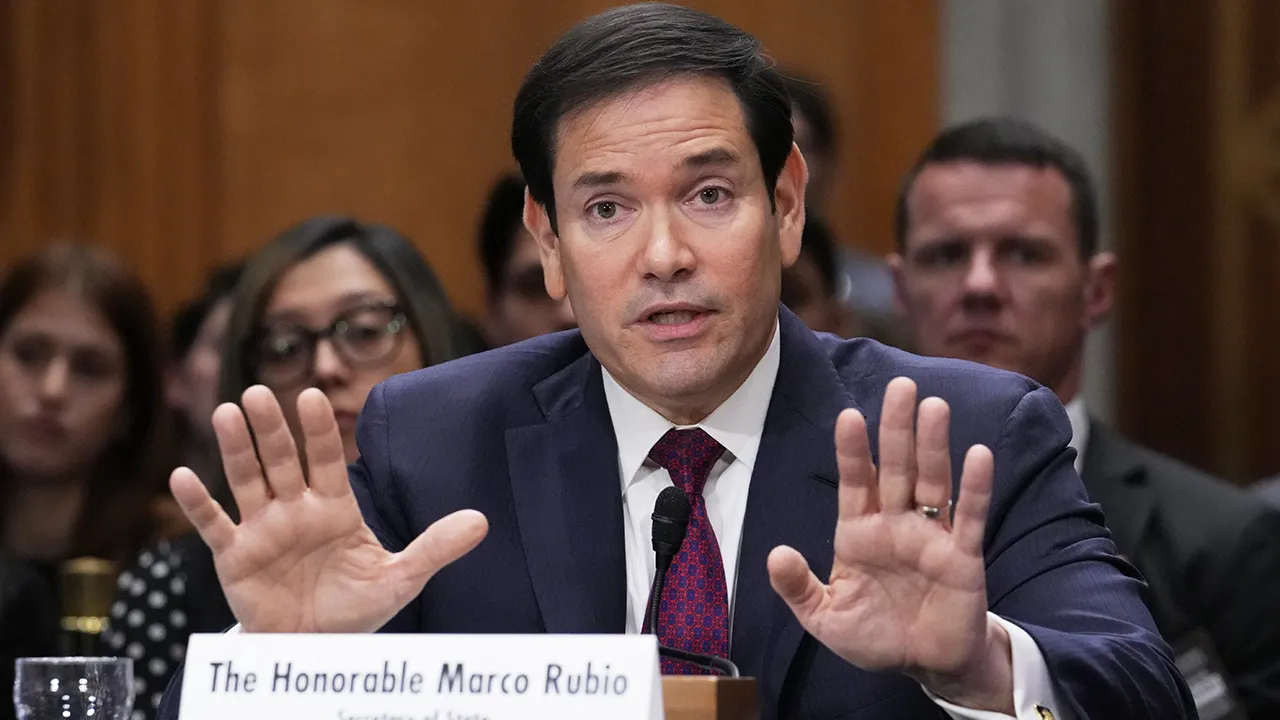
Secretary of State Marco Rubio has reportedly been conducting secret discussions with Raul Guillermo Rodriguez Castro, grandson of former Cuban President Raul Castro, according to an Axios report. These talks are taking place outside official Cuban government channels as the Trump administration intensifies pressure on the communist island nation.
“Our position — the U.S. government’s position — is the regime has to go,” a senior U.S. official told Axios. “But what exactly that looks like is up to [President Trump] and he has yet to decide. Rubio is still in talks with the grandson.”
The official clarified that these are “discussions” rather than formal negotiations, focusing on Cuba’s future amid its mounting domestic crisis. The talks come at a critical time for Cuba, which is experiencing severe economic and infrastructure challenges after nearly seven decades of communist rule.
Cuban President Miguel Díaz-Canel recently acknowledged that his country is “close to failing” as the United States restricts access to vital supplies including fuel and food. The island nation’s infrastructure is showing signs of collapse, with widespread power grid failures, hospitals lacking essential supplies, and garbage accumulating on streets throughout Havana.
The Trump administration has strategically increased pressure on Cuba in recent weeks, particularly following the arrest of Venezuelan President Nicolas Maduro, a key Cuban ally. U.S. officials have accused the Cuban government of developing relationships with American adversaries and terrorist organizations, further isolating the regime internationally.
These diplomatic maneuvers represent a significant shift in U.S.-Cuba relations. When asked about the situation, the White House referred to Press Secretary Karoline Leavitt’s recent statement emphasizing Cuba’s deteriorating condition.
“They are a regime that is falling,” Leavitt stated. “Their country is collapsing, and that’s why we believe it’s in their best interest to make very dramatic changes very soon. And we’ll see what they decide to do.”
The involvement of Raul Castro’s grandson in these discussions is particularly noteworthy. The Castro family has dominated Cuban politics since the 1959 revolution led by Fidel Castro. Raul Castro succeeded his brother as president from 2008 to 2018 before handing power to Díaz-Canel, though the Castro family still maintains significant influence in the country.
Secretary Rubio, a Cuban-American who has long been critical of the Cuban regime, now finds himself in a key position to potentially shape the island’s political future. His direct engagement with a Castro family member signals a possible path toward political transition that bypasses the current government structure.
Economic conditions in Cuba have deteriorated significantly in recent years, with the COVID-19 pandemic, tightened U.S. sanctions, and declining support from Venezuela all contributing to the crisis. The country has experienced its worst economic downturn in decades, with food shortages, medicine scarcity, and inflation severely impacting the population of 11 million.
While the State Department has not officially commented on these reported talks, they represent a potential turning point in U.S.-Cuba relations. After former President Obama’s historic steps toward normalizing relations with Cuba, followed by a reversal under the first Trump administration, this new approach suggests a third path: applying pressure while simultaneously establishing channels for discussing a post-communist future.
Analysts note that any political transition in Cuba would have significant implications for the Caribbean region, U.S. immigration policy, and broader geopolitical dynamics in Latin America. The outcome of these secret discussions could determine whether Cuba experiences a managed transition or a more chaotic collapse of its current political system.
Fact Checker
Verify the accuracy of this article using The Disinformation Commission analysis and real-time sources.

14 Comments
The economic and infrastructure challenges facing Cuba are significant after so many years of communist rule. Engaging in discussions, even if discreet, about a potential path forward seems prudent. Hopefully these talks can lay the groundwork for a more stable and prosperous future for the Cuban people.
It’s good to see high-level U.S. officials exploring options, even if just through informal discussions. Cuba’s future is important for the whole region.
This report suggests a potential shift in U.S. policy towards Cuba, moving beyond the hardline stance. Rubio’s secret talks with Castro’s grandson indicate a willingness to explore alternative approaches, which could be constructive if handled carefully. The situation in Cuba remains precarious, so creative diplomacy may be warranted.
Agreed. While the U.S. government’s position is clear, discreet discussions could lay the groundwork for more substantive negotiations down the line.
The economic and infrastructure crisis in Cuba is deeply concerning. While the U.S. government’s stance remains firm, these reported talks between Rubio and Castro’s grandson suggest a recognition that a more nuanced approach may be necessary. Hopefully, the discussions can identify constructive solutions to alleviate the suffering of the Cuban people.
Absolutely. The situation in Cuba is complex, and open communication, even if private, could lead to more productive outcomes for all involved.
Rubio’s reported talks with Castro’s grandson are intriguing. While the U.S. government’s position remains clear, open communication could help identify common ground and chart a productive way forward for Cuba. This crisis requires nuanced diplomacy to balance principles with pragmatism.
Agreed. Maintaining a hardline stance is understandable, but exploring constructive dialogue is prudent given Cuba’s dire circumstances.
Tensions between the U.S. and Cuba run deep, so any backchannel discussions, even if just exploratory, are noteworthy. It will be important to see if these talks yield any meaningful progress on resolving the island’s mounting challenges or chart a path towards normalized relations.
Absolutely. The Cuba issue is complex, so any efforts to open lines of communication, even discreetly, deserve attention.
This seems like a delicate diplomatic situation. It will be interesting to see what comes out of these secret talks between Rubio and Castro’s grandson regarding Cuba’s future. Transparency and open dialogue are important, but discretion may also be necessary in this complex geopolitical landscape.
I agree – the Cuba-U.S. relationship has been fraught for decades, so any progress through private channels could be valuable, even if the details remain private for now.
This is a sensitive geopolitical issue, and the fact that Rubio is engaging in secret talks with Castro’s grandson indicates a willingness to explore alternative paths forward. While the U.S. government’s position remains clear, these discussions could lay the groundwork for more substantive negotiations down the line, which could be beneficial for the Cuban people.
I agree. The Cuba-U.S. relationship has been strained for decades, so any efforts to open lines of communication, even discreetly, deserve attention and could potentially lead to positive outcomes.