


Listen to the article
Liberian Man’s Home Forcibly Entered During Immigration Crackdown Despite Regular Check-ins
A Liberian immigrant who had been regularly checking in with federal authorities was arrested Sunday when armed immigration agents used a battering ram to break through the front door of his Minneapolis home, an action his attorney describes as a “blatant constitutional violation.”
Garrison Gibson, 37, was taken into custody during what the Department of Homeland Security has called its largest immigration enforcement operation ever in Minnesota. The arrest occurred in a city already experiencing heightened tensions after an immigration agent shot and killed 37-year-old Renee Good last week, triggering widespread protests and confrontations between authorities and activists.
Attorney Marc Prokosch contends the agents’ entry was illegal because they possessed only an administrative warrant, which authorizes someone’s arrest but does not permit forcible entry into private homes. Such forced entry legally requires a criminal warrant signed by a judge.
“This was an illegal search, absolutely,” Prokosch said.
Gibson fled Liberia as a child during the civil war. While he had been ordered removed from the United States, reportedly due to a 2008 drug conviction that courts later dismissed, he had remained in the country legally under a supervision order requiring regular meetings with immigration authorities.
What makes the case particularly puzzling, Prokosch noted, is that Gibson had checked in with immigration officials just days before his arrest—at the same regional immigration offices where agents have been staging recent enforcement raids.
“He would have had another check-in in a couple of months,” Prokosch explained. “So if he’s this dangerous person, then, why are they letting him walk around?”
Homeland Security spokeswoman Tricia McLaughlin claimed Gibson has “a lengthy rap sheet” including robbery, drug possession with intent to sell, possession of a deadly weapon, malicious destruction, and theft. However, she did not clarify whether these were arrests, charges, or convictions, nor did she address questions about whether the agents’ use of force was justified.
Court records tell a different story, showing Gibson’s legal history primarily consists of traffic violations, minor drug arrests, and once riding public transportation without paying. Only one felony appears in his record—the 2008 conviction for third-degree narcotics sales that was subsequently dismissed.
Following his arrest, Gibson was quickly flown to Texas by immigration authorities, then returned to Minnesota after his lawyer filed a habeas corpus petition to determine if the imprisonment was legal. The courts have not yet ruled on this petition. According to ICE’s detainee locator, Gibson is currently being held at an immigration detention center in Albert Lea, Minnesota, after brief detention at Fort Bliss Army base in El Paso, Texas.
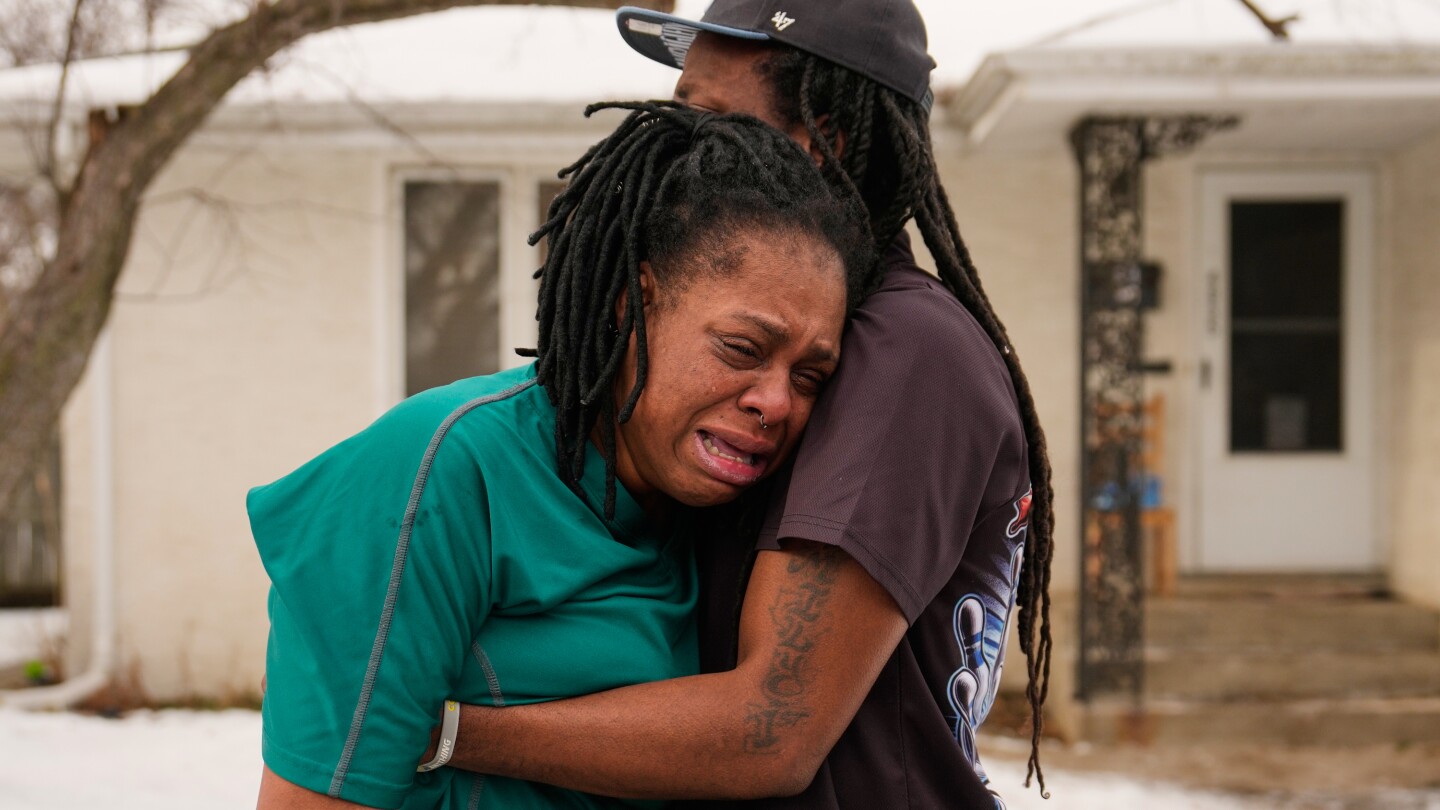
Gibson’s wife, Teyana Gibson Brown, a nurse who was inside their home with the couple’s 9-year-old child during the raid, has been severely traumatized by the incident. Prokosch reported that during their conversations, she “was having a hard time just completing sentences because she’s just been so distraught.”
The arrest unfolded amid a chaotic scene. Activists monitoring immigration agents’ activities attempted to disrupt the operation and warn neighbors by banging drums, blowing whistles, and honking car horns, prompting many residents to come into the streets. Video taken by the Associated Press shows agents pushing protesters and using pepper spray to control the crowd.
This incident is part of a larger enforcement campaign that has created significant turmoil in the Twin Cities area. The region has been particularly tense since the January 7 shooting of Renee Good during a confrontation with immigration agents. While the Trump administration has defended the officer who shot Good, saying she had “weaponized” her vehicle and the agent was protecting himself and colleagues, city and state officials have rejected these explanations based on video evidence of the encounter.
State and local authorities are urging the public to share videos and other evidence related to Good’s death as they pursue their investigation, especially since federal authorities have insisted on conducting their own inquiry without sharing information.
The Department of Homeland Security reports that more than 2,000 immigration arrests have been made in Minnesota since the enforcement operation began in early December. Homeland Security Secretary Kristi Noem told Fox News that additional federal agents would be sent to Minnesota to protect immigration officers and continue enforcement efforts.
The escalating tensions highlight the increasingly contentious nature of immigration enforcement under the current administration, with communities caught in the crossfire between aggressive federal tactics and growing resistance from local officials and activists.
Fact Checker
Verify the accuracy of this article using The Disinformation Commission analysis and real-time sources.

5 Comments
This case highlights the delicate balance between immigration enforcement and individual rights. While the authorities have a duty to uphold the law, the alleged use of a battering ram against someone in regular contact with them seems heavy-handed. A thorough investigation is warranted to ensure due process was followed.
Immigrants regularly checking in with authorities should not face such heavy-handed enforcement actions. This seems like an excessive show of force, even in the context of a broader immigration crackdown. I hope the courts can provide a fair and impartial review of the legality of the agents’ conduct.
Absolutely. The lawyer’s claim of a ‘blatant constitutional violation’ deserves close scrutiny. Forcible entry without a proper criminal warrant raises serious civil liberties concerns that need to be addressed.
This appears to be a concerning case of potential overreach by immigration authorities. While details are still unfolding, the lawyer’s argument about the lack of a proper criminal warrant raises important legal questions. I hope the facts can be carefully examined to ensure constitutional rights are upheld.
I agree, the use of a battering ram to enter a home with only an administrative warrant is highly troubling. The authorities need to provide a clear justification for such aggressive tactics, especially given the heightened tensions in the area.