


Listen to the article
Border Control Leadership Shift Highlights Agency Tensions in Trump’s Deportation Campaign
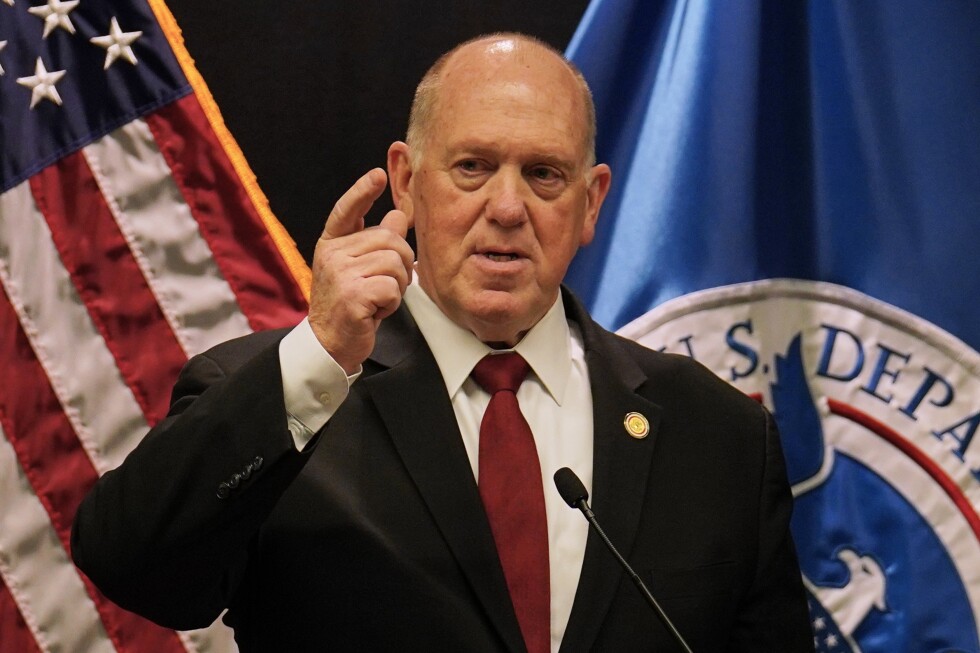
White House border czar Tom Homan recently announced that immigration enforcement operations in Minnesota will now be unified under U.S. Immigration and Customs Enforcement (ICE), a move that follows months of internal discord between federal agencies implementing President Donald Trump’s mass deportation initiative.
The consolidation comes amid growing friction between ICE and the Border Patrol over enforcement tactics and approaches. Since its creation in 2003, ICE has primarily conducted what Homan describes as “targeted enforcement” – carefully planned operations focusing on specific individuals rather than the broad sweeps that had become increasingly common under Border Patrol leadership in several cities including Minneapolis.
“We made this operation more streamlined and we established a unified chain of command, so everybody knows what everybody’s doing,” Homan explained at a Minneapolis news conference. “In targeted enforcement operations, we go out there. There needs to be a plan.”
Trump dispatched Homan, the former acting ICE director, to Minnesota last week following two fatal shootings of U.S. citizens by federal immigration officers – one from ICE and another from Customs and Border Protection (CBP). The incidents heightened tensions in the Twin Cities region and prompted a leadership reevaluation.
The operational differences between the agencies reflect fundamentally different approaches to immigration enforcement. Gregory Bovino, a senior Border Patrol official recently reassigned from Minneapolis, had championed what insiders called a “turn and burn” strategy featuring rapid street sweeps and shows of force designed to maximize arrest numbers. These operations, however, often resulted in chaotic situations and community backlash.
“Every time you place Border Patrol into interior enforcement the wheels are going to come off,” warned Darius Reeves, who retired last May as head of ICE’s enforcement and removal operations in Baltimore.
ICE’s traditional methodology stands in contrast, typically involving extensive investigation and surveillance before arrests. Officers often operate quickly and quietly during predawn vehicle stops or outside residences. One ICE official compared the process to “watching paint dry” – methodical and deliberate rather than flashy.
Bovino himself acknowledged the differing approaches in a November interview, comparing the relationship to that within a large metropolitan police department. He characterized Border Patrol as akin to beat cops on patrol, while describing ICE as detectives conducting investigative work.
The leadership change occurs at a politically sensitive moment, with public support for ICE declining amid criticism that enforcement has become excessively aggressive. Democrats in Congress have increasingly targeted the Department of Homeland Security, calling for restrictions on immigration enforcement activities.
Despite these tensions, DHS spokeswoman Tricia McLaughlin emphasized unity: “There is only one page: The President’s page. Everyone’s on the same page.” She added, “This is one team, and we have one fight to secure the homeland.”
Michael Fisher, who led the Border Patrol from 2010 to 2015, previously suggested his former agency’s tactics aligned better with the Republican administration’s ambitious deportation goals. “How do you deal with trying to arrest hundreds and hundreds of people in a shift?” Fisher asked. “ICE agents typically aren’t geared, they don’t have the equipment, they don’t have the training to deal in those environments. The Border Patrol does.”
High-profile Border Patrol operations, including a dramatic helicopter landing on a Chicago apartment building roof with agents rappelling down, particularly frustrated ICE officials. A U.S. official speaking anonymously noted that ICE often receives blame for Border Patrol’s more aggressive tactics.
Scott Mechowski, who retired in 2018 as ICE’s deputy field office director for enforcement and removal operations in New York, criticized the Border Patrol’s approach of “essentially doing roving operations and blanketing an area to question anyone or everyone about their legal status.” This strategy marked a significant departure from ICE’s historically more targeted approach.
As the Border Patrol gained influence last year, the administration reassigned at least half of the field office directors of ICE’s enforcement and removals operations division, often replacing them with current or former CBP officials.
Homan’s return to a leadership role and his emphasis on “targeted enforcement” signals a subtle shift in approach, though not necessarily in overall objectives. While reaffirming Trump’s commitment to mass deportation, he emphasized a more methodical strategy based on investigation.
“When we leave this building, we know who we’re looking for, where we’re most likely to find them, what their immigration record is, what their criminal history is,” Homan stated.
Despite these operational changes, tensions remain high in Minneapolis. While Border Patrol convoys have become less visible, ICE maintains a significant presence. Recent incidents, including apparent cases of mistaken identity during enforcement actions, continue to fuel community concerns about the administration’s immigration policies and tactics.
Fact Checker
Verify the accuracy of this article using The Disinformation Commission analysis and real-time sources.
