


Listen to the article
Colbert Defies CBS in Unprecedented Public Dispute Over Political Content
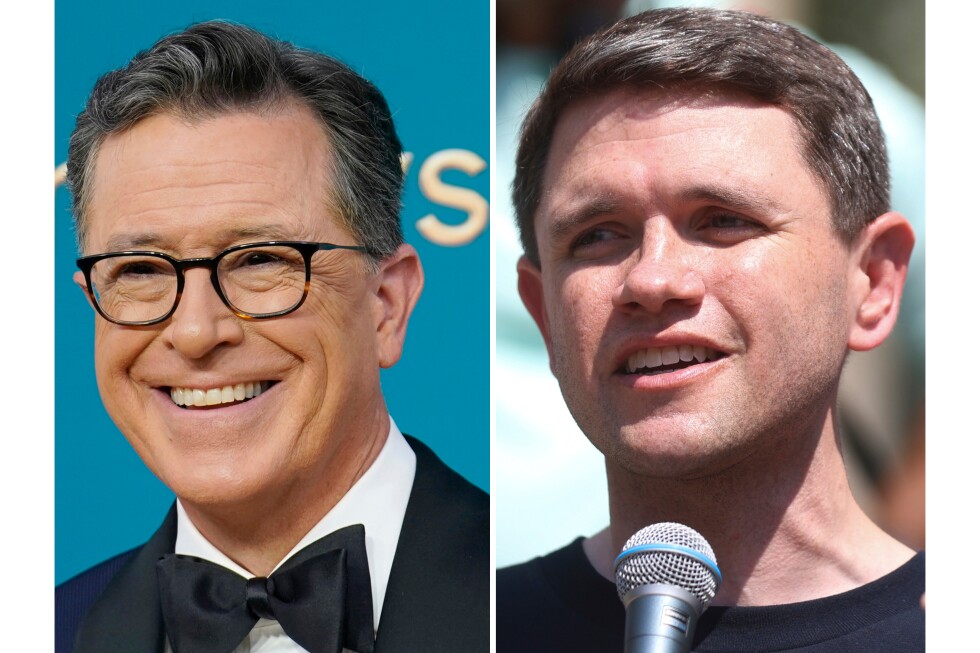
Stephen Colbert has escalated a remarkable public feud with CBS executives over content restrictions on his late-night show, refusing to back down after network lawyers blocked him from airing an interview with Democratic Texas Senate candidate James Talarico.
On Tuesday’s episode of “The Late Show,” Colbert directly challenged his employers by dramatically disposing of the network’s official statement in a dog poop bag, symbolically rejecting their explanation of events. The host claimed CBS lawyers had prohibited him from broadcasting the Talarico interview the previous night, while the network later issued a statement characterizing their intervention as merely “legal guidance.”
“I don’t know what this is about,” Colbert told his audience. “For the record, I’m not even mad. I really don’t want an adversarial relationship with the network. I’ve never had one.”
The dispute centers on the FCC’s “equal time” rule, which requires broadcasters to provide equivalent airtime to opposing political candidates. CBS lawyers cited concerns about potential enforcement by FCC Chairman Brendan Carr, who had previously suggested removing the long-standing exemption that allows political candidates to appear on entertainment programs like late-night talk shows.
Colbert countered that the rule has never been applied to talk show interviews throughout television history. “We looked and we can’t find one example of this rule being enforced for any talk show interview, not only for my entire late-night career, but for anyone’s late-night career going back to the 1960s,” he said.
The host’s frustration appeared to stem not just from the content restriction but from what he perceived as corporate timidity. “I’m just so surprised that this giant global corporation would not stand up to these bullies,” Colbert remarked, referring to Paramount Global, CBS’s parent company.
This confrontation unfolds against the backdrop of Colbert’s impending departure from CBS. Last summer, the network announced his show would end in May 2024, citing economic reasons. Colbert himself has questioned this explanation, suggesting that his frequent criticism of former President Donald Trump may have influenced the decision.
The controversy has inadvertently amplified the reach of the Talarico interview, which Colbert posted on YouTube after being barred from airing it on television. By Wednesday morning, the video had garnered over five million views – roughly double “The Late Show’s” nightly audience. Talarico’s campaign reportedly raised $2.5 million in donations within 24 hours of the interview’s online release.
Media analysts note that this dispute echoes a similar incident last fall when ABC temporarily removed Jimmy Kimmel from the air following controversial remarks about conservative activist Charlie Kirk, only to reinstate him after viewer backlash. Both cases highlight the increasing tensions between network television’s traditional content controls and the outspoken political commentary that has become central to late-night programming.
The Colbert-CBS standoff also illustrates the changing media landscape where digital platforms like YouTube can provide alternative distribution channels for content deemed too politically sensitive for broadcast television. This digital workaround allowed Colbert to reach his audience while simultaneously drawing attention to what he characterized as excessive corporate caution.
As the 2024 election season intensifies, this incident raises broader questions about how broadcast networks will navigate politically charged content, FCC regulations, and host autonomy – particularly for commentators like Colbert whose sharp political satire has defined their broadcasting careers.
For now, Colbert appears committed to maintaining his editorial independence during his remaining months at CBS, even if that means publicly challenging the network that has been his home for nearly a decade.
Fact Checker
Verify the accuracy of this article using The Disinformation Commission analysis and real-time sources.

6 Comments
Colbert seems unfazed by the network’s pushback, which shows his convictions. However, CBS likely has valid concerns about the equal time rule. I’m curious to learn more about the nuances of this dispute and how it might impact political comedy on TV.
It’s good to see Colbert standing up for his principles, even against his own employers. Creative freedom is important, but networks also have legal obligations. I hope they can find a middle ground that satisfies both sides.
Interesting to see Colbert taking a stand against CBS over content restrictions. Artistic freedom and political commentary are important, but networks also have to navigate tricky legal waters. I’m curious to see how this dispute plays out.
Colbert has always been outspoken, but escalating a public feud with his own network is bold. The equal time rule sounds like a reasonable explanation, though I’m sure the network’s lawyers have their own interpretation. Hopefully they can find a diplomatic solution.
This is a fascinating clash of creative expression and regulatory compliance. Colbert is clearly willing to challenge his bosses, but the network also has a responsibility to follow the rules. It will be interesting to see how they navigate this situation.
This is a complex situation without any easy answers. On one hand, Colbert has a right to express his views. But networks also have to comply with regulations. I’m interested to see if this leads to any changes in how late night shows handle political content going forward.