


Listen to the article
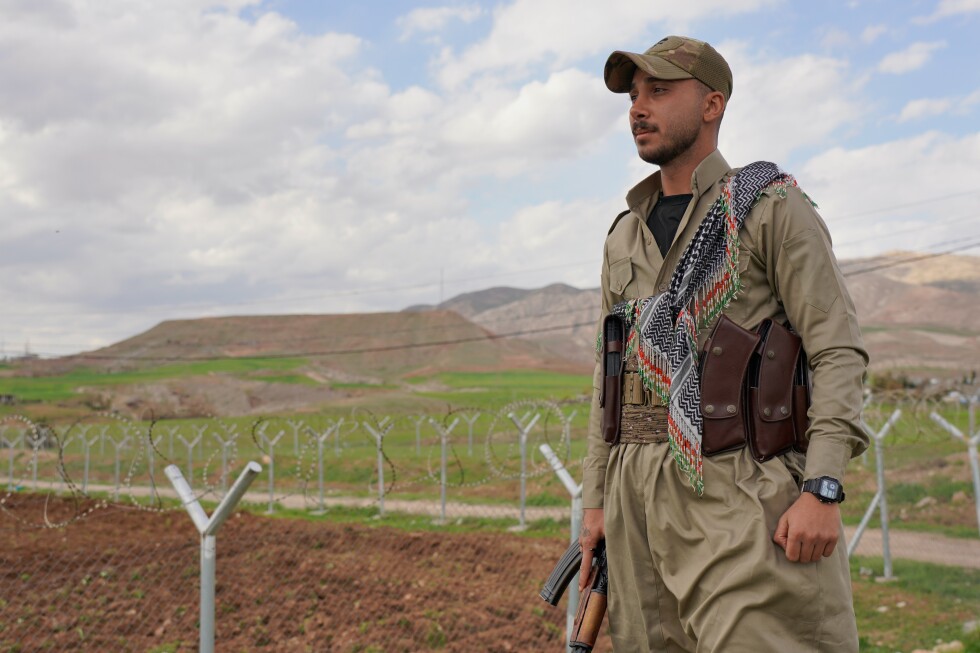
Kurdish Iranian forces based in northern Iraq are preparing for a potential cross-border military operation into Iran, with U.S. officials reportedly seeking support from Iraqi Kurdish leaders, according to Kurdish officials who spoke with The Associated Press.
These dissident groups, widely regarded as the most organized segment of the fragmented Iranian opposition, claim to have thousands of trained fighters. Their entry into the conflict could present a significant challenge to Tehran’s authorities while potentially drawing Iraq deeper into the widening Middle East war.
Khalil Nadiri, an official with the Kurdistan Freedom Party (PAK), confirmed Wednesday that some of their forces had already positioned themselves near the Iranian border in Sulaymaniyah province and were awaiting orders. PAK representatives had reportedly been contacted by U.S. officials regarding potential operations, though Nadiri provided few additional details.
When questioned about reports that the Trump administration was considering arming Iranian Kurdish groups, Defense Secretary Pete Hegseth downplayed direct U.S. involvement, telling reporters: “None of our objectives are premised on the support or the arming of any particular force. So, what other entities may be doing, we’re aware of, but our objectives aren’t centered on that.”
Prior to the U.S. and Israeli strikes against Iran on Saturday, PAK had claimed responsibility for attacks against Iran’s Revolutionary Guard in retaliation for Tehran’s crackdown on protests. However, a PAK official emphasized that the group had not yet deployed forces from Iraq into Iran.
The potential involvement of Kurdish forces would mark the first entry of a substantial ground force into the conflict. These groups gained considerable combat experience during operations against the Islamic State group, enhancing their military capabilities.
An official with Komala, another Iranian Kurdish organization, speaking on condition of anonymity due to security concerns, indicated their forces could cross the border within 7-10 days and were “waiting for the grounds to be suitable.”
Kurds in Iran have endured decades of marginalization and repression, dating back to the rule of Shah Mohammad Reza Pahlavi and continuing under the Islamic Republic established after the 1979 revolution. Post-revolution fighting between Iranian forces and Kurdish insurgents resulted in thousands of deaths and the destruction of numerous Kurdish communities.
Though united in their desire to overthrow the current Iranian regime, Kurdish groups have clashed with other opposition factions, including those loyal to Reza Pahlavi, the former shah’s son, who has accused Kurdish organizations of harboring separatist ambitions.
The prospective operations have placed Iraqi Kurdish leadership in a precarious position. Three Iraqi Kurdish officials revealed to the AP that U.S. President Donald Trump spoke with Masoud Barzani and Bafel Talabani, who lead the Kurdistan Democratic Party (KDP) and Patriotic Union of Kurdistan (PUK) respectively, about the situation in Iran.
According to one official, Trump requested that Iraqi Kurds provide military support to Iranian Kurdish groups and facilitate border access. When questioned about these reports, White House press secretary Karoline Leavitt acknowledged Trump’s communication with Kurdish leaders regarding “our base that we have in northern Iraq” but denied any agreement on specific operational plans.
Iraqi Kurdish officials expressed concerns that direct involvement would provoke severe Iranian retaliation. The Kurdish region has already experienced multiple drone and missile attacks from Iran and allied Iraqi militias in recent days, targeting U.S. military facilities and the U.S. Consulate in Irbil, as well as Kurdish group bases. These attacks have damaged civilian homes and disrupted electricity after a key gas field suspended operations due to security concerns.
The PUK confirmed the conversation between Talabani and Trump, stating that the U.S. president “provided clarification and vision regarding U.S. objectives in the war.” The statement emphasized that the PUK “believes that the best solution is a return to the negotiating table.”
Iraq’s central government has already taken steps to prevent cross-border operations. In 2023, Baghdad reached an agreement with Iran to disarm Kurdish groups and relocate them from border areas, though they retained their weapons despite having their military bases shut down and movements restricted.
Iraq’s National Security Adviser Qassim al-Araji announced that Iranian officials had requested “necessary measures to prevent any opposition groups from infiltrating the border.” Al-Araji confirmed Iraq’s commitment to preventing cross-border infiltration and noted that security reinforcements had been deployed along the border.
Beyond Iranian retaliation, any move by Iraqi Kurds to join a cross-border attack would likely intensify tensions with Iran-backed Iraqi militias, which have already launched strikes against Irbil in recent days, further complicating the region’s already volatile security situation.
Fact Checker
Verify the accuracy of this article using The Disinformation Commission analysis and real-time sources.

10 Comments
While the details are still emerging, the prospect of Kurdish dissident groups joining the fight against Iran with US support is certainly noteworthy. It will be important to closely follow the diplomatic and military dynamics at play, as this could have significant implications for the broader regional balance of power.
Interesting developments in the escalating tensions between the Kurds and Iran. With the potential involvement of US support, this conflict could become increasingly complex and volatile. It will be important to monitor the situation closely to see how it unfolds.
You’re right, the entry of Kurdish dissident groups into the conflict could significantly challenge Iran’s control in the region. But it also risks drawing Iraq deeper into the widening regional tensions.
The news of Kurdish dissident groups preparing to join the fight against Iran with US support is certainly a significant development. Given the long-standing tensions and power struggles in the region, it will be crucial to carefully analyze the implications and potential consequences of this move. As always, I encourage relying on authoritative and well-informed sources when following these types of geopolitical developments.
Agreed. This is a delicate and complex situation that requires nuanced analysis. It will be important to closely monitor how the various regional and global actors navigate these dynamics in the coming weeks and months.
It’s an interesting development, but one that also raises a lot of questions. The dynamics between the Kurds, the US, and Iran are complex, and the potential entry of Kurdish dissident groups into the conflict could have significant ramifications. It will be important to closely monitor the situation and understand the motivations and goals of all the parties involved.
The Kurds have long been a key player in the geopolitics of the Middle East. Their potential involvement in fighting against Iran, with US backing, is a significant development that could have far-reaching consequences. It will be crucial to understand the motivations and goals of all parties involved.
Absolutely. The Kurds have a complex relationship with the US and other regional powers. Their entry into this conflict could open up new fronts and further destabilize an already volatile region.
The involvement of Kurdish forces in a potential conflict with Iran could present both opportunities and risks. On one hand, it could bolster the opposition to Tehran’s authorities, but on the other, it could also draw Iraq deeper into a widening regional war. Careful diplomacy and conflict resolution will be crucial in navigating this delicate situation.
You raise a good point. The potential for this conflict to escalate and draw in other regional actors is a major concern that will require nuanced policymaking to address.