


Listen to the article
Kentucky Launches Investigation Into Mail-Order Abortion Pills Amid Post-Roe Legal Landscape
With the March for Life marking nearly three years since the Supreme Court overturned Roe v. Wade, Kentucky has launched an investigation into out-of-state groups advertising mail-order abortion pills in the state. The probe cites a post-Dobbs law that explicitly bans the delivery of abortion-inducing drugs into Kentucky.
Kentucky Attorney General Russell Coleman announced Friday that his office is investigating organizations potentially violating House Bill 3, passed in 2022, which prohibits the mailing or delivery of abortion-inducing drugs into the state. The investigation specifically targets advertisements appearing at gas stations across Kentucky and neighboring West Virginia.
“Out-of-state activist groups who are targeting the vulnerable here should be on notice: Keep your illegal pills out of our Commonwealth or face the full weight of the attorney general’s office,” Coleman said. He added that the ads may also violate Kentucky’s consumer protection laws.
The investigation centers on a New York-based nonprofit called Mayday Health, which has purchased advertising space at more than 100 gas stations in both rural states. The ads feature the phrase “Pregnant? Don’t want to be?” and invite customers to contact them about “abortion pills by-mail.”
In response to Coleman’s investigation, Liv Raisner, executive director of Mayday Health, defended the organization’s actions, stating that “it turns out [Coleman] doesn’t like free speech as much as he says.” Raisner noted that her group won a temporary restraining order against similar restrictions in South Dakota where they also placed advertisements.
“We think everyone in Kentucky, and South Dakota, and around the country, should know that abortion pills are safe and available,” Raisner said.
The legal battle in Kentucky reflects the broader national landscape that has emerged since the Supreme Court’s landmark Dobbs decision in 2022, which overturned the federal right to abortion and returned regulatory authority to individual states.
Following the Dobbs ruling, many states have taken decisive action in opposite directions. Kentucky was among several states with “trigger laws” that immediately went into effect, alongside Alabama, Arkansas, Idaho, Louisiana, Missouri, Oklahoma, South Dakota, Texas, and North Dakota.
West Virginia, which borders Kentucky, also enacted strict regulations, including a near-total ban on the abortion drug Mifepristone and significant restrictions on abortion procedures generally.
Meanwhile, other states have moved to expand abortion access. Arizona lawmakers repealed their state’s ban after Dobbs, while Wisconsin’s Supreme Court struck down a pre-Civil War law that provided for felony charges for anyone who “intentionally destroys the life of an unborn child.” Illinois expanded protection for abortion pills and broadened the roles of medical providers.
Several states have gone further by enshrining abortion rights in their constitutions. Montana voters passed such an amendment, and Virginia voters will decide on a similar measure this year after the Democratic-majority legislature passed a resolution advancing it to the ballot.
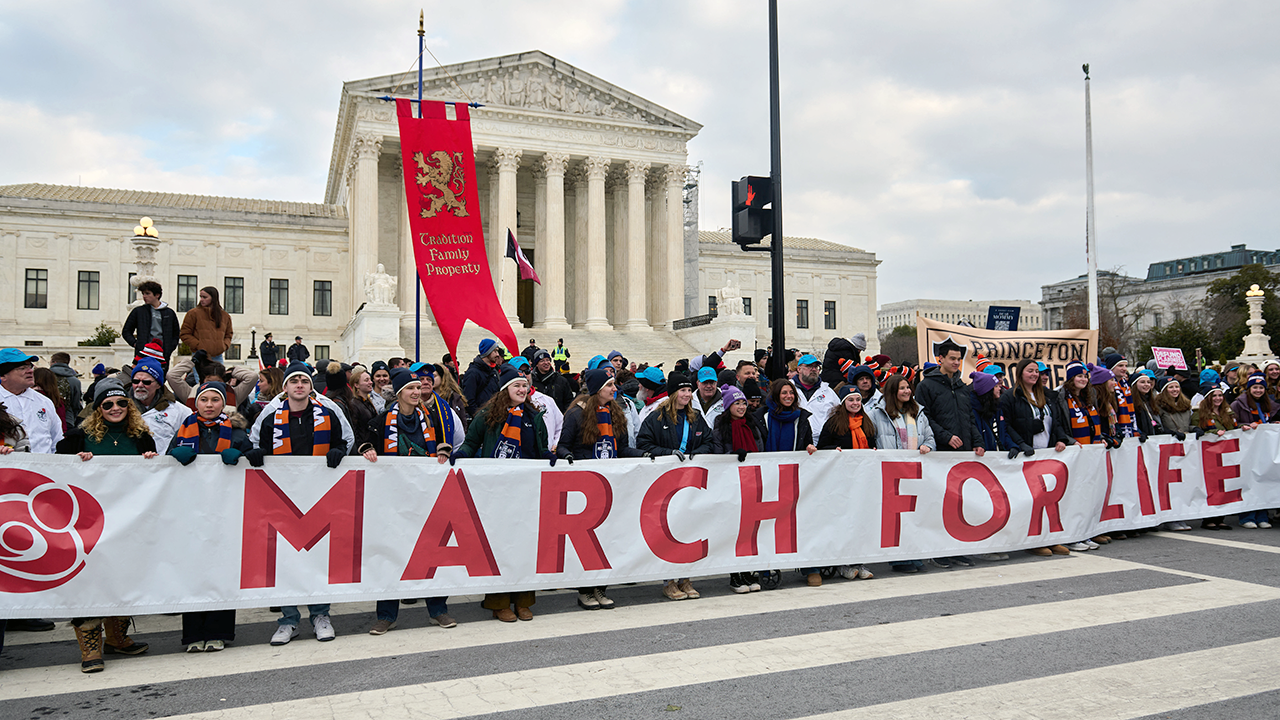
The March for Life, which has been held annually in Washington D.C. for decades, has taken on new significance in the post-Roe era. Once focused primarily on overturning Roe v. Wade, march organizers now emphasize state-level action and continued advocacy in the changing legal landscape.
Coleman urged Kentucky residents who encounter abortion pill advertisements to report them to his agency’s consumer protection office as the investigation continues.
The dispute highlights how the Dobbs decision has created a patchwork of abortion regulations across the country, with neighboring states often having dramatically different policies regarding reproductive healthcare access, reflecting the Supreme Court’s position that such matters should be regulated at the state level under the Tenth Amendment.
Fact Checker
Verify the accuracy of this article using The Disinformation Commission analysis and real-time sources.

22 Comments
The AG’s investigation into the sale of abortion pills at gas stations is a noteworthy development in the complex legal landscape surrounding reproductive rights post-Roe. I’m curious to see how this case unfolds.
This case highlights the growing tensions between reproductive rights advocates and state governments seeking to enforce new laws and regulations in a post-Roe America.
This investigation underscores the ongoing battles over abortion access in a post-Roe legal environment. It will be interesting to see how the courts navigate the competing interests and interpretations of the law.
The sale of abortion pills through unconventional channels like gas stations reflects the creative tactics being employed to work around state-level restrictions.
The investigation into the sale of abortion pills at gas stations is a noteworthy example of the complex legal battles over reproductive rights in a post-Roe America. It will be interesting to see how the courts balance individual rights with state regulatory authority.
This case underscores the growing tensions between reproductive rights advocates and state governments seeking to enforce new laws and regulations in the highly charged and evolving legal landscape.
The AG’s crackdown on the sale of abortion pills at gas stations is a significant development in the ongoing debate over reproductive rights in a post-Roe legal landscape. I’m curious to see how this case unfolds and what precedents it may set.
This case highlights the creative tactics being employed by reproductive rights advocates to work around state-level restrictions, and the determined efforts by state governments to enforce new laws and regulations.
This investigation by the Kentucky AG is a significant development in the ongoing battles over reproductive rights in a post-Roe legal environment. It will be important to follow the details of this case and see how the courts interpret the relevant laws and regulations.
The sale of abortion pills through unconventional channels like gas stations reflects the creative tactics being employed by reproductive rights advocates to work around state-level restrictions in a highly regulated environment.
The sale of abortion pills at gas stations is an unusual and potentially risky approach. I wonder about the safety and efficacy considerations, as well as the legal rationale behind it.
This case highlights the growing tensions between reproductive rights advocates and state governments in a post-Roe America.
Kentucky’s AG seems determined to crack down on any attempts to circumvent the state’s abortion laws. This investigation will likely have national implications as other states grapple with similar issues.
It will be important to monitor how the courts interpret the relevant laws and balance individual rights with state regulatory authority in this complex legal landscape.
This investigation seems like a complicated legal battle with high stakes. I’m curious to see how the AG’s office navigates the post-Roe landscape and enforces Kentucky’s laws on the mail-order abortion pill issue.
It will be interesting to follow the details of this case and see how the courts interpret the relevant laws and regulations.
The sale of abortion pills at gas stations is an unusual and potentially risky approach. I wonder about the safety and efficacy considerations, as well as the legal rationale behind it.
This case underscores the ongoing battles over abortion access in a post-Roe legal environment and the creative tactics being employed to work around state-level restrictions.
This investigation by the Kentucky AG highlights the complex legal battles over reproductive rights in a post-Roe landscape. It will be interesting to see how the courts navigate the competing interests and interpretations of the law.
The sale of abortion pills through unconventional channels like gas stations reflects the challenges that reproductive rights advocates are facing in providing access in a highly regulated environment.
The sale of abortion pills at gas stations is an unexpected development in the ongoing debate over reproductive rights. I wonder what the rationale is behind this tactic and how effective it may be at providing access.
This case highlights the creative ways that groups are trying to work around state-level restrictions on abortion access in a post-Roe environment.