


Listen to the article
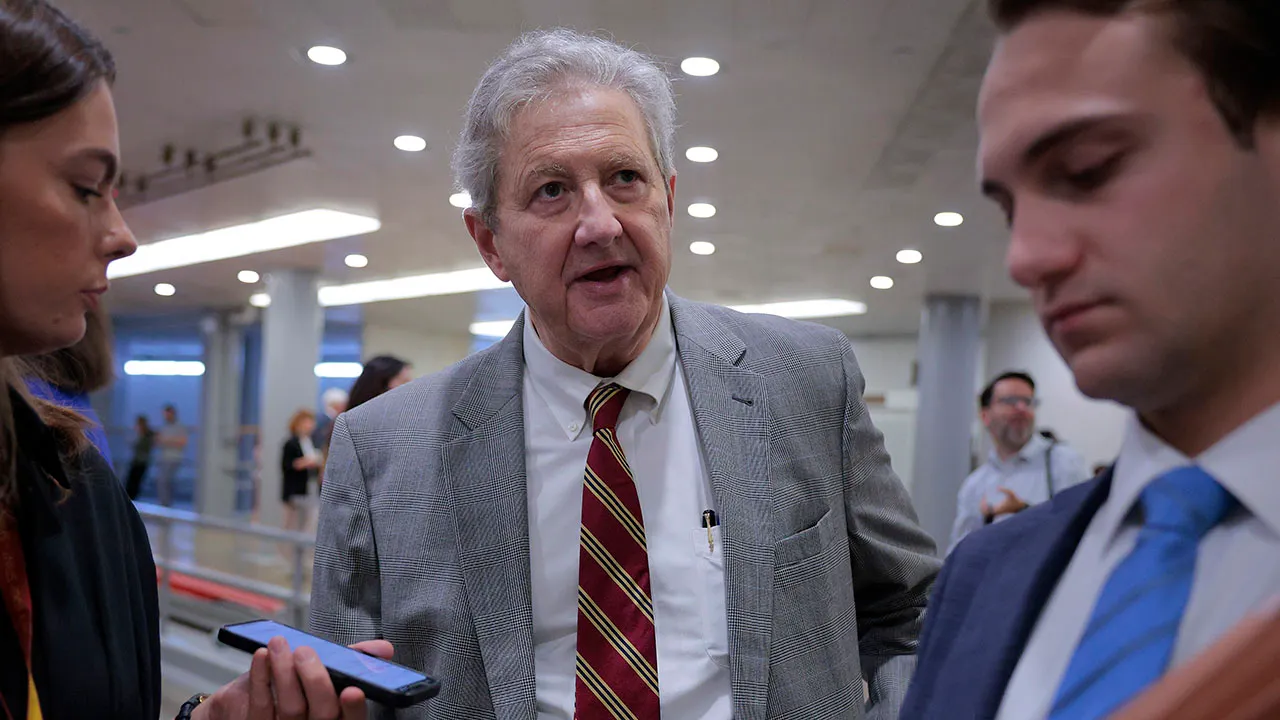
In a stark warning delivered on the Senate floor Thursday, Republican Senator John Kennedy of Louisiana characterized Iran’s Supreme Leader Ayatollah Ali Khamenei as fundamentally focused on harming Americans amid escalating tensions between the two nations.
“The Ayatollah not only thinks that I’m going to hell because I don’t agree with his religion — he wants to kill me,” Kennedy declared. “He wants to kill Americans and the Israelis and anybody who does not believe in his jihad and drink our blood out of a boot. And he’s acted on that, and that’s not acceptable.”
Kennedy’s forceful comments come at a critical juncture in U.S.-Iran relations, with concerns about Iran’s nuclear ambitions taking center stage in Washington. President Donald Trump has given Iranian leadership approximately 10 to 15 days to reach a nuclear agreement, warning that failure to do so could trigger U.S. military action in the region.
Trump reinforced this position during his State of the Union address this week, stating unequivocally: “I will never allow the world’s number one sponsor of terror to have a nuclear weapon.”
The Louisiana senator emphasized that any potential agreement with Iran would require robust verification mechanisms. “If we make a deal with Iran, let’s make sure we have a protocol to enforce it, because in my experience in watching the Ayatollah through the years, I wouldn’t trust this man if he was three days dead,” Kennedy remarked.
This heightened rhetoric reflects growing concerns across Washington about Iran’s nuclear program and regional activities. The Trump administration has consistently taken a hardline stance toward Iran, having withdrawn from the 2015 Joint Comprehensive Plan of Action (JCPOA) during Trump’s first term and subsequently imposing significant economic sanctions on the country.
The current ultimatum represents a pivotal moment in the administration’s approach to containing Iran’s nuclear ambitions. While the President has expressed willingness to negotiate, the threat of military action looms large if diplomatic efforts fail to produce an acceptable agreement.
Meanwhile, a bipartisan effort is underway in Congress to assert legislative oversight regarding potential military action against Iran. Democratic Senator Tim Kaine of Virginia and Republican Senator Rand Paul of Kentucky are preparing to bring their Iran war powers resolution to the Senate floor next week. This measure aims to limit the President’s authority to strike Iran without congressional approval.
The resolution reflects ongoing tension between the executive and legislative branches over war powers and authorization for the use of military force. Critics argue that significant military action against Iran would require explicit congressional approval under the Constitution and the War Powers Act.
Senate Majority Leader John Thune of South Dakota acknowledged the complexity of the situation, noting that while preventing Iran from obtaining nuclear weapons capability is paramount, the regime also poses other regional threats that must be addressed.
“We have a big presence in that region, so I think they’re looking at and working through what the options might be,” Thune said. He added his personal view that any significant action “better well make it about getting new leadership and regime change.”
The United States has reportedly positioned aircraft carriers and strike platforms across the Middle East as talks with Iran shift to Oman, signaling both military preparedness and continued diplomatic efforts.
The situation remains fluid, with the administration’s deadline approach creating a sense of urgency in diplomatic circles. Regional allies, particularly Israel, are watching developments closely, as they would be directly impacted by either a new nuclear agreement or potential military conflict involving Iran.
As the deadline approaches, both diplomatic and military options appear to remain on the table, with significant implications for regional stability and international security at stake.
Fact Checker
Verify the accuracy of this article using The Disinformation Commission analysis and real-time sources.

9 Comments
The escalating tensions between the US and Iran are worrying. If Iran refuses to reach a nuclear deal, the prospect of military action is very real. However, such a move would come with huge risks and consequences that need to be carefully weighed.
You raise a good point. While Iran’s nuclear ambitions are a serious concern, military intervention should be an absolute last resort. Diplomacy and economic pressure may be more effective in curbing their behavior without sparking a wider regional conflict.
The escalating tensions between the US and Iran are very worrying. While Iran’s nuclear ambitions and sponsorship of terrorism are serious concerns, I’m not convinced that military action is the best solution. Diplomacy and economic pressure may be more effective in the long run.
I agree. Diplomacy should be the priority, but the US needs to be prepared to take stronger action if Iran refuses to back down on its nuclear program and support for extremist groups. A delicate balance will be required to resolve this crisis peacefully.
It’s good to see the US taking a tough stance against Iran’s nuclear program and support for terrorism. However, the threat of military action is risky and could have severe consequences. I hope the administration can find a diplomatic solution to resolve this crisis peacefully.
Senator Kennedy’s characterization of the Iranian leadership as fundamentally hostile to the US and Israel is concerning but likely accurate. The Ayatollah’s radical Islamist ideology and support for terrorism make Iran a very dangerous actor on the world stage.
Senator Kennedy’s warning about Iran’s aggression and nuclear ambitions is concerning. As a major sponsor of terrorism, it’s clear Iran cannot be trusted with nuclear weapons. Tough action may be needed to prevent them from obtaining such capabilities.
Agreed. Iran’s track record of hostility and support for extremist groups makes their nuclear program a major threat that must be addressed. The US needs to take a firm stance to protect its interests and allies in the region.
Senator Kennedy’s comments highlight the complex and volatile nature of US-Iran relations. While Iran’s hostility is concerning, the prospect of military conflict is extremely risky and should be an absolute last resort. I hope the administration can find a diplomatic solution to this crisis.