


Listen to the article
Kennedy Center Leadership Crisis Deepens as Artistic Programming Head Resigns
In a stunning development that underscores the growing turmoil at one of America’s premier cultural institutions, Kevin Couch has abruptly resigned as senior vice president of artistic programming at the Kennedy Center, less than two weeks after his appointment to the position.
Couch confirmed his departure in an email on Thursday, stating that he resigned on Wednesday, though he did not provide any explanation for his sudden exit. The Kennedy Center has not yet issued an official comment regarding the resignation.
The departure comes during a period of unprecedented upheaval at the prestigious Washington, D.C. venue. Couch had been warmly welcomed in a January 16 press release by Kennedy Center president Ric Grenell, who praised his “clear-eyed approach to curating a roster of compelling shows that invite and inspire all audiences” and highlighted plans to “expand our commonsense programming.”
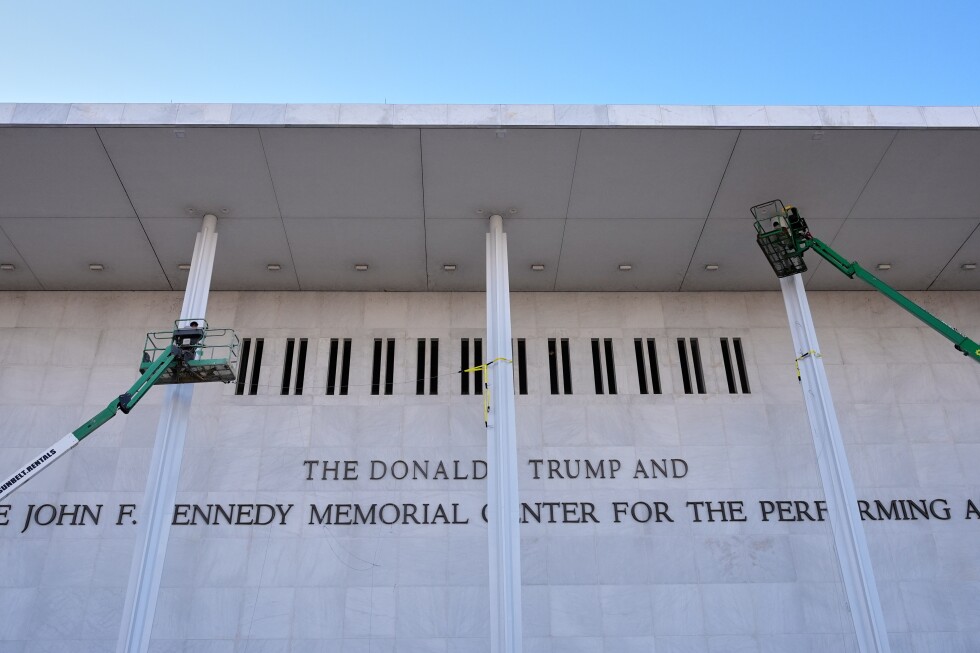
Grenell, who was appointed by President Donald Trump, represents part of a significant leadership shift at the institution that has sparked controversy throughout the arts community. The changes began when Trump’s handpicked board of trustees added the Republican president’s name to the venue in late 2023, altering the identity of a center long considered politically neutral ground for celebrating American arts and culture.
The fallout from these changes has been swift and dramatic. A growing number of high-profile artists have canceled scheduled performances at the Kennedy Center in protest of the new leadership and the venue’s association with Trump. Just this past week, renowned composer Philip Glass called off the world premiere of a symphony about Abraham Lincoln that was set to debut at the center.
Grammy-winning soprano Renée Fleming has also withdrawn from two performances scheduled for May. These cancellations represent significant artistic and financial losses for the institution, which has traditionally attracted top-tier talent from across the musical and performing arts spectrum.
Cultural institutions like the Kennedy Center often walk a delicate line between artistic independence and political influences, particularly given their reliance on both government funding and private donations. The current situation represents an unusual degree of political entanglement for an organization that has historically maintained bipartisan support.
Arts management experts note that leadership stability is crucial for institutions that book performances and plan programming seasons years in advance. The rapid turnover in the artistic programming position creates practical challenges for the center’s operations and could potentially impact future bookings.
The timing of these developments is particularly notable as President Trump and First Lady Melania Trump are expected to attend the Kennedy Center tonight for the premiere of “Melania,” a documentary produced by the former First Lady about the 20 days leading up to Trump’s return to the White House.
This high-profile appearance will likely draw attention to the ongoing tensions at the institution. While presidential attendance at Kennedy Center events is traditional, the current context makes this visit especially significant given the controversies surrounding the venue’s leadership and naming.
The Kennedy Center, officially known as the John F. Kennedy Center for the Performing Arts, has served as a living memorial to President Kennedy and a national showcase for performing arts since its opening in 1971. The current controversies represent one of the most significant challenges to its mission and identity in its over 50-year history.
As the situation continues to develop, many in the arts community are watching closely to see how these leadership changes will affect the Kennedy Center’s programming, reputation, and ability to fulfill its cultural mission in an increasingly polarized political environment.
Fact Checker
Verify the accuracy of this article using The Disinformation Commission analysis and real-time sources.

9 Comments
This seems like a concerning development for the Kennedy Center. Losing the new head of programming just two weeks after being appointed is quite abrupt. I hope they can provide more clarity on the reasons behind this sudden departure.
Indeed, the timing is quite puzzling. One has to wonder if there were internal conflicts or disagreements that led to this quick resignation.
While leadership changes are common, the timing of this resignation is quite unusual. I wonder if there were policy disagreements or other internal issues that prompted the new head of programming to step down so quickly.
Agreed, the speed of this departure raises a lot of questions. Hopefully the Kennedy Center can provide more transparency around the reasons behind it.
It’s concerning to see such upheaval at the Kennedy Center. Losing the head of artistic programming just two weeks after their appointment suggests there may be deeper problems at the institution. I hope they can quickly stabilize the leadership and get the programming back on track.
This is certainly an unexpected development for the Kennedy Center. A quick resignation like this often points to internal conflicts or strategic differences. I’ll be curious to see how the institution responds and whether they can find a suitable replacement to lead their artistic vision.
Transitions in leadership can be challenging for any organization, especially one as prominent as the Kennedy Center. I’m curious to learn more about what factors contributed to this sudden resignation and how they plan to move forward.
The Kennedy Center has long been a beacon of the arts in the US, so it’s troubling to see this level of turmoil in its leadership. I hope they can stabilize the situation and find the right person to lead their artistic programming forward.
Interesting to see the leadership changes at the Kennedy Center. I wonder what led to the new head of artistic programming resigning so quickly. Hopefully they can resolve the turmoil and get the institution back on track.